
If you’ve recently started knitting or come across the word purl, you may be wondering about its exact meaning. The purl meaning depends on the context.
In knitting, a purl stitch is one of the two fundamental stitches used to create countless fabric patterns. Historically, purl also referred to gold or silver thread used in embroidery, and in literature, it can describe the gentle murmur of a flowing stream.
Understanding these meanings helps you appreciate how one simple word has evolved over centuries. In this guide, we’ll explore every definition of purl, explain how it’s used in knitting, discuss its historical origins, compare it with the knit stitch, and answer the most common questions beginners ask.
What Does Purl Mean?
Purl has multiple meanings depending on how it’s used.
| Meaning | Explanation |
|---|---|
| Knitting | A basic stitch created by inserting the needle from front to back, producing a textured loop. |
| Embroidery | Decorative gold or silver thread used for embroidery or edging garments. |
| Nature | A gently swirling stream or a soft murmuring sound made by flowing water. |
Today, the knitting definition is by far the most common.
Purl Meaning in Knitting
A purl stitch is one of the two basic knitting stitches. It creates a small horizontal bump on the side facing the knitter and forms the reverse of a knit stitch.
Every knitted fabric is built using only two stitches:
- Knit stitch
- Purl stitch
Almost every advanced knitting pattern from scarves to sweaters combines these two stitches in different ways. Once you learn them, you’re already capable of making thousands of stitch patterns.
Simply put:
Purl → is a → Basic knitting stitch
This relationship forms the foundation of knitting.
How Is a Purl Stitch Made?
A purl stitch is worked by inserting the right-hand needle into the front of the stitch from right to left while the yarn stays in front of your work.
The process looks simple after some practice:
- Hold the yarn in front.
- Insert the right needle into the front of the stitch.
- Wrap the yarn around the needle.
- Pull the new loop through.
- Slide the old stitch off.
Although it feels awkward for beginners, it soon becomes second nature.
What Does a Purl Stitch Look Like?
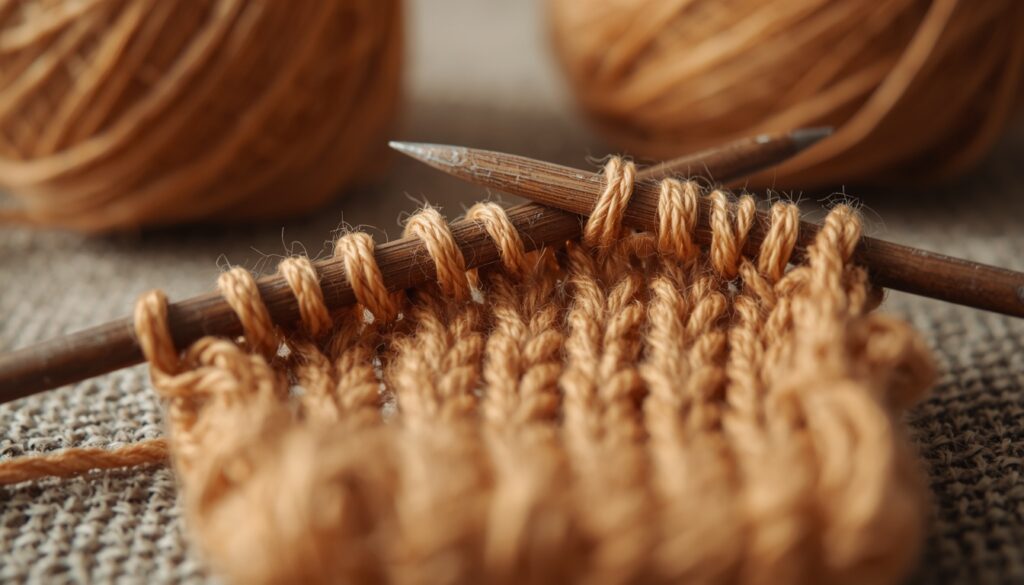
A completed purl stitch appears as a small horizontal bump.
On knitted fabric, you’ll notice:
- Knit stitches resemble little “V” shapes.
- Purl stitches look like raised bumps.
These bumps create texture and depth in knitted fabrics.
Purl stitch → creates → Reverse-side texture in knitting
Because of this texture, purl stitches are essential for decorative knitting.
Knit vs. Purl: What’s the Difference?
Many beginners assume they’re completely different stitches. Actually, they’re opposite sides of the same stitch.
| Knit Stitch | Purl Stitch |
|---|---|
| Yarn stays behind the work | Yarn stays in front |
| Creates “V” shaped loops | Creates horizontal bumps |
| Smooth appearance | Textured appearance |
| Common for stockinette front | Common for stockinette back |
Think of it this way:
A knit stitch viewed from the opposite side becomes a purl stitch, and a purl stitch viewed from the opposite side becomes a knit stitch.
Understanding this relationship makes reading knitting patterns much easier.
Why Are Purl Stitches Important?
Without purl stitches, knitting would be very limited.
They help create:
- Ribbing
- Moss stitch
- Seed stitch
- Basket weave
- Cable backgrounds
- Lace patterns
- Textured blankets
- Sweaters
- Socks
- Hats
Nearly every modern knitting project relies on a combination of knit and purl stitches.
Common Stitch Patterns Using Purl
Here are some popular knitting patterns built with purl stitches.
Stockinette Stitch
One row knit.
One row purl.
This creates the classic smooth fabric seen in sweaters.
Rib Stitch
Alternating knit and purl stitches.
Example:
- Knit 1, Purl 1
- Knit 2, Purl 2
Ribbing stretches naturally, making it ideal for cuffs and collars.
Seed Stitch
Alternating knit and purl every stitch while reversing them on the next row.
This produces a textured fabric that lies flat.
Moss Stitch
Very similar to seed stitch but repeated over two rows.
It gives fabric a soft, woven appearance.
Purl Meaning Beyond Knitting
Many people don’t realize that purl existed long before modern knitting became popular.
Historically, purl referred to:
- Gold embroidery thread
- Silver embroidery wire
- Decorative edging
- Ornamental stitching
These materials were commonly used on royal garments, ceremonial clothing, and military uniforms.
Purl → originally referred to → Gold or silver embroidery thread
Although this meaning is uncommon today, it’s still found in historical dictionaries.
Purl Meaning in Literature
In literature, purl often describes the movement or sound of flowing water.
Examples include:
- A purling brook
- A purling stream
- The purl of the river
Here, purl means:
- Gentle ripple
- Small swirling stream
- Soft murmur
- Quiet flowing sound
Writers use the word because it creates vivid imagery and evokes calmness.
Purl (noun) → describes → A swirling stream or gentle murmuring sound
Purl as a Verb
The word can also function as a verb.
In knitting:
- To purl means to create a purl stitch.
In literature:
- Water may purl through rocks.
- A stream may purl softly.
This usage emphasizes smooth movement or a quiet murmuring sound.
Origin and Etymology of Purl
The history of purl is surprisingly rich.
The embroidery meaning dates back to the 14th century in Middle English.
The water-related meaning likely comes from Scandinavian languages, where similar words referred to rippling or swirling water.
The knitting meaning developed later as knitting became more widespread across Europe.
This evolution explains why dictionaries list several definitions under the same word.
Common Terms Related to Purl
When learning knitting, you’ll frequently encounter these related terms:
- Knit stitch
- Yarn
- Needle
- Gauge
- Cast on
- Bind off
- Ribbing
- Stockinette
- Seed stitch
- Moss stitch
- Cable knitting
- Stitch marker
- Knitting pattern
- Crochet hook
- Knit fabric
Understanding these terms makes following knitting instructions much easier.
Common Beginner Mistakes When Learning to Purl
Nearly everyone struggles with purling at first.
Some common mistakes include:
- Holding the yarn behind the work.
- Wrapping the yarn in the wrong direction.
- Pulling stitches too tightly.
- Accidentally adding extra stitches.
- Twisting stitches.
- Losing even tension.
Practice slowly rather than rushing. Consistency matters more than speed.
Tips for Better Purling
If your purl stitches feel awkward, these tips can help:
- Relax your hands.
- Keep consistent yarn tension.
- Practice short rows daily.
- Watch the direction of your yarn.
- Count stitches regularly.
- Use smooth beginner-friendly yarn.
Many knitters eventually purl just as comfortably as they knit.
Examples of Purl in Sentences
Here are different ways the word appears in everyday English.
Knitting
- She learned how to purl during her first knitting lesson.
- The pattern alternates knit and purl stitches.
Embroidery
- The royal robe was decorated with gold purl embroidery.
Literature
- The quiet stream purled through the forest.
- We listened to the gentle purl of the river.
These examples show how context changes the meaning of the word.
Why Learning Purl Matters
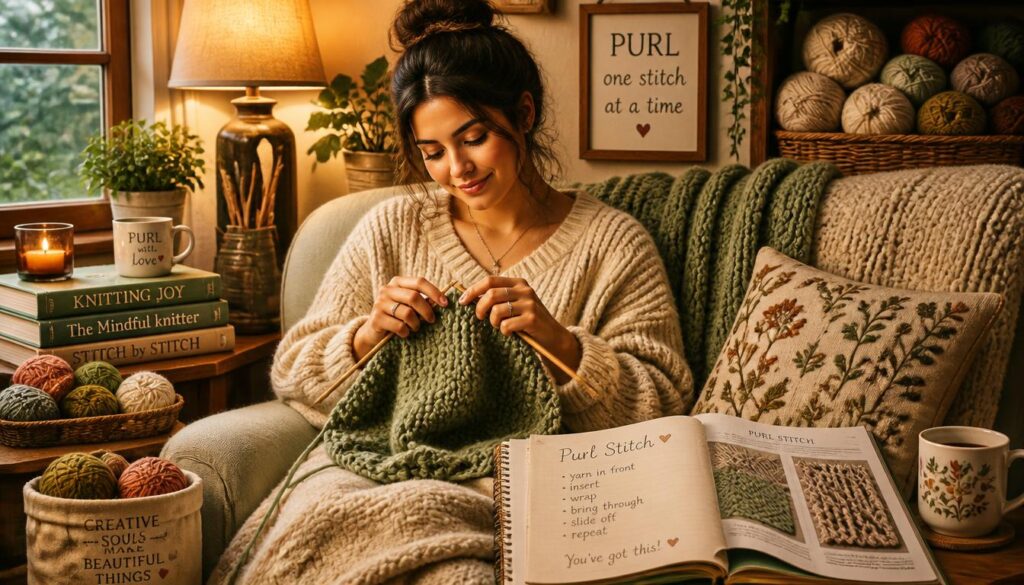
Mastering the purl stitch opens the door to countless knitting projects. From cozy scarves and hats to intricate sweaters and blankets, nearly every design relies on a combination of knit and purl stitches. Once you understand how they work together, reading patterns becomes far less intimidating, and your confidence grows with each project.
Beyond knitting, knowing the historical and literary meanings of purl also enriches your vocabulary. Whether you encounter it in a novel, a historical text, or a craft guide, you’ll recognize the intended meaning based on the context.
Frequently Asked Questions
What is the meaning of purl in knitting?
A purl is one of the two fundamental knitting stitches. It is worked with the yarn held in front of the fabric and creates a textured bump on the side facing the knitter. Combined with knit stitches, it forms countless knitting patterns and fabrics.
Is purl the opposite of knit?
Yes. A purl stitch is essentially the reverse of a knit stitch. A stitch that appears as a knit “V” on one side appears as a purl bump on the other. Together, they form the foundation of all knitted fabrics.
Why is it called a purl stitch?
The exact origin of the knitting term is uncertain, but the word purl has older roots in Middle English and later developed additional meanings. Over time, it became the accepted name for one of knitting’s two basic stitches.
What does purl mean in literature?
In literature, purl refers to the soft, murmuring sound or gentle swirling movement of flowing water. Writers often use it to create peaceful imagery, describing streams, brooks, or rivers that ripple quietly through a landscape.