
There are certain printing technologies that quietly change an entire industry, and DTF printing is one of them. You may have seen the letters “DTF” on a printing machine, custom T-shirt business, or online apparel store and wondered, what does DTF mean in printing, exactly? It sounds technical at first, but the basic idea is surprisingly straightforward.
DTF stands for Direct-to-Film, a form of digital textile printing in which a design is printed onto a special PET film and later transferred onto fabric using heat. Instead of printing directly onto a finished shirt, the artwork takes a little detour through a transfer film. Oddly enough, that extra step is part of what makes the method so flexible.
Today, DTF technology is used for T-shirts, hoodies, uniforms, bags, sportswear, denim items, promotional products, and plenty of other custom garments.
It has become especially interesting to small business owners, print shops, clothing brands, and print-on-demand operators because it can handle detailed artwork without requiring the same setup associated with some traditional methods.
So, if you’re trying to understand the DTF meaning, how the process works, what materials it uses, and whether it is actually useful for business, let’s unpack the whole thing without drowning in printing jargon.
What Does DTF Mean in Printing?
In printing, DTF means Direct-to-Film. The name describes the central part of the technology: an image is first printed onto a special transfer film, rather than directly onto the garment.
A typical DTF printing process involves several connected stages. The artwork is prepared digitally, printed onto a coated PET film, covered with adhesive powder, cured, and then transferred to the fabric through heat pressing. The finished result is a colorful and durable decoration sitting on the garment.
This differs from Direct-to-Garment (DTG) printing, where specialized ink is printed directly onto the textile. DTF basically says, “Let’s print the design somewhere else first,” and that simple change has a pretty big effect on material compatibility.
The method is particularly known for vibrant colors, fine artwork, and the ability to reproduce photorealistic details. For someone producing custom clothing, that combination can be very handy because customers don’t always arrive with simple one-color logos.
Sometimes they arrive with a photograph, a complicated illustration, tiny lettering, and the expectation that it should all look perfect. Naturally, the printer has to somehow survive that ambition.
How Does DTF Printing Work?
Understanding the DTF printing process step by step makes the technology much less mysterious. While equipment and workflows can vary, four major stages are at the heart of most DTF production.
Design Preparation and Printing
The process begins with a digital design. The artwork is prepared using appropriate graphic software and then sent to a DTF printer.
Instead of applying the image directly to a shirt, the printer deposits textile-compatible inks onto a coated PET transfer film. A white ink layer is normally important because it provides opacity and helps the colors remain visible on darker fabrics.
The quality of this stage influences nearly everything afterward. Poor artwork, incorrect color settings, or unsuitable film can create problems that no amount of wishful thinking will fix later.
Applying DTF Adhesive Powder
After printing, adhesive powder is applied to the wet ink on the film. This material is sometimes called DTF powder, and its job is rather literal: it provides the bonding layer that eventually helps the printed design adhere to the garment.
The excess powder needs to be removed carefully. This stage is sometimes referred to as powder shaking, although modern equipment may automate much of the application and removal process.
Too much powder or inconsistent coverage can affect the finished print, while insufficient powder can weaken adhesion. It is one of those steps that looks simple until you’re the person responsible for getting 200 shirts out the door.
Curing the Transfer
The powdered film then goes through a curing process. Heat melts the adhesive powder and creates the layer needed for the later transfer.
Depending on the equipment, curing may happen in a dedicated oven, shaker-dryer unit, or integrated system. Correct temperature and timing matter because under-curing and over-curing can both create quality issues.
Once cured, the film becomes a ready-to-press transfer. At this point, the design can be stored or used later, which is particularly useful for businesses producing transfers ahead of garment orders.
Heat Pressing
The final major step is heat pressing. The prepared transfer is positioned onto the garment and pressed under controlled heat and pressure.
The adhesive bonds with the fabric, and the film is removed according to the transfer system’s requirements. What remains is the finished DTF print.
This is the moment where the design stops being a piece of film and becomes part of the customer’s hoodie, shirt, bag, or other textile product. Quite a small transformation, but commercially, it can mean a lot.
What Fabrics Can DTF Print On?
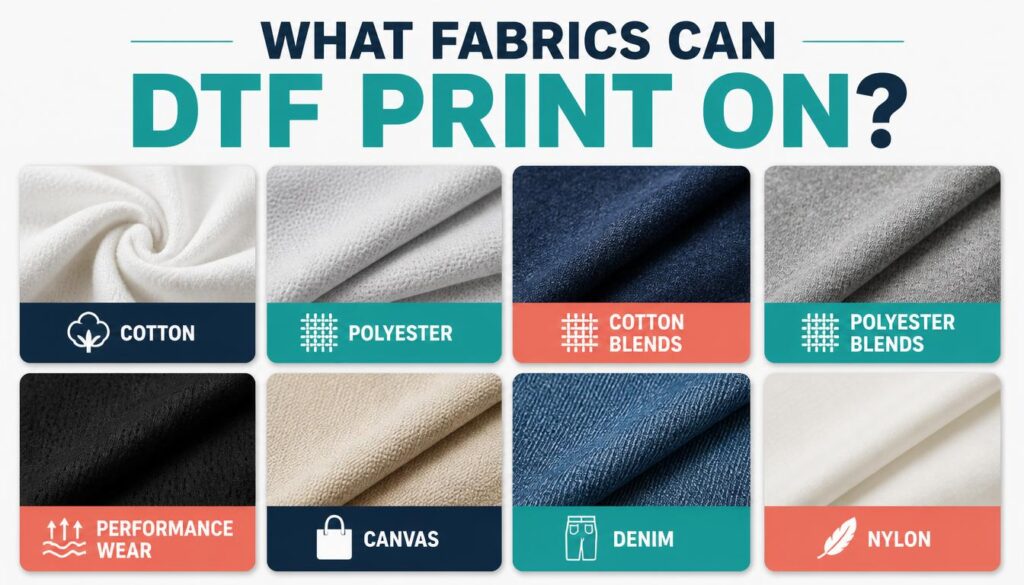
One of the biggest attractions of DTF printing technology is its broad fabric compatibility. Unlike some decorating methods that work best with particular fiber types, DTF can be used across a relatively wide range of textiles when the correct materials and settings are selected.
Common applications include:
- Cotton T-shirts and sweatshirts
- Polyester sportswear and performance garments
- Blended fabrics containing cotton and polyester
- Denim jackets, jeans, and accessories
- Nylon garments and selected textile products
- Certain leather and leather-like products
- Hoodies, uniforms, tote bags, and other apparel
That does not mean every DTF transfer works perfectly on every material. Fabric construction, surface treatment, temperature sensitivity, stretch, and the particular adhesive system all matter.
For example, DTF printing for cotton is a common application, while DTF printing for polyester is attractive for sportswear and colored synthetic garments. Businesses should still test unfamiliar fabrics before accepting a large order. A sample shirt is cheaper than 300 unhappy customers, which is a fairly useful business equation.
Why Is DTF Printing So Popular?
The popularity of DTF isn’t based on one magical feature. It is really the combination of flexibility, visual quality, and a relatively adaptable production workflow.
One important advantage is color vibrancy. DTF can produce strong, saturated colors and detailed artwork, including designs containing gradients and complex photographic elements.
Another attraction is customization. A business can produce one design today, five tomorrow, and a larger batch later without creating screens for every artwork. This makes the technology especially appealing for personalized apparel and small-to-medium production runs.
There is also the question of fabric choice. Because DTF can work with cotton, polyester and various blends, a printing business can offer a broader product range instead of restricting customers to one narrow garment category.
For customers, the practical benefits can include detailed prints, good washability, useful stretchability, and a comfortable finished surface when the transfer is produced and applied correctly.
DTF vs DTG: What’s the Difference?
The comparison between DTF vs DTG comes up constantly because both are digital methods used for apparel decoration.
Direct-to-Garment printing applies ink directly onto the garment. DTF, meanwhile, prints onto film and then transfers that image to the fabric.
DTG can produce excellent results, especially for suitable cotton garments and certain detailed designs. But it often involves garment preparation or pretreatment, and the workflow can be more dependent on the type and color of fabric.
DTF offers a different approach. Because the design is printed onto film first, it can be prepared independently of the final garment. This can create useful flexibility for custom apparel businesses.
Neither technology is automatically “better” in every situation. The choice depends on garment type, artwork, production volume, equipment, desired feel, and business model. Printing has a funny habit of refusing to give simple yes-or-no answers.
DTF vs Screen Printing
Traditional screen printing remains a powerful method, particularly for larger orders with relatively simple artwork. Once screens are prepared and production gets moving, it can be highly efficient for bulk quantities.
DTF is often more attractive when designs are complicated or orders are smaller. There is less need for the physical screen setup associated with conventional screen printing, and artwork can move from computer to transfer workflow relatively quickly.
For a business handling dozens of different designs, personalization, names, numbers, or POD orders, DTF can offer considerable flexibility.
Screen printing still has its place, especially for large-volume jobs. DTF isn’t here to make every older printing technology disappear. It’s more like another tool entering a very crowded toolbox.
DTF vs Sublimation Printing
Sublimation printing works differently again. It uses special inks that turn into gas under heat and bond with suitable polyester materials.
This makes sublimation excellent for polyester-based products and certain all-over printing applications. However, traditional sublimation has limitations when it comes to cotton and many dark garments.
DTF has a wider material range, making it attractive when a business wants to print on both light and dark garments made from different fabrics.
So, DTF vs sublimation isn’t really about declaring a universal winner. If your product line is heavily polyester-based, sublimation may be a strong choice. If you need broad garment compatibility and want to work with cotton, blends, polyester, denim and more, DTF can be a very compelling option.
DTF Printing for Small Businesses
For DTF printing for small businesses, flexibility is often more important than raw production speed.
A small customization business may receive wildly different orders throughout a week: one personalized hoodie on Monday, twenty company shirts on Wednesday, and perhaps several unusual promotional items by Friday. A method that can accommodate changing order sizes is valuable.
DTF can support:
- Small orders without extensive setup
- Personalized garments
- Print-on-demand production
- Medium-sized orders
- Custom logos and illustrations
- Multiple garment colors
- A broader product catalog
- Ready-to-press transfers for later use
However, entrepreneurs should look beyond the price of the machine. Initial investment, ink, film, adhesive powder, maintenance, electricity, labor, curing equipment and rejected prints all contribute to the real DTF printing cost.
A cheap machine isn’t necessarily cheap to operate. That’s one of those lessons business owners tend to learn exactly once.
DTF Printing Costs and Business Considerations
The cost of DTF printing varies significantly depending on equipment, ink consumption, transfer size, labor, materials, and production volume.
A business calculating DTF consumable costs should account for ink, transfer film, adhesive powder and other supplies. Maintenance also deserves attention because printheads and related components require proper care.
Production efficiency matters too. If an order takes significantly longer than expected because the workflow is poorly organized, labor costs can quietly eat into profit.
The goal should therefore be cost-effectiveness, not simply the lowest possible material price.
For some businesses, DTF makes sense because it allows competitive pricing while still supporting custom artwork and relatively flexible order quantities. For others, a different technology may deliver better margins. The right calculation comes from actual orders, not a glossy machine brochure.
DTF Print Quality, Durability, and Washability
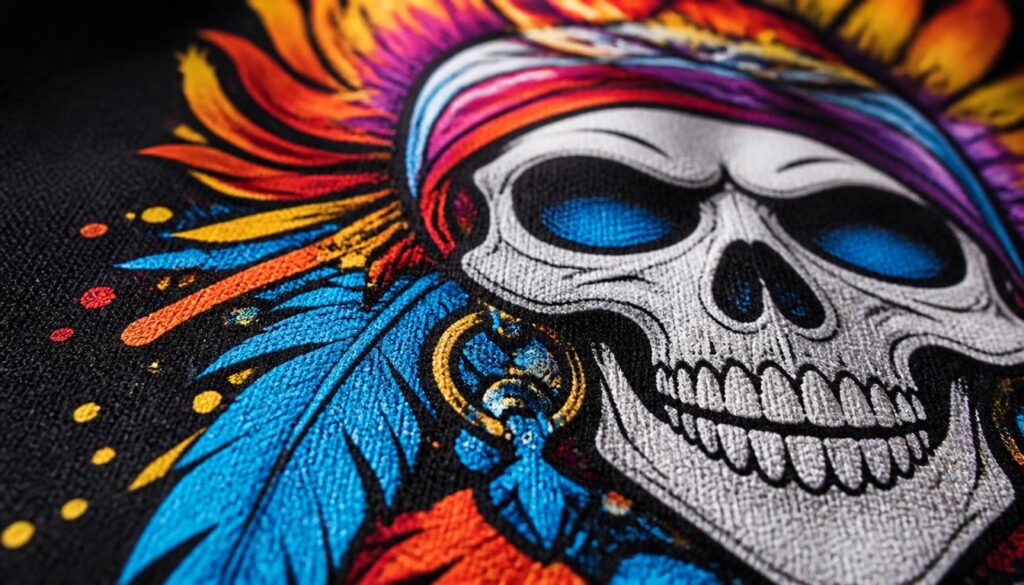
Customers don’t merely want a shirt that looks impressive for three days. They want a print that survives ordinary use.
Good DTF print quality can include strong color retention, fine detail, decent washability, and resistance to premature cracking or fading. Proper curing and heat pressing are especially important to achieving those results.
Print durability depends on several variables: ink quality, transfer film, adhesive powder, curing conditions, fabric, press settings and washing habits.
A well-made transfer can offer useful crack resistance and fade resistance, while its stretchability makes it suitable for garments that move with the wearer.
Care instructions still matter. Excessive heat, harsh detergents and improper washing can shorten the life of almost any decorated garment. Even a very durable print has its limits; it isn’t wearing a superhero cape.
Advantages and Limitations of DTF Printing
Like every production method, DTF has genuine strengths and some limitations.
Major advantages
- Versatility: DTF works across many common fabric categories.
- Detailed prints: Fine artwork and complex graphics can be reproduced effectively.
- Color vibrancy: Strong colors are possible, including on dark garments.
- Flexible order sizes: It suits everything from personalized pieces to larger batches.
- Customization: Names, numbers, photographs and intricate designs are practical applications.
- Print-on-demand: Businesses can produce transfers or garments as orders arrive.
- Broad product range: Businesses can expand beyond standard T-shirts.
- Production efficiency: A well-designed workflow can reduce unnecessary setup.
- Ready-to-press transfers: Transfers can be prepared in advance and applied later.
Potential limitations
- DTF requires consumables such as film, ink and adhesive powder.
- Equipment needs regular cleaning and maintenance.
- Poor curing can compromise adhesion properties and durability.
- The finished print may feel different from ink absorbed directly into a textile.
- Ventilation and workspace organization can matter because the process involves powder and heated materials.
- Incorrect heat-press settings can damage garments or produce weak transfers.
- Not every fabric should be treated identically.
The important point is that DTF isn’t a shortcut around quality control. It simply changes where quality control happens.
Common DTF Applications
The range of DTF applications is one reason the technology has attracted so much attention.
A custom clothing company might use it for graphic T-shirts and hoodies. A sportswear supplier could decorate polyester jerseys. A local business may print employee uniforms, while an online seller uses DTF print-on-demand to avoid holding huge inventories.
Other applications can include:
- Personalized clothing
- Promotional apparel
- Team uniforms
- Fashion garments
- Workwear
- Tote bags
- Denim products
- Custom accessories
- Small-batch merchandise
- Personalized gifts
This broad application range can help businesses increase market reach. Instead of asking customers to choose only from a handful of standard shirts, the business can offer more fabrics, products and personalization options.
What Makes a Good DTF Workflow?
A successful DTF workflow is more than owning a printer. The complete production chain needs to work together.
Artwork preparation should be consistent. Printer settings need to match the film and ink. Adhesive powder should be distributed properly. The curing process needs controlled heat. Finally, the DTF heat press process must use appropriate pressure, temperature and dwell time.
Quality checks should happen along the way, not just after the customer receives the shirt.
Businesses should also keep records of successful settings for different garments. If a particular polyester shirt requires a certain pressing approach, writing that down can save considerable headaches later.
Efficiency often comes from boring little details. Labeling transfers, organizing orders, maintaining equipment and checking samples aren’t glamorous, but they quietly keep production moving.
Is DTF Printing Worth It?
Whether DTF is worthwhile depends heavily on the business model.
For someone selling custom garments, personalized apparel, small batches or online merchandise, DTF can be a powerful option because it combines customization with broad fabric compatibility.
For a high-volume operation producing thousands of identical shirts, another technology may offer better economics. Likewise, a company focused entirely on polyester sportswear may find sublimation especially attractive.
The smartest approach is to compare the complete workflow rather than focusing on the printer alone. Consider production speed, material costs, order sizes, labor, maintenance, expected selling prices, customer demand and realistic DTF return on investment.
In other words, don’t buy a printer first and then go searching for a business model afterward. That’s a slightly expensive way to discover entrepreneurship.
Read more: https://ytmeaning.com/obo-meaning/
How to Choose DTF Equipment for Your Business
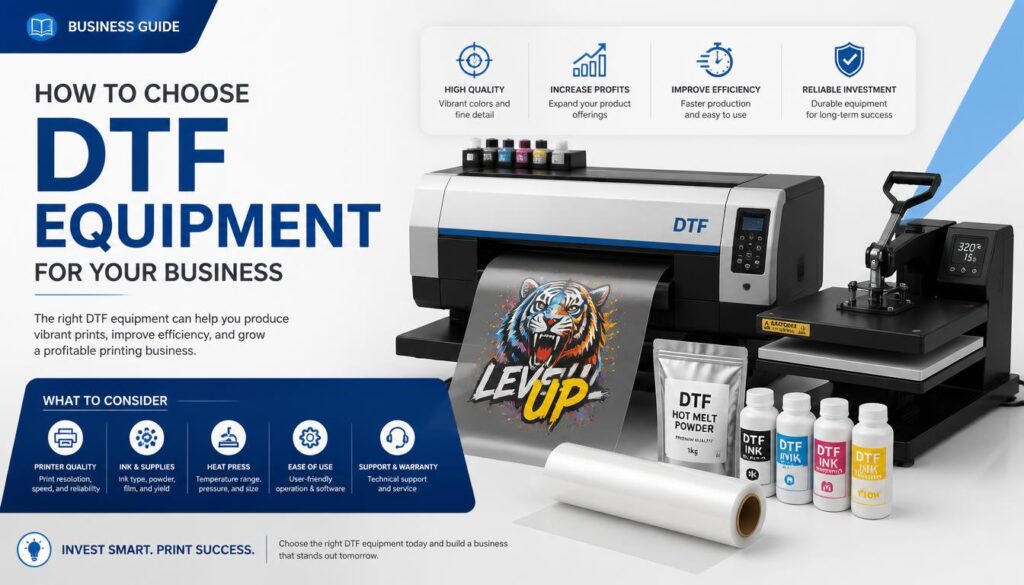
Choosing a DTF printing machine should begin with your expected workload rather than whichever machine happens to look most impressive online.
Think about the number of garments you expect to produce each day, the maximum print width you need, maintenance requirements, ink availability, film compatibility and whether you need automated powder application and curing.
Also consider support. A printer that technically works but leaves you alone when something goes wrong can become a rather costly piece of furniture.
For growing businesses, scalability is important. Your first year may involve small orders, but your workflow should ideally have a path toward medium-sized orders and larger quantities if demand increases.
Frequently Asked Questions About DTF Meaning
What does DTF stand for?
DTF stands for Direct-to-Film. It is a textile decoration method in which artwork is printed onto transfer film and then applied to garments using heat.
What is DTF printing?
DTF printing is a digital transfer-printing technique involving inkjet printing onto PET film, application of adhesive powder, curing and heat pressing onto fabric.
Is DTF better than DTG?
Not universally. DTF vs DTG depends on the garments, materials, artwork, workflow and business requirements. DTF generally offers broader fabric flexibility, while DTG directly prints onto the garment and can provide a different hand feel.
Can DTF print on cotton?
Yes. DTF printing for cotton is one of the common applications of the technology, provided the transfer and pressing process are appropriate for the garment.
Can DTF print on polyester?
Yes. DTF printing for polyester is widely used for garments such as sportswear and performance apparel. Proper temperature and pressing settings remain important.
Is DTF printing durable?
A properly produced DTF print can be durable and washable, with good color retention, stretchability and resistance to cracking. Actual durability depends on materials, production settings and garment care.
Does DTF work for small orders?
Yes. Flexible order sizes are one of its major attractions. This makes DTF useful for personalization, small businesses, custom apparel and print-on-demand models.
dtf meaning
DTF means Direct-to-Film, a modern printing method used to transfer printed designs onto garments and other fabric materials using transfer film and heat.
dtf mean
DTF refers to Direct-to-Film printing, a textile printing technique that prints designs onto a special film before transferring them onto fabric with heat.
dtf full form
The full form of DTF is Direct-to-Film. It is a digital printing technology commonly used for custom apparel and textile printing.
Final Thoughts on DTF Meaning
So, what does DTF mean in printing? In simple terms, it means Direct-to-Film: a digital printing process where a design is printed onto special film, coated with adhesive powder, cured and then transferred onto fabric through heat.
The real appeal of DTF is not simply the cleverness of printing onto film. It is the flexibility that comes afterward. The technology can support customization, detailed graphics, vibrant colors, multiple fabric types, small orders and scalable production.
Compared with DTG, screen printing and sublimation, DTF occupies its own useful corner of the textile-printing world. It won’t be the perfect solution for every business, but for many custom apparel and textile printing operations, it offers an unusually versatile combination of quality and convenience.
And perhaps that’s the easiest way to remember the DTF meaning: the design takes a temporary trip onto film before it finds its permanent home on fabric. A little detour, yes, but a surprisingly useful one.
If you’re considering DTF for a business, don’t judge it only by colorful sample prints. Look at your customers, fabrics, order sizes, production speed, consumable costs and expected margins. When those pieces fit together, DTF printing technology can become much more than another machine on a workbench—it can become the engine behind a genuinely flexible customization business.
If you’d like, I can also turn this into a more SEO-aggressive 2,000–2,500 word version with a meta title, meta description, FAQ schema-ready questions, keyword placement, and a stronger commercial-intent section.