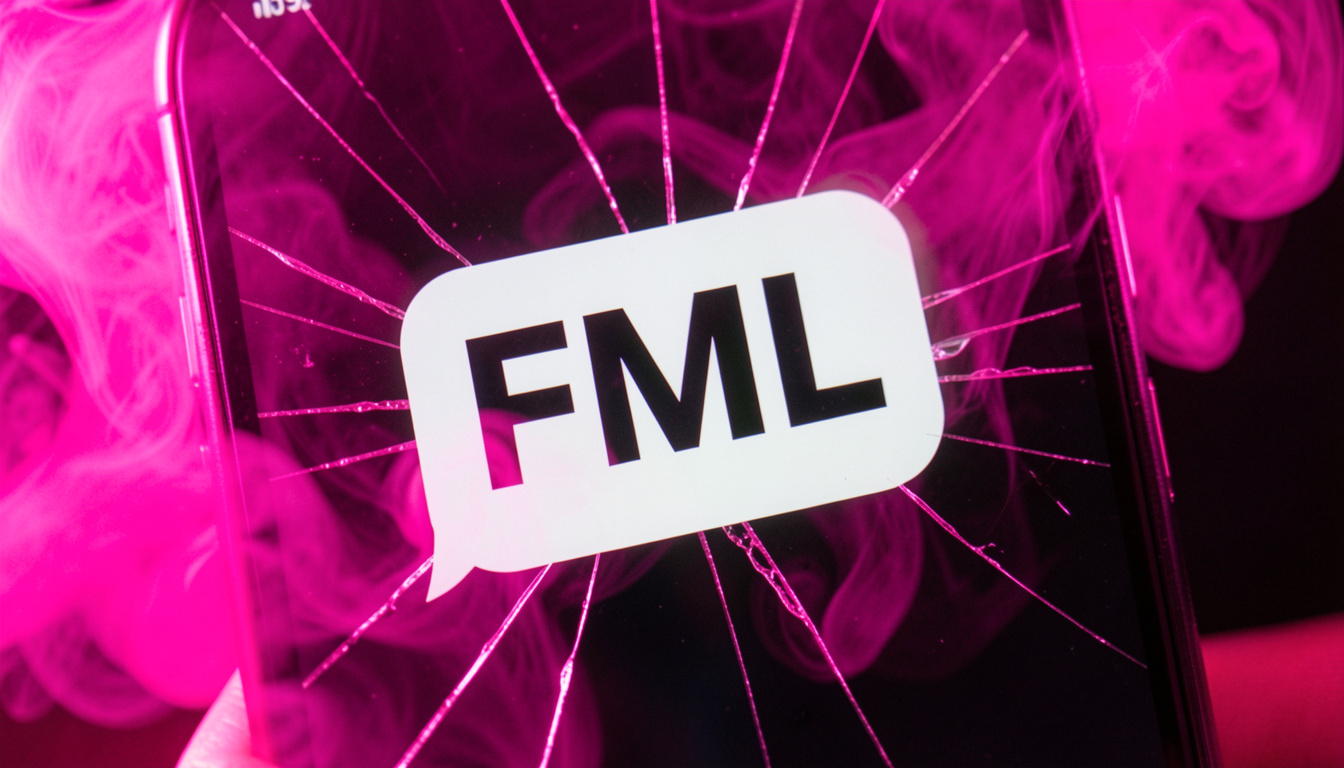

Ever seen “FML” in a text and immediately wondered whether the sender was joking, angry, or having the worst day imaginable?
You’re not alone.
A friend misses a flight and texts, “FML.” Someone spills coffee on a laptop before a big presentation. “FML.” A student studies all night, only to discover the exam was postponed. You guessed it “FML.”
This tiny three-letter acronym appears everywhere. Text messages. Social media posts. Group chats. Memes. Online forums. Yet many people still aren’t completely sure what it means, when to use it, or whether it’s considered offensive.
If you’ve been asking, “What does FML mean in text?” this guide breaks down everything you need to know, including its definition, origins, examples, proper usage, and how to respond when someone sends it.
What Does FML Mean in Texting?
Full Definition of FML
FML stands for “F* My Life.”**
It’s a popular internet slang acronym used to express frustration, disappointment, embarrassment, annoyance, or bad luck.
Most of the time, people use FML after something unfortunate happens. The phrase acts as a dramatic emotional reaction rather than a literal statement about their life.
For example:
“I forgot my wallet at home and only realized it at the checkout line. FML.”
The speaker isn’t genuinely giving up on life. They’re venting about an annoying situation.
What FML Stands For
The acronym consists of three letters:
- F = an expletive beginning with “F”
- M = My
- L = Life
Because the full phrase contains profanity, many people prefer using the abbreviation instead of writing it out completely.
That’s one reason it became so popular in texting language and digital communication.
Why People Use It
People use FML because it’s:
- Short
- Easy to type
- Widely recognized
- Emotionally expressive
- Often humorous
Instead of writing a long explanation about a frustrating experience, someone can simply add “FML” and instantly communicate their emotional reaction.
How Is FML Used in Conversations?
FML typically appears in casual conversation, online messaging, social media posts, and chat messages.
The common thread?
Something went wrong.
Everyday Frustrations
Many FML messages revolve around small annoyances.
Examples:
- Missing the bus by seconds
- Losing house keys
- Dropping your phone
- Forgetting a password
Example:
“Waited 20 minutes for food delivery and they brought the wrong order. FML.”
Embarrassing Moments
Embarrassment fuels countless FML posts.
Consider this:
“Waved at someone who wasn’t actually waving at me. FML.”
Almost everyone can relate.
The awkwardness is exactly what makes the expression effective.
Bad Luck Situations
Sometimes life simply refuses to cooperate.
Examples include:
- Flat tires
- Missed flights
- Lost luggage
- Broken devices
Example:
“Flight delayed four hours and now I’ve missed my connection. FML.”
Humorous Complaints
One interesting thing about FML is that it’s often funny.
People exaggerate everyday inconveniences for comedic effect.
Example:
“Bought ice cream. Dropped it before the first bite. FML.”
The situation isn’t catastrophic. That’s the joke.
Examples of FML in Text Messages
Context matters.
Here are some realistic examples showing how people use the acronym in different situations.
Example #1: School Problems
Student 1: Did you finish the assignment?
Student 2: Yeah, but I uploaded the wrong file.
Student 2: FML.
The phrase communicates immediate frustration.
Example #2: Work Mishaps
Coworker: How did the presentation go?
Employee: My laptop froze five minutes before I started.
Employee: FML.
Here, the acronym expresses annoyance and stress.
Example #3: Relationship Issues
Friend: Any update on your date?
Friend 2: They canceled 30 minutes before dinner.
Friend 2: FML.
The message conveys disappointment.
Example #4: Travel Disasters
Traveler: Guess what.
Friend: What happened?
Traveler: My suitcase went to a different country.
Traveler: FML.
Classic travel frustration.
Is FML Offensive?
This is one of the most common questions people ask.
The answer depends on context.
Why Some People Consider It Profane
The full version of FML contains a swear word.
Even though most people only use the abbreviation, many still recognize its meaning immediately.
Because of that, some audiences may view it as offensive.
Particularly:
- Employers
- Teachers
- Professional clients
- Older audiences
- Formal organizations
Appropriate vs Inappropriate Situations
Generally acceptable:
- Text messages
- Social media
- Group chats
- Friends
- Online communities
Generally inappropriate:
- Business emails
- Professional presentations
- Academic papers
- Job interviews
- Workplace reports
A simple rule works well:
If you wouldn’t comfortably say the full phrase aloud, don’t use the acronym either.
Should You Use It at Work?
Usually not.
Professional communication requires careful language choices.
Instead of writing:
“Server crashed again. FML.”
Try:
“The server experienced another outage. We’re investigating the issue.”
Same message. Better professionalism.
Is FML Always Serious?
Not even close.
In fact, many uses are intentionally dramatic.
Humor vs Genuine Frustration
Most people use FML somewhere between humor and annoyance.
Think of it as emotional shorthand.
Someone spilling coffee might say:
“Spilled coffee on my white shirt before the meeting. FML.”
They’re frustrated.
But they’re also joking.
Understanding Tone Through Context
Tone depends heavily on the surrounding message.
Look for clues:
Humorous tone
- Funny stories
- Self-deprecating jokes
- Everyday inconveniences
Serious tone
- Major personal setbacks
- Significant disappointment
- Emotional distress
Context always wins.
Social Media Usage Trends
Social media helped transform FML into a mainstream online expression.
You’ll frequently see it paired with:
- Memes
- Viral videos
- Funny screenshots
- Relatable content
- Sarcastic posts
The acronym fits perfectly into modern online culture because it communicates emotion quickly.
Where Did FML Originate?
Internet slang doesn’t appear out of nowhere.
Neither did FML.
Early Internet Culture
FML gained popularity during the rise of online forums and internet communities in the 2000s.
Users began sharing short stories about unfortunate situations.
The phrase quickly became a recognizable way to summarize those experiences.
Message Boards and Forums
Discussion boards played a major role in spreading the acronym.
People posted stories involving:
- Bad luck
- Embarrassment
- Dating failures
- Workplace disasters
The community often responded with sympathy—or laughter.
Sometimes both.
Rise of Texting Slang
As SMS messaging became more popular, shorter forms of communication became essential.
People embraced acronyms such as:
- LOL
- BRB
- OMG
- IDK
- FML
The fewer characters required, the better.
FML fit perfectly into that environment.
How Should You Respond to FML?

A good response depends on the situation.
Supportive Responses
If someone seems genuinely upset, empathy works best.
Examples:
- “That really sucks.”
- “I’m sorry that happened.”
- “Hope things improve soon.”
- “That’s rough.”
Funny Responses
When the sender is clearly joking, humor can help.
Examples:
- “That’s definitely an FML moment.”
- “Life chose violence today.”
- “At least it can’t get worse… probably.”
Responses for Close Friends
Friends often mix support and humor.
Examples:
- “You need a restart button.”
- “What happened this time?”
- “Tell me everything.”
Read the mood before responding.
That’s the key.
Similar Texting Acronyms You Should Know
Internet slang evolves constantly.
Understanding related acronyms helps you communicate more naturally.
SMH
SMH = Shaking My Head
Used when something is disappointing, ridiculous, or frustrating.
Example:
“He forgot his passport again. SMH.”
TBH
TBH = To Be Honest
Often used before sharing an honest opinion.
Example:
“TBH, I didn’t expect that outcome.”
LOL
LOL = Laughing Out Loud
One of the most recognizable internet acronyms.
Example:
“That meme is hilarious. LOL.”
IKR
IKR = I Know, Right?
Shows agreement.
Example:
“That movie ending was wild.”
“IKR.”
YOLO
YOLO = You Only Live Once
Used to justify spontaneous decisions.
Example:
“Booked a last-minute trip. YOLO.”
IDC
IDC = I Don’t Care
Communicates indifference.
Example:
“IDC what restaurant we choose.”
FML vs SMH vs “I’m Cooked”
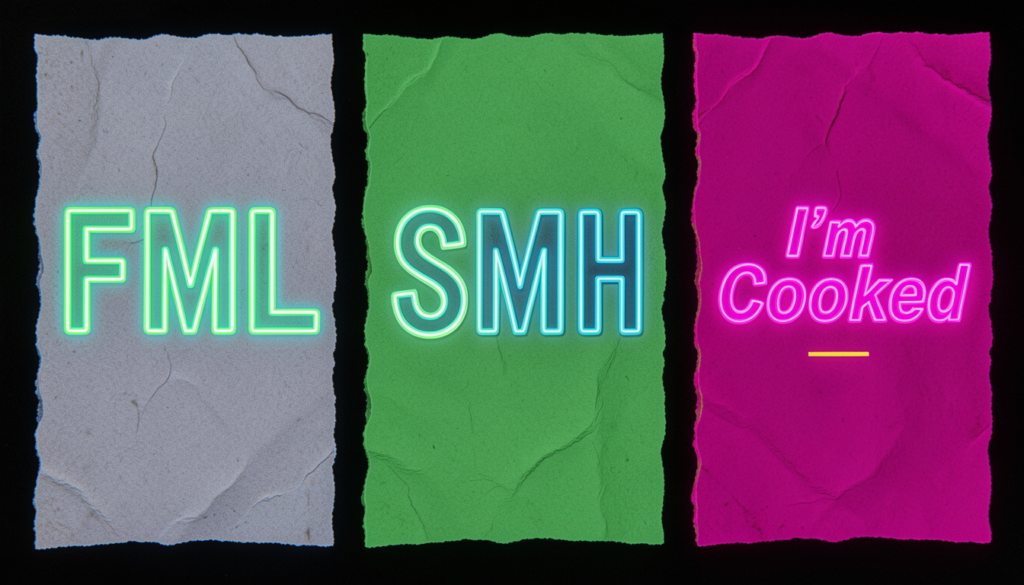
Many people use these expressions interchangeably, but they aren’t identical.
| Expression | Primary Meaning | Typical Emotion |
|---|---|---|
| FML | Something unfortunate happened to me | Frustration |
| SMH | Disapproval or disappointment | Annoyance |
| I’m Cooked | Situation feels hopeless | Defeat |
| LOL | Something is funny | Amusement |
Understanding the difference helps you choose the right expression for the moment.
Frequently Asked Questions
What does FML stand for?
FML stands for “F*** My Life.” It’s an internet slang acronym used to express frustration, disappointment, embarrassment, or bad luck.
Is FML rude?
It can be. Since the full phrase contains profanity, some people consider it inappropriate in formal settings.
Can I say FML at work?
Generally, no. Professional communication should avoid slang that references profanity.
Is FML used by Gen Z?
Yes. Gen Z, Millennials, and many social media users still recognize and use the acronym regularly.
What should I reply to FML?
Respond with empathy, humor, or support depending on the context and relationship.
What is another way to say FML?
Common alternatives include:
- Just my luck
- Well, that sucks
- SMH
- I’m cooked
- What a disaster
- Seriously?
Final Takeaway
If you’ve ever wondered about the FML meaning in text, the explanation is straightforward.
FML stands for “F*** My Life” and serves as a quick way to express frustration, disappointment, embarrassment, or bad luck. Despite the dramatic wording, it’s usually not meant literally. Most people use it as a humorous complaint about everyday inconveniences.
Before using it yourself, remember a few simple guidelines:
- Keep it casual.
- Avoid professional settings.
- Pay attention to tone.
- Consider your audience.
The next time a friend texts “FML,” you’ll know exactly what they’re communicating—and probably have the perfect response ready.