
You spotted “CC me on that” in a message and paused for a second. Maybe it showed up in a group chat, an email, or a TikTok comment. Either way, you’re probably wondering: what does CC mean in text, and why do people keep using it?
You’re not alone.
CC is one of those abbreviations that seems obvious once you know it, yet confusing because its meaning changes depending on where you see it. In some conversations, it means Carbon Copy. On social media, it can mean Credit. In video content, it often refers to Closed Captions.
The good news? The meaning is usually easy to figure out once you understand the context.
Quick Answer: What Does CC Mean in Text?
In most text messages and online conversations, CC means “Carbon Copy.”
It refers to including another person in a conversation, message, or communication so they stay informed about what’s being discussed.
For example:
“CC John when you send the update.”
This means John should receive a copy of the message as well.
Depending on the platform, CC can also mean:
- Credit
- Closed Captions
- Crowd Control
- Credit Card (less common)
Let’s break down each meaning and when people actually use it.
What Does CC Mean in Text?
The most common CC meaning in text is Carbon Copy.
The term originally came from office paperwork. Before computers existed, people used carbon paper to create duplicate copies of documents. One copy went to the primary recipient, while additional copies were distributed to others who needed the information.
That idea carried over into digital communication.
Today, when someone says “CC,” they’re usually talking about including another person in a message so they remain informed without being the primary recipient.
CC = Carbon Copy
Think of CC as a visibility tool.
It allows you to:
- Include someone in a conversation
- Keep team members informed
- Share updates with multiple people
- Notify stakeholders without making them responsible for replying
Example:
Sarah: “Can you send the project timeline?”
Mike: “Sure. I’ll CC Emma so she knows the deadline too.”
Emma isn’t necessarily expected to respond. She’s simply being kept in the loop.
Why It’s Used in Text Messages
People use CC because communication often involves more than two people.
Instead of forwarding information later, you can immediately include everyone who should see the conversation.
Common reasons include:
- Keeping managers informed
- Updating teammates
- Sharing school project information
- Coordinating events
- Preventing misunderstandings
In digital messaging, transparency saves time.
Example Conversations
Here are a few everyday examples:
- “CC me when you send the report.”
- “I’ll CC Alex on the email.”
- “Can you CC the whole team?”
- “Please CC the teacher on your submission.”
- “CC Jessica so she’s aware of the changes.”
Where Did the Term CC Come From?
Most people use CC without knowing its surprisingly old history.
Carbon Copy Origins
Before photocopiers became common, offices used carbon paper.
A sheet of carbon-coated paper was placed between two pieces of paper. When someone typed or wrote on the top sheet, the pressure transferred the writing onto the second sheet.
That duplicate became known as a carbon copy.
The abbreviation “CC” eventually appeared on business letters to indicate who received additional copies.
For example:
CC: Marketing Department
This told readers that the marketing department had received a copy of the same document.
Transition to Digital Communication
When email became popular in the 1990s and early 2000s, software developers borrowed the same concept.
The CC field allowed users to send identical copies of messages to multiple recipients.
From there, the term spread into:
- Text messaging
- Workplace chat platforms
- Group chats
- Social media conversations
- Online collaboration tools
The technology changed. The purpose stayed the same.
CC Meaning in Email
Email is where CC is still used most frequently.
When you add someone to the CC field, every recipient can see that person’s email address.
This creates transparency.
When to Use CC
Use CC when:
- Someone should be informed
- A supervisor needs visibility
- A team member should follow the discussion
- Multiple departments are involved
- You want everyone aware of important updates
Example:
You send a project update to a client and CC your manager.
The client receives the information directly, while your manager stays informed.
When Not to Use CC
Avoid CC when:
- Recipient privacy matters
- Large groups don’t need visibility
- Someone has no connection to the conversation
- Sensitive information is involved
Overusing CC can clutter inboxes and create unnecessary notifications.
Real Email Example
To: Client
CC: Project Manager
Subject: Website Launch Update
In this situation, the project manager can monitor progress without becoming the primary contact.
CC vs BCC: What’s the Difference?
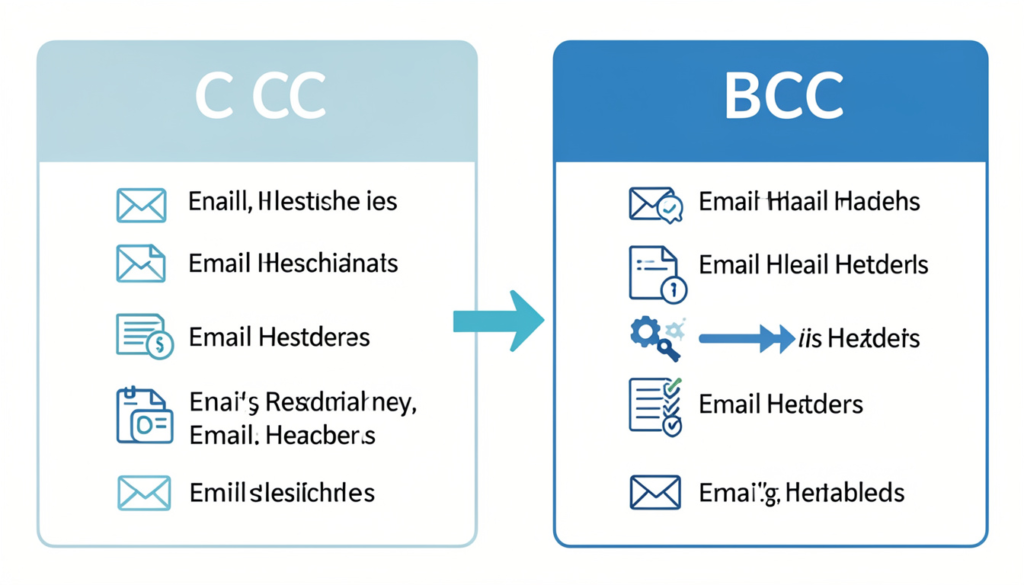
This is one of the most common questions people ask.
What Is BCC?
BCC stands for Blind Carbon Copy.
Unlike CC, BCC hides recipients from one another.
If you BCC someone, other recipients cannot see that they received the message.
CC vs BCC Comparison
| Feature | CC | BCC |
|---|---|---|
| Recipient visibility | Visible | Hidden |
| Used for awareness | Yes | Yes |
| Privacy protection | No | Yes |
| Team collaboration | Excellent | Limited |
| Mass emails | Not ideal | Better choice |
A simple rule:
- Use CC when visibility is helpful.
- Use BCC when privacy is important.
What Does CC Mean on Social Media?
Things get more interesting here.
On social media platforms, CC doesn’t always mean Carbon Copy.
Context matters.
CC Meaning on TikTok
On TikTok, CC frequently means Credit.
Creators use it to acknowledge the original source of content, ideas, edits, or inspiration.
Example:
“CC: @username”
This tells viewers who deserves recognition.
CC Meaning on Instagram
Instagram users often use CC in a similar way.
You’ll see it in:
- Reels
- Story reposts
- Photography edits
- Design inspiration posts
Giving creator credit helps maintain transparency and proper attribution.
CC as Creator Credit
Content creators rely heavily on crediting original work.
Examples:
- “CC to the original creator.”
- “Photo edit CC @artistname.”
- “CC for inspiration.”
This meaning has become increasingly common among younger social media users.
CC as Closed Captions
Another growing definition is Closed Captions.
Video creators often write:
- “CC available”
- “Turn on CC”
- “English CC included”
In this context, CC refers to on-screen text that helps viewers follow spoken content.
Closed captions are especially valuable for:
- Accessibility
- Language learners
- Watching videos without sound
- Hearing-impaired audiences
What Does “CC Me” Mean?
When someone says “CC me,” they’re asking to be included.
The exact meaning depends on the setting.
In Work Messages
Example:
“CC me when you email the client.”
The speaker wants a copy of the communication.
In Group Chats
Example:
“CC me if plans change.”
The person wants updates and notifications.
In School or Team Projects
Example:
“CC me on the final version.”
This ensures everyone remains informed throughout the project.
The phrase is essentially shorthand for:
“Keep me informed.”
Common Examples of CC in Texting
Here are some examples you’ll encounter online:
- “CC me on the email.”
- “I’ll CC the whole team.”
- “Can you CC my professor?”
- “CC Alex so he sees this.”
- “Please CC me when it’s finished.”
- “CC everyone involved.”
- “Don’t forget to CC management.”
- “CC Sarah on future updates.”
- “I’ll CC the organizer.”
- “CC the original creator.”
- “Video includes CC.”
- “Turn on CC for subtitles.”
- “CC the client before sending.”
- “CC me if anything changes.”
- “Can someone CC the project lead?”
Common Mistakes People Make With CC
Even experienced professionals misuse CC from time to time.
Confusing CC and BCC
This is easily the most common mistake.
Remember:
- CC = visible recipients
- BCC = hidden recipients
Sending sensitive contact information through CC can expose recipient details.
Using CC Too Often
Not everyone needs every update.
Adding unnecessary people creates inbox fatigue and excessive notifications.
Before you CC someone, ask:
Do they genuinely need this information?
Assuming CC Always Means Carbon Copy
This causes confusion on social media.
A TikTok user saying “CC the creator” probably means Credit, not Carbon Copy.
Likewise, “CC available” usually means Closed Captions.
Context is everything.
Other Meanings of CC You Should Know
While Carbon Copy remains the most common definition, a few other meanings appear regularly.
Credit
Popular on TikTok, Instagram, and creator communities.
Example:
“CC @designer”
Meaning:
Give credit to the designer.
Closed Captions
Common in video content.
Example:
“English CC available.”
Meaning:
Captions are available for viewers.
Crowd Control
Used in gaming, security, and event management.
Example:
“The tank character has strong CC abilities.”
Meaning:
The character can control enemy movement.
Credit Card
Occasionally used in casual texting.
Example:
“I’ll pay with my CC.”
Meaning:
Credit card.
This usage is less common but still appears occasionally.
Frequently Asked Questions
What does CC mean in a text message?
CC usually means Carbon Copy, which indicates another person is included in the conversation for awareness or information.
Does CC mean the same thing in texting and email?
Mostly yes. In both cases, it generally means Carbon Copy. Social media may use CC differently to mean Credit or Closed Captions.
What is the difference between CC and BCC?
CC allows everyone to see recipients. BCC hides recipients from one another.
What does CC mean on TikTok?
On TikTok, CC often means Credit and is used to acknowledge original creators.
What does “CC me” mean?
It means include me in the conversation or send me a copy of the message.
Is CC internet slang?
Not exactly. CC is an abbreviation that originated in traditional business communication and later expanded into digital messaging.
Final Answer: What Does CC Mean in Text?
If you’re looking for the simplest answer, here’s the one to remember:
CC most commonly stands for Carbon Copy. It means someone is included in a message, email, or conversation so they can stay informed.
That said, context matters. On social media, CC may mean Credit. In videos, it often means Closed Captions. Less commonly, it can refer to Crowd Control or Credit Card.
Whenever you see CC, take a quick look at the platform and the conversation. In most cases, the meaning becomes obvious immediately.