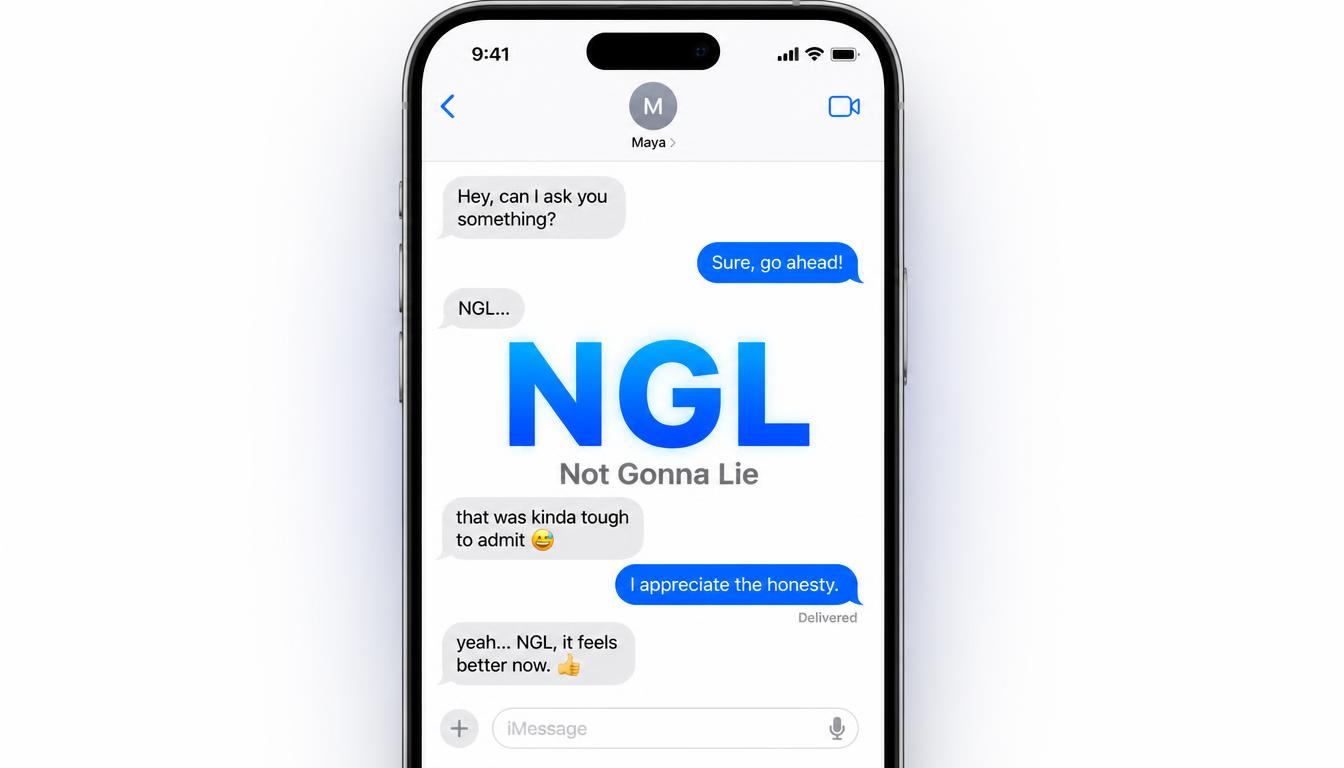

Have you ever received a message that starts with “NGL” and wondered what the person actually means? In today’s fast-moving digital world, texting slang changes quickly, and new internet abbreviations appear almost every day. If you are asking “What does NGL mean in text?”, the simple answer is: NGL stands for “Not Gonna Lie.”
People use NGL in text messages, social media posts, online chats, and direct messages (DMs) to introduce an honest opinion, confession, compliment, or personal thought. It adds a casual and conversational feeling to a message, almost like saying, “Honestly…” or “I have to admit…”
For example:
NGL, this movie was way better than I expected.
The person is signaling that they are about to share a genuine opinion. It makes the message feel more personal and relatable.
In this complete guide, we’ll explain the NGL meaning in text, its origin, how to use it correctly, examples from real conversations, differences between NGL and similar slang terms like TBH, and even explain another meaning of NGL related to the NGL anonymous messaging app.
What Does NGL Stand For?
NGL means “Not Gonna Lie.”
It is an internet slang acronym commonly used before sharing an honest statement, personal opinion, or unexpected reaction.
The phrase works as a conversational introduction. Instead of simply saying:
“I love this song.”
Someone might write:
“NGL, I love this song.”
The second version sounds more casual and emphasizes that the speaker is being honest.
Quick Meaning of NGL
| Term | Meaning | Common Use |
|---|---|---|
| NGL | Not Gonna Lie | Honest opinions, confessions, reactions |
| TBH | To Be Honest | Sharing an opinion or judgment |
| IMO | In My Opinion | Expressing a viewpoint |
| IDK | I Don’t Know | Showing uncertainty |
The relationship is simple:
NGL → introduces → honest or candid statements
It does not usually provide new information by itself. Instead, it changes the tone of whatever comes after it.
Why Do People Use NGL in Text Messages?
People use NGL in texting because it makes conversations feel more natural and friendly. Digital communication often lacks facial expressions and voice tone, so small phrases like NGL help communicate emotions.
NGL can make a message sound:
- More honest
- More casual
- More relatable
- Less robotic
- More conversational
Compare these examples:
Without NGL:
Your new haircut looks good.
With NGL:
NGL, your new haircut looks really good.
The second message feels warmer and more like something a friend would say.
This is why NGL became popular among users of Instagram, Snapchat, TikTok, Twitter (X), and WhatsApp.
Origin and History of NGL
The phrase “Not Gonna Lie” existed in spoken English long before it became an online abbreviation. People have used similar expressions like “not going to lie” or “honestly” in everyday conversations for many years.
The abbreviation NGL became popular through internet culture and social media during the growth of short-form communication in the 2010s.
Platforms that encouraged quick posts and short messages helped slang abbreviations spread faster. Users wanted shorter ways to express emotions, opinions, and reactions.
The evolution looked something like this:
Spoken phrase “Not Gonna Lie” → shortened abbreviation NGL → popular texting slang
Social platforms such as Twitter, Snapchat, and TikTok helped make NGL common among younger internet users.
Today, NGL is used by teenagers, young adults, online communities, and even some workplace teams in informal conversations.
How to Use NGL Correctly in Texts
Using NGL is simple. In most cases, it appears at the beginning of a sentence before the main thought.
Common NGL Sentence Examples
- NGL, this restaurant has amazing food.
- NGL, I was nervous before the interview.
- NGL, your artwork looks incredible.
- NGL, I watched that series three times.
- NGL, I didn’t expect the ending.
The structure is usually:
NGL + comma + honest statement
Example:
NGL, I forgot about the meeting.
The abbreviation prepares the reader for a confession.
Where Is NGL Commonly Used?
NGL on Instagram
On Instagram, users often add NGL to captions, comments, and stories.
Examples:
- “NGL, this sunset is beautiful.”
- “NGL, this outfit is my favorite.”
Instagram users use it to make posts feel more personal instead of overly polished.
NGL on Snapchat
On Snapchat, NGL often appears in quick conversations between friends.
Examples:
- “NGL, your snap streak is impressive.”
- “NGL, that filter looks funny.”
Because Snapchat focuses on casual messaging, NGL fits naturally into the platform’s communication style.
NGL on TikTok
On TikTok, creators and viewers use NGL when reacting to videos, trends, and opinions.
Examples:
- “NGL, this trend is actually fun.”
- “NGL, I watched this video five times.”
TikTok trends often spread slang quickly because users copy phrases from viral content.
NGL on WhatsApp and Private Chats
In private messaging, NGL is commonly used for:
- Personal confessions
- Friendly compliments
- Reactions
- Humor
Example:
“NGL, I miss our old conversations.”
NGL vs TBH: What Is the Difference?
Many people confuse NGL with TBH (To Be Honest) because both introduce honesty.
However, they have slightly different meanings.
| Slang | Full Form | Main Purpose |
|---|---|---|
| NGL | Not Gonna Lie | Casual confession or honest reaction |
| TBH | To Be Honest | Direct opinion or judgment |
Examples:
NGL:
NGL, I’m surprised you finished that project so quickly.
This expresses a personal reaction.
TBH:
TBH, I think this design needs more work.
This expresses an opinion.
A simple way to remember:
NGL focuses on honesty and personal feelings.
TBH focuses more on giving an opinion.
NGL Meaning vs Other Text Slang
Internet slang has many similar expressions. Understanding the differences helps you communicate better.
NGL vs IMO
IMO means “In My Opinion.”
Example:
IMO, this is the best game this year.
IMO directly signals an opinion.
NGL often sounds more emotional or personal.
NGL vs FWIW
FWIW means “For What It’s Worth.”
Example:
FWIW, I think you made the right choice.
FWIW is often used when offering advice or a perspective.
NGL vs FR
FR means “For Real.”
Example:
FR, that concert was amazing.
FR emphasizes agreement or seriousness, while NGL introduces honesty.
When Should You Use NGL?
NGL works best in informal situations.
Good places to use NGL:
- Text messages with friends
- Social media comments
- Casual online chats
- Gaming conversations
- Personal posts
Examples:
NGL, that game was harder than I expected.
NGL, your cooking skills improved a lot.
NGL, I’m excited for the weekend.
However, context matters. The same phrase may not work everywhere.
When Should You Avoid Using NGL?
Although NGL is widely accepted in casual communication, it is still considered informal language. It is not suitable for every situation.
Avoid using NGL in:
- Formal business emails
- Job applications
- Academic papers
- Official reports
- Client presentations
For example, writing:
NGL, I think this proposal is great.
in a professional email may sound too casual.
A better professional alternative would be:
“I believe this proposal has strong potential.”
The meaning is similar, but the tone matches the situation.
The key relationship is:
Professional communication → requires → more formal language
while:
NGL → belongs to → casual digital communication
NGL in Professional Communication
Modern workplaces are changing, especially in creative industries and companies where teams communicate through platforms like Slack, Discord, or Microsoft Teams.
Some employees may casually use NGL in internal conversations.
Examples:
- “NGL, this presentation looks amazing.”
- “NGL, that coding issue was difficult to solve.”
However, it is better avoided when communicating with:
- Customers
- Business partners
- Managers in formal situations
- External organizations
Understanding your audience is important. The same phrase can sound friendly among coworkers but inappropriate in a formal business setting.
Common Mistakes When Using NGL
Even simple slang can be misunderstood if used incorrectly. Here are some common mistakes people make.
1. Using NGL Too Often
Adding NGL to every message can make conversations feel repetitive.
Incorrect:
NGL, I like this.
NGL, I ate lunch.
NGL, I watched TV.
When every sentence starts with NGL, the expression loses its impact.
Use it when you genuinely want to highlight honesty.
2. Using NGL Before a False Statement
The purpose of NGL is to introduce honesty.
Using it before something obviously untrue can confuse people.
Example:
NGL, I never use my phone.
This sounds unrealistic for most people.
3. Using NGL for Harsh Criticism
NGL can introduce negative opinions, but the tone matters.
Example:
NGL, your idea is terrible.
This may sound rude.
A softer version:
NGL, I think the idea needs some improvement.
The phrase should support honest communication, not become an excuse for being disrespectful.
4. Using NGL in the Wrong Place
Most people put NGL at the beginning of a sentence.
Natural:
NGL, this song is catchy.
Less common:
This song is NGL catchy.
The first structure sounds more natural in online conversations.
How NGL Changes the Tone of a Message
A major reason people use NGL in text messages is because it changes how a sentence feels.
Compare:
Neutral:
I didn’t like the movie.
With NGL:
NGL, I didn’t like the movie.
The second version sounds more like a personal confession rather than a direct criticism.
NGL can make messages feel:
- More approachable
- More honest
- Less serious
- More conversational
It acts as a tone marker in digital communication.
What Does NGL Mean on the NGL App?
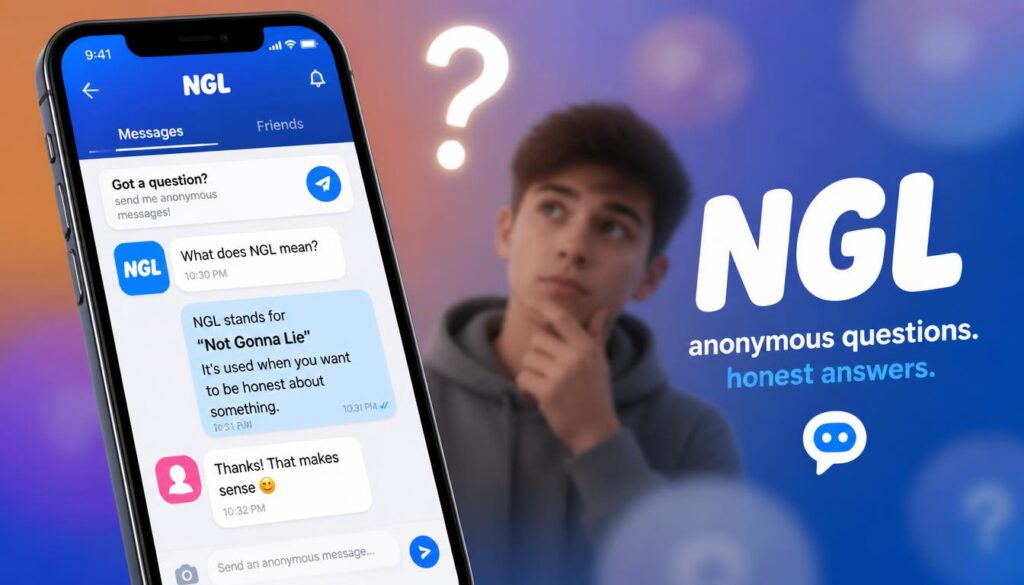
One important thing many articles miss is that NGL can have another meaning besides “Not Gonna Lie.”
NGL is also the name of an anonymous messaging app that became popular on social media.
The NGL app allows users to share a link where friends or followers can send anonymous messages.
For example, someone may post:
“Send me anonymous messages on NGL.”
In this context, NGL does not mean “Not Gonna Lie.” It refers to the application itself.
This creates two different meanings:
| NGL Meaning | Context |
|---|---|
| Not Gonna Lie | Text slang and online conversations |
| NGL App | Anonymous messaging platform |
Understanding the context solves the confusion.
If someone writes:
NGL, I love this song.
They are using the slang meaning.
If someone writes:
Ask me something anonymously through my NGL link.
They are referring to the app.
Is the NGL Anonymous Messaging App Really Anonymous?
The NGL app became popular because of anonymous questions and messages. Users often share their personal NGL links on platforms like Instagram.
However, users should remember that online anonymity is not always absolute.
People should avoid sharing:
- Private information
- Sensitive personal details
- Passwords
- Financial information
Like any online platform, responsible use is important.
NGL Meaning on Different Platforms
The meaning of NGL stays mostly the same across platforms, but the way people use it changes slightly.
Usually appears in:
- Stories
- Captions
- Comments
- Replies
Example:
NGL, this picture turned out amazing.
TikTok
Commonly used for:
- Video reactions
- Trend comments
- Creator opinions
Example:
NGL, this challenge is harder than it looks.
Snapchat
Often appears in:
- Private chats
- Snaps
- Friend conversations
Example:
NGL, that filter is hilarious.
Gaming Communities
Gamers use NGL when sharing reactions.
Examples:
- “NGL, that boss fight was impossible.”
- “NGL, this update is better than expected.”
NGL Alternatives You Can Use
If you want to express honesty but avoid repeating NGL, there are several alternatives.
“Honestly”
Example:
Honestly, I really enjoyed that movie.
“To Be Honest (TBH)”
Example:
TBH, I wasn’t expecting that result.
“I Have to Admit”
Example:
I have to admit, your idea was clever.
“For Real (FR)”
Example:
FR, that was one of the funniest videos.
Each phrase creates a slightly different feeling, but all communicate sincerity.
Popular NGL Text Templates
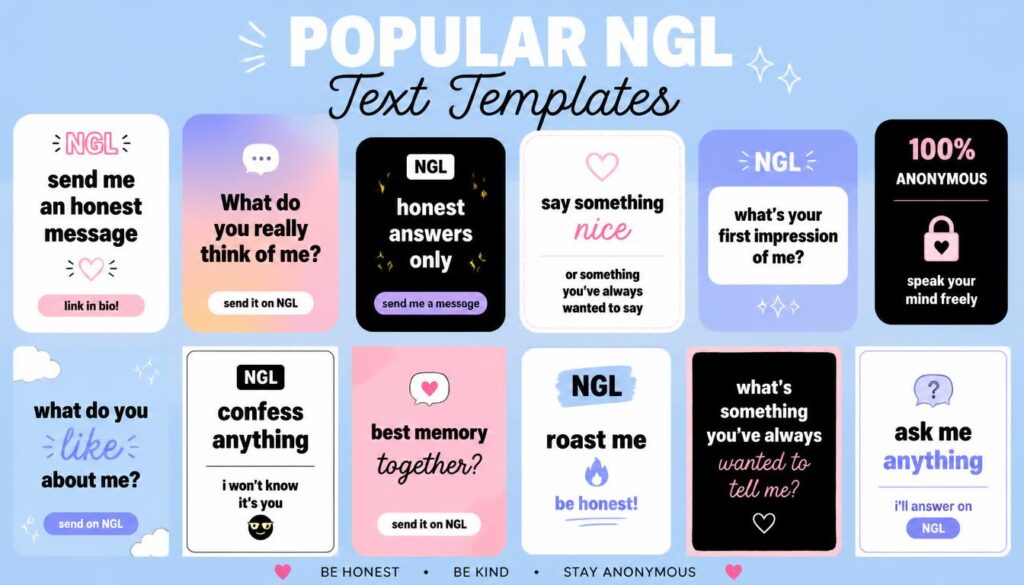
Here are some natural examples you can use:
- NGL, this song is stuck in my head.
- NGL, I’m proud of myself today.
- NGL, that was the funniest thing I’ve seen.
- NGL, your advice really helped me.
- NGL, I didn’t expect that ending.
- NGL, this food looks delicious.
- NGL, I’m excited about this new project.
- NGL, that outfit looks great on you.
These examples show why NGL became popular: it turns simple statements into more personal conversations.
Frequently Asked Questions About NGL
What does NGL mean in texting?
NGL means “Not Gonna Lie.” It is a casual texting abbreviation used before an honest opinion, confession, compliment, or personal reaction. People commonly use it in social media posts, messages, and online conversations to make their statements sound more natural and genuine.
Is NGL only used by teenagers?
No. While NGL is popular among younger internet users, including Gen Z, people of different ages use it in casual online communication. Anyone can use NGL when the situation is informal and the tone fits the conversation.
What is the difference between NGL and TBH?
NGL and TBH both express honesty, but they have slightly different purposes. NGL (“Not Gonna Lie”) usually introduces a personal feeling or confession, while TBH (“To Be Honest”) is more commonly used when sharing an opinion or judgment.
Can I use NGL in professional emails?
Generally, no. NGL is considered informal internet slang and is better suited for personal chats and social media. In professional emails, reports, or client communication, use formal phrases like “I believe,” “In my opinion,” or “I would suggest.”
Conclusion: Understanding the Real Meaning of NGL
So, what does NGL mean in text? The answer is simple: NGL means “Not Gonna Lie.”
This popular internet abbreviation helps people introduce honest thoughts, reactions, compliments, and confessions in a casual way. It became widely used through platforms like Instagram, Snapchat, TikTok, Twitter, and WhatsApp, where short and expressive communication is common.
Remember:
- Use NGL in casual conversations.
- Use it to introduce genuine thoughts.
- Avoid it in formal professional writing.
- Understand that NGL can also refer to the anonymous messaging app, depending on the context.
When used correctly, NGL makes digital conversations feel more human, friendly, and relatable.