
You’re mid-chat, messages flying back and forth, and then it hits you someone drops “OTW.” No context. No explanation. Just that three-letter blur sitting there like it’s supposed to be obvious.
What does OTW mean in text?
And why does everyone else seem to understand it except you?
It’s one of those tiny internet things that feels bigger than it should. A small abbreviation, but it can change how a conversation flows in real time.
Let’s break it down without overcomplicating it.
What Does OTW Mean in Text?
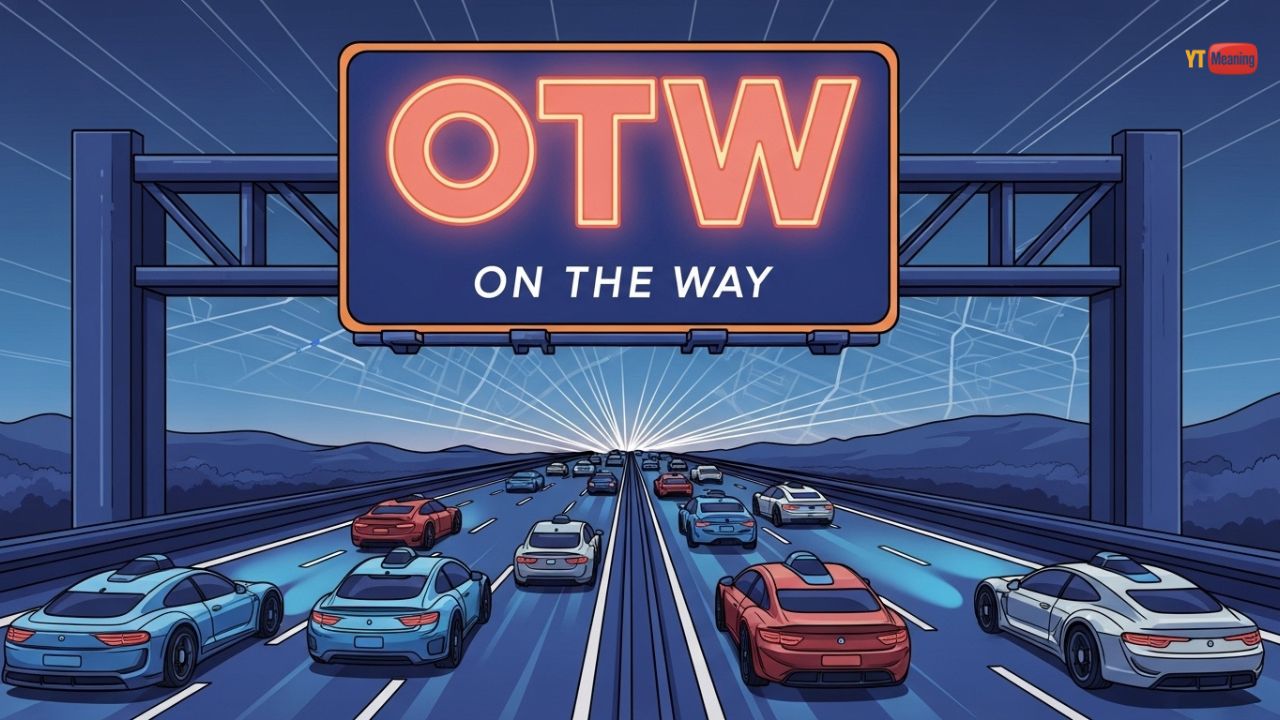
OTW means “On The Way.”
That’s the core meaning. No hidden layers, no secret alternate version in everyday texting. When someone sends “OTW,” they’re telling you they are moving toward a destination or about to arrive soon.
Simple. Direct. Very widely used in internet slang and text messaging.
But the nuance matters more than the definition.
Because OTW isn’t just information—it’s reassurance.
It answers the unspoken question: Are you coming or not?
OTW Full Form Explained
The full form of OTW is:
On The Way
In real-world digital communication, it shows up when someone is:
- Leaving their house
- Already traveling
- Running slightly late but actively moving
- Updating their status without sending a long message
It’s part of a broader shift in messaging shorthand, where people compress full sentences into fast, readable signals.
Instead of typing:
“I am on my way, I just left and will reach soon”
People simply write:
OTW
No friction. No extra words. Just intent.
How OTW Is Used in Real Conversations

This is where OTW starts to feel human.
It rarely appears alone in isolation. It lives inside conversations that already have motion, timing, and expectation built into them.
Here’s how it actually looks in real chats:
Example 1: casual meetup
- “Where are you?”
- “OTW, 10 mins”
Example 2: slightly late arrival
- “Still coming?”
- “Yes, OTW now”
Example 3: urgency without panic
- “Hurry bro”
- “OTW don’t start without me”
Notice something?
OTW doesn’t just mean movement. It also reduces pressure. It signals progress without overexplaining.
That’s why it thrives in platforms like WhatsApp, Instagram DMs, and Snapchat, where speed matters more than grammar.
OTW Full Form in Context (Not Just Words)
Here’s where many misunderstand it: OTW is not just an abbreviation. It’s a status update compressed into three letters.
Think of it like a real-time indicator inside digital communication systems.
Instead of saying:
- “I will be there soon”
It becomes:
- OTW
And that shift matters because it changes tone. It’s less formal, more immediate.
In texting culture, OTW sits alongside other high-frequency abbreviations like:
- BRB (Be Right Back)
- ETA (Estimated Time of Arrival)
- IDK (I Don’t Know)
All of them serve one purpose: reduce effort, preserve meaning.
Does OTW Have Other Meanings?
Yes—but they’re rare in everyday texting.
The secondary meaning is:
Off The Wall
This version shows up more in:
- Music references
- Pop culture discussions
- Branding or creative contexts
However, in 2026 messaging behavior across Gen Z slang terms and mobile chats, “On The Way” dominates almost entirely.
Context decides meaning. Always.
If someone texts:
“OTW rn”
They are not talking about creativity or abstract ideas. They’re just moving.
OTW in Social Media & Messaging Apps
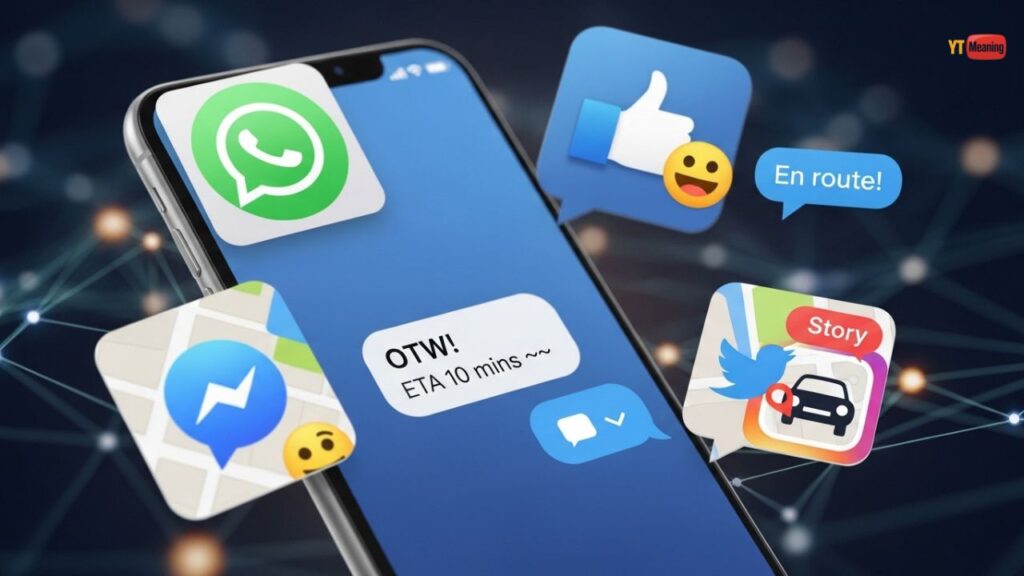
OTW behaves slightly differently depending on the platform, even though the meaning stays the same.
Fast coordination. Group chats. Family meetups. OTW often replaces longer updates like “leaving now.”
Instagram DMs
Used casually when making plans or replying to location-based meetups.
Snapchat
Even more compressed. Sometimes just:
- “otw”
- or even lowercase entirely
SMS
Older but still relevant in some regions. OTW fits perfectly into character-limited communication habits.
Across all of these, OTW functions as messaging shorthand for movement and timing.
OTW vs Other Common Text Abbreviations
This is where confusion usually clears up.
OTW vs ETA
- OTW = I am moving
- ETA = When I will arrive
One is action. The other is prediction.
OTW vs BRB
- OTW = heading somewhere
- BRB = temporarily away but not necessarily traveling
Different contexts entirely.
OTW vs OMW
This one gets tricky.
- OTW = On The Way
- OMW = On My Way
In practice, they overlap heavily. Some users prefer one over the other, but meaning stays identical in most text slang meaning contexts.
When Should You Use OTW?
OTW works best when the situation is informal and time-sensitive.
Use it when:
- You are traveling somewhere
- Someone is waiting for you
- You want to confirm movement quickly
- You’re updating location status in a chat
Avoid it when:
- Writing formal emails
- Professional communication
- Official documentation
It belongs in casual language. Not structured writing.
Think of it as part of everyday mobile messaging behavior, not formal speech.
Frequently Asked Questions
What does OTW mean in text messages?
OTW means “On The Way.” It’s used to tell someone you are currently heading toward a place or about to arrive.
Is OTW only used for “On The Way”?
Mostly yes. In rare contexts, it can mean “Off The Wall,” but that usage is uncommon in texting.
How do you use OTW in a sentence?
You’ll usually see it in short replies:
- “OTW now”
- “I’m OTW, be there soon”
- “OTW 5 mins”
Does OTW mean urgent?
Not necessarily. It signals movement, not urgency. The urgency depends on surrounding context, not the abbreviation itself.
Is OTW slang or formal language?
It’s informal internet slang used in everyday conversations on chat apps and social media.
Where is OTW commonly used?
You’ll find it on:
- Instagram DMs
- Snapchat
- SMS conversations
Final Thoughts
OTW is one of those tiny digital shortcuts that carries more weight than it looks like on screen.
Three letters. That’s it.
But inside those letters sits timing, movement, and reassurance—all compressed into a quick signal people instantly understand once they’ve seen it a few times.
It’s not about language complexity. It’s about speed.
And in modern digital communication terms, speed wins almost every time.