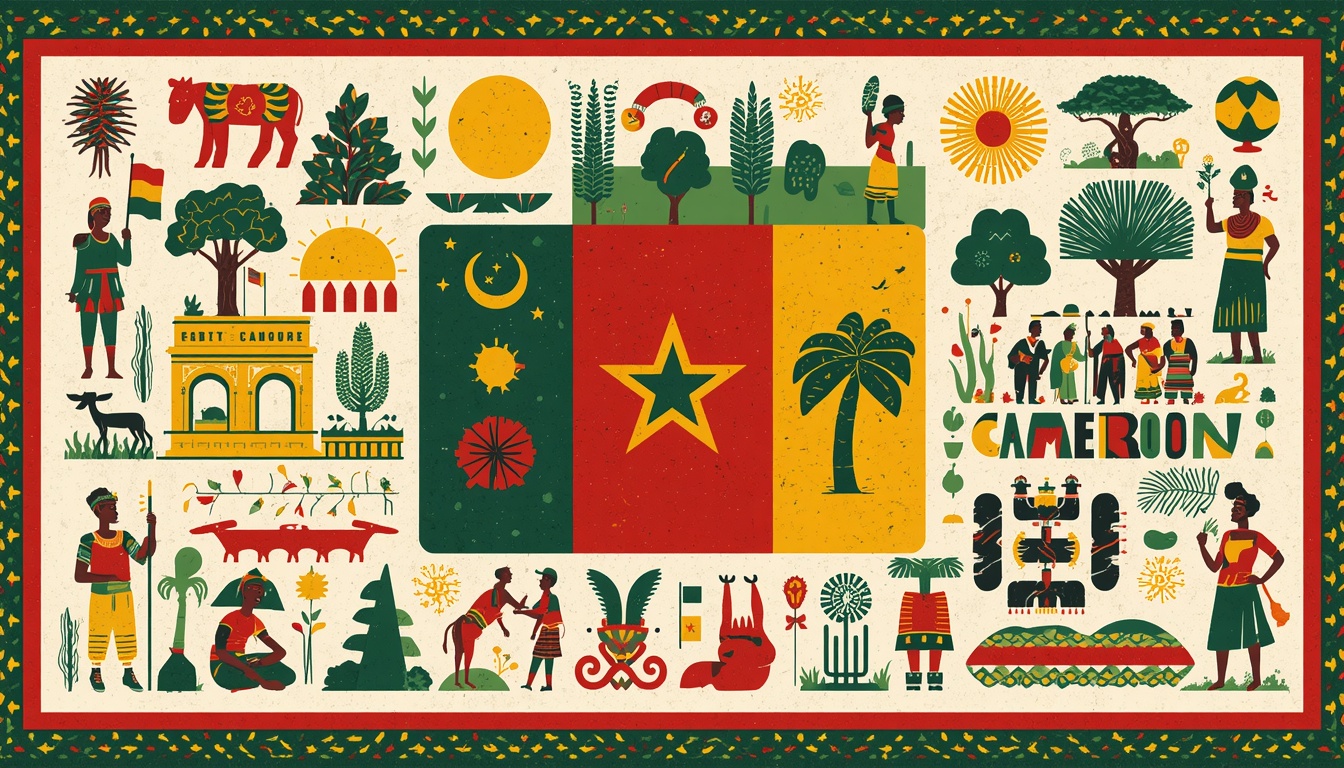

The word Cameroon carries a surprisingly unusual story. It is not simply an old local word that slowly became the name of a country. Its history reaches back to Portuguese explorers, a river estuary, an abundance of prawns, and a name that changed shape as different European powers arrived.
Today, when people search for Cameroon meaning, they are often really asking a few connected questions: What does Cameroon mean? Where did the name come from? Why is Cameroon called Cameroon? And what does the old expression Rio dos Camarões have to do with the modern country?
The answer begins along the coast, where the Wouri River meets the sea. Long before the modern Republic of Cameroon existed, Portuguese explorers encountered the river and noticed something that made the place memorable. There were so many prawns in the water that they gave it a rather descriptive name.
That little naming moment eventually traveled through centuries of exploration, German rule, French administration, British administration, and independence. So, the meaning of Cameroon is really a small window into the country’s much larger history.
What Does Cameroon Mean?
The simplest answer is that Cameroon comes from the Portuguese expression Rio dos Camarões, meaning “River of Prawns.” The expression was associated with the Wouri River estuary, where Portuguese explorers encountered large numbers of prawns or shrimp.
It sounds almost like a nickname somebody might give a river after seeing it on an unusually busy seafood day. But this simple description eventually became attached to the wider territory.
The Portuguese name was later adapted by other European languages. Over time, Camarões developed into forms such as Cameroon in English and Cameroun in French. The German form became Kamerun, which is another important version in the country’s history.
So, when someone asks about the Cameroon name meaning, “River of Prawns” is the key phrase to remember. The modern country’s name has a very old connection with the Wouri River.
What Is the Origin of Cameroon’s Name?
The origin of Cameroon’s name goes back to the Portuguese exploration of the West African coast during the 15th century.
Portuguese explorers reached the area around the Wouri River estuary and observed an unusually large number of prawns in its waters. They called the river Rio dos Camarões, a Portuguese expression translated as “River of Prawns.”
The name did not remain limited to the river itself. As European maps and geographical descriptions developed, the expression became associated with the surrounding territory. This is where the story gets a little interesting, because a name originally connected with one waterway eventually became the name of an entire modern nation.
The Portuguese word camarões refers to prawns or shrimp. The English form Cameroon therefore has a connection with an animal rather than with the name of a particular ruler, tribe, or ancient kingdom.
That is one reason the Cameroon etymology is so memorable. A major country’s modern name can be traced back to something as ordinary as prawns in a river.
What Does Rio dos Camarões Mean?
Rio dos Camarões literally means “River of Prawns.”
The expression was used by Portuguese explorers for the river and estuary they encountered in the region. That waterway is now known as the Wouri River, which flows through the coastal area of Cameroon.
The name reflected what the explorers saw around them. The river environment was rich in prawns, making the description natural enough to stick. Sometimes historical names are grand and complicated, but this one started with a very practical observation.
Imagine arriving somewhere unfamiliar after a long sea journey and finding a river filled with prawns. You might remember the place too, especially if the catch was plentiful. In this case, the Portuguese description survived for centuries.
This is why Rio dos Camarões meaning is so important when understanding the modern name Cameroon. Without this Portuguese expression, the origin of the country’s English name would be much harder to explain.
Why Is Cameroon Called Cameroon?
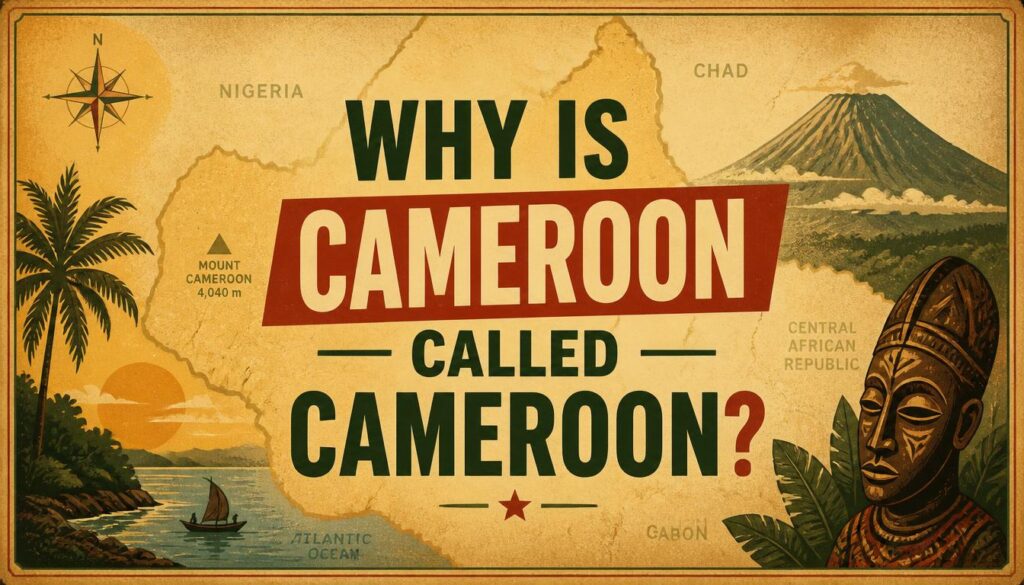
So, why is Cameroon called Cameroon?
The short answer is that the name developed from the Portuguese Rio dos Camarões, which referred to the Wouri River because of the abundance of prawns found there.
As European powers explored, mapped, and later controlled different parts of the region, the Portuguese name continued to influence the terminology used for the territory. The spelling changed depending on the language and political administration.
The Germans used Kamerun after establishing their protectorate in 1884. Under French administration, the territory became known as French Cameroun, while the British-controlled areas were known as the British Cameroons.
Eventually, the modern English form Cameroon became established as the country’s name.
It is a good example of how geographical names can travel through languages. One Portuguese phrase became a German colonial name, a French territorial name, and eventually the English name used for an independent African country.
How Did Cameroon Get Its Name From the Wouri River?
The connection between Cameroon and the Wouri River is central to the whole story.
The Wouri flows through the coastal region of Cameroon and reaches the Atlantic Ocean. Its estuary was the place where Portuguese explorers encountered large numbers of prawns.
The Portuguese called the waterway Rio dos Camarões, or River of Prawns. Later geographical usage extended the name beyond the immediate river environment.
This means the Cameroon name history is closely connected to the country’s coastal geography. The name wasn’t created randomly on a European map. It came from an observation made at a particular place.
The Wouri River therefore has more than geographical importance in this story. It is also part of the linguistic history behind the country’s modern identity.
The Name Kamerun Under German Rule
The next major stage in the story came in the late 19th century.
In 1884, Germany established a protectorate over the territory and used the name Kamerun. The spelling was German, but its deeper historical connection still reached back to the Portuguese Camarões.
This period introduced a new political chapter. The territory was no longer simply a place appearing in European geographical descriptions; it became part of a formal colonial system.
The word Kamerun is therefore an important historical name to know. If you encounter it in older documents, maps, or discussions of colonial history, it refers to the territory that became modern Cameroon.
The spelling changed, but the basic naming lineage remained surprisingly stable.
French Cameroun and British Cameroons
After the First World War, the territory was divided between French and British administration. This created two commonly used historical names: French Cameroun and the British Cameroons.
French Cameroun covered the larger eastern portion and was administered by France. The British Cameroons consisted of territories administered by Britain.
The difference in administration also meant different political, educational, and linguistic influences. French and English developed important roles in the territories, a legacy that can still be seen in Cameroon today.
The older Portuguese name was therefore only the beginning. Over several centuries, the name passed through Portuguese, German, French, and English contexts.
It is almost like watching one word pack its bags several times without ever completely disappearing.
When Did Cameroon Become Independent?
The modern Republic of Cameroon emerged from the end of colonial rule.
The French-administered territory achieved independence on January 1, 1960, becoming the independent Republic of Cameroon. Ahmadou Ahidjo became the country’s first president.
But the story did not stop there because the former British Cameroons still had an important political decision to make.
In February 1961, a United Nations-supervised plebiscite was held in the British Cameroons. The southern portion chose to unite with the former French-administered territory, while the northern portion chose union with Nigeria.
The southern British Cameroons therefore joined with the Republic of Cameroon, contributing to the creation of the Federal Republic of Cameroon.
The country’s political history became complicated, but the old geographical name continued through all these changes.
From French and British Territories to the Republic of Cameroon
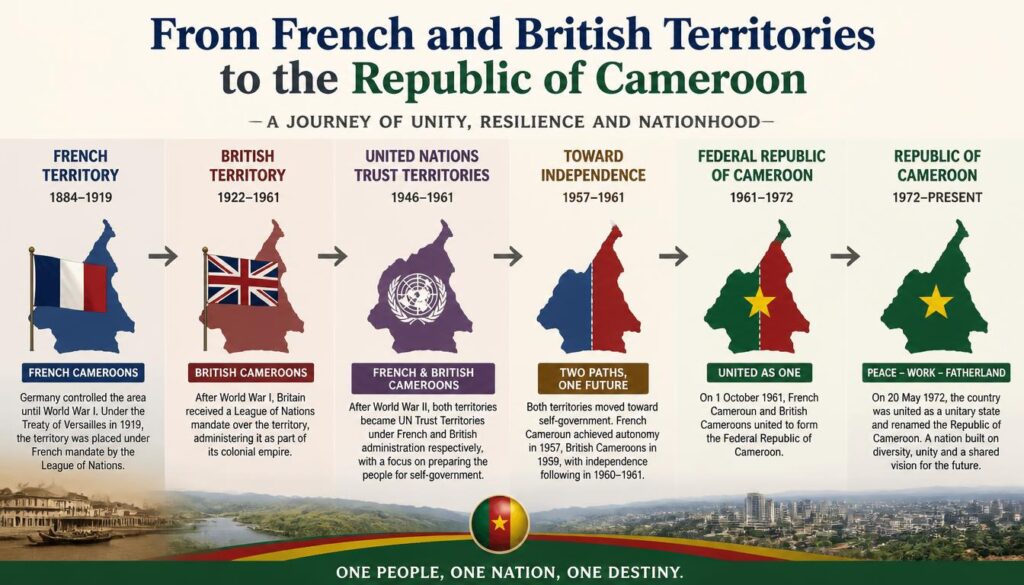
The formation of the modern state brought together territories that had experienced different colonial administrations.
The name Cameroon eventually became the common national name, even though the country contained communities shaped by both French and British colonial histories.
This is why the word has more depth than its literal translation suggests. “River of Prawns” explains the linguistic origin, but it does not describe the entire historical identity of the nation.
The modern Republic of Cameroon contains layers of Portuguese exploration, German colonial history, French administration, British administration, independence, and political reunification.
A small word, really, carrying a very large suitcase.
Cameroon Meaning and the Geography Behind the Name
The meaning of Cameroon becomes even more interesting when viewed alongside the country’s physical geography.
Cameroon contains a remarkable variety of landscapes, including coastal plains, forested areas, savanna, plateaus, and mountains. Its geography changes considerably from one part of the country to another.
The northern region includes extensive savanna landscapes and areas containing distinctive rocky formations known as inselbergs. These isolated hills and rock formations rise above surrounding plains, creating landscapes quite different from the humid south.
The central part of Cameroon includes rising elevations and broad areas of plateau. Moving farther south, the landscape becomes increasingly associated with forests and coastal areas.
The western region is known for stronger mountainous relief, giving the country a physical landscape that is much more varied than the simple image suggested by the name’s river-based origin.
So, while “River of Prawns” explains the Cameroon meaning, it certainly does not capture the country’s complete geographical character.
The Difference Between Cameroon, Cameroun, and Kamerun
You may see three different forms when researching the history of the country: Cameroon, Cameroun, and Kamerun.
Cameroon is the standard English name of the country.
Cameroun is the French form. It is widely used in French-language contexts and is also part of the historical term French Cameroun.
Kamerun is the German form associated particularly with the period of German colonial rule.
All three forms are connected historically. They ultimately trace their lineage back to the Portuguese naming of the area as Rio dos Camarões.
The spelling changed because languages change names to fit their own pronunciation and writing systems. The underlying historical connection, however, remained.
Read more: https://ytmeaning.com/cognizant-meaning/
Why the Cameroon Name Origin Is Important
Understanding the Cameroon name origin gives readers a useful starting point for understanding the country’s history.
A name can preserve an old encounter long after the people who first used it have disappeared from the scene. In this case, the name remembers the Wouri River and the abundance of prawns observed by Portuguese explorers centuries ago.
It also shows how African geographical names have often been shaped by encounters between local societies and outside powers. The story isn’t only about Portugal, Germany, Britain, or France. It is about how a place can accumulate layers of names while remaining home to its own peoples and cultures.
That makes the history behind Cameroon meaning more than a simple translation exercise.
What Is the Original Name of Cameroon?
If by “original name” we mean the European name from which the modern country’s name developed, Rio dos Camarões is the crucial expression.
It was the Portuguese name connected to the Wouri River, and it means “River of Prawns.”
However, it is worth being careful with the phrase “original name.” The territory was home to African societies and communities long before Portuguese explorers arrived. Rio dos Camarões was therefore not an original indigenous name for the entire region.
It was a Portuguese geographical name that later influenced the names used for the territory by European colonial powers.
That distinction matters because history becomes misleading when a colonial-era label is presented as though it was the first name ever used for the land.
What Does Cameroon Mean in Simple Words?
If you need the answer in one sentence, here it is:
Cameroon means “River of Prawns,” from the Portuguese name Rio dos Camarões, associated with the Wouri River estuary.
The modern name developed through several languages and historical periods. The Portuguese used Camarões, the Germans used Kamerun, the French used Cameroun, and English eventually settled on Cameroon.
Behind the modern spelling is therefore a long chain of exploration, colonial history, political change, and language.
Cameroon Meaning: A Name That Outlived Its Moment
There is something quietly fascinating about the story of Cameroon.
A group of Portuguese explorers saw prawns in a river centuries ago and gave the place a name based on what they saw. Nobody standing there at that moment could have known that the expression would survive through enormous political changes and eventually become associated with a modern independent nation.
The name crossed languages. It survived changes from Kamerun to Cameroun and finally Cameroon in English usage. It remained recognizable even while the territory moved through German, French, and British colonial periods.
And that is perhaps the most interesting part of the Cameroon name meaning. A name that sounds simple carries an unexpectedly long journey behind it.
Frequently Asked Questions About Cameroon Meaning
What does Cameroon mean?
Cameroon comes from the Portuguese Rio dos Camarões, meaning “River of Prawns.” The name was associated with the Wouri River estuary.
Where did the name Cameroon come from?
The name came from Portuguese explorers who encountered large numbers of prawns around the Wouri River and called it Rio dos Camarões.
What does Rio dos Camarões mean?
Rio dos Camarões means “River of Prawns” in Portuguese. It is the historical expression linked to the origin of the modern name Cameroon.
Why is Cameroon called Cameroon?
Cameroon is called Cameroon because the modern English name developed from the Portuguese Camarões, through later German and French forms such as Kamerun and Cameroun.
What is Kamerun?
Kamerun was the German form of the name used during the period when Germany controlled the territory as a protectorate beginning in 1884.
What is the Wouri River?
The Wouri River is a major river in Cameroon. Its estuary is historically important because it is associated with the Portuguese name Rio dos Camarões, or “River of Prawns.”
When did Cameroon become independent?
The former French-administered territory became independent on January 1, 1960. The political formation of the modern state continued with the union involving the southern British Cameroons after the 1961 UN-supervised plebiscite.
Who was Ahmadou Ahidjo?
Ahmadou Ahidjo was the first president of independent Cameroon. He became president when the country achieved independence from French administration in 1960.
What were French Cameroun and British Cameroons?
French Cameroun and the British Cameroons were territories administered by France and Britain respectively after the division of the former German territory following the First World War.
Is Cameroon’s name connected to prawns?
Yes. The connection is direct. The Portuguese expression Rio dos Camarões, meaning “River of Prawns,” is the historical source of the modern name Cameroon.
How to Remember the Meaning of Cameroon
If historical names usually disappear from your memory five minutes after reading them, there is an easy way to keep this one.
Think of three words: Portuguese explorers → Wouri River → prawns.
The explorers saw many prawns, called the waterway Rio dos Camarões, and the name eventually developed into Cameroon.
Then remember the later forms: Kamerun under German rule and Cameroun in French.
That small chain gives you the whole story without needing to memorize a mountain of dates.
Final Thoughts on Cameroon Meaning
The meaning of Cameroon is often given as “River of Prawns,” and that is correct, but the real story is much richer than those three words.
The name began with Portuguese explorers and the Wouri River estuary. It passed through the forms Camarões, Kamerun, and Cameroun, while the territory experienced German, French, and British administration. Eventually, the name became attached to an independent African nation known today as the Republic of Cameroon.
What started as a description of a river became the name of a country with diverse landscapes, languages, communities, and a complicated history.
So the next time you see the word Cameroon, remember that it is not just a country name printed on a map. Hidden inside it is an old Portuguese phrase, a river full of prawns, centuries of changing borders, and a remarkable journey from Rio dos Camarões to modern Cameroon.