
You saw “IDGAF” pop up in a chat, paused for a second, and thought: Wait… are they joking, angry, or just being dramatic? Yeah. That reaction is common.
Internet slang moves ridiculously fast. One week it’s “TBH,” then suddenly everyone’s typing things like “IDGAF,” “IDC,” or “IDFC” like they’re normal English. If you’re not buried in TikTok comments, Discord servers, Snapchat streaks, or gaming chats every day, it can feel like decoding another language.
Here’s the short version:
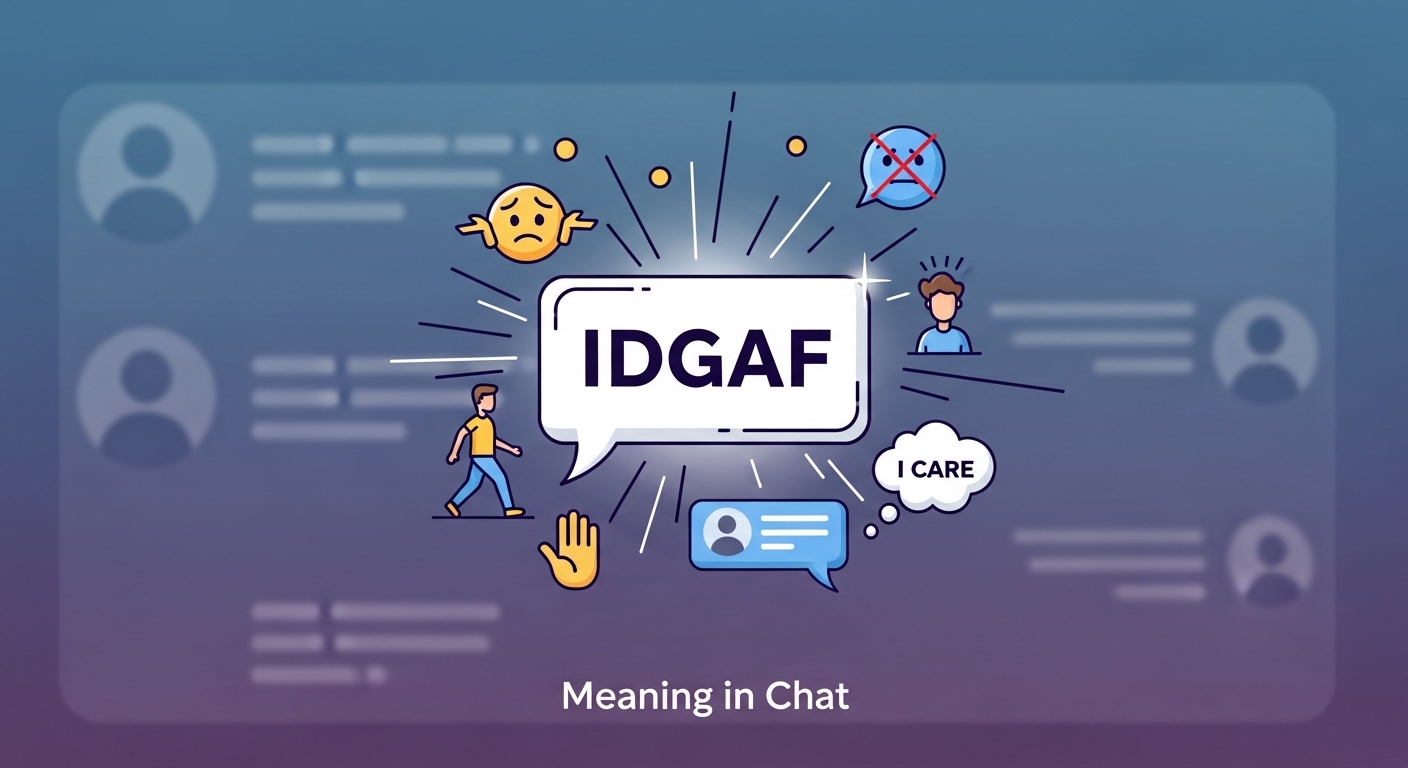
IDGAF means “I don’t give a f*.”**
Simple. Blunt. Emotional.
But context changes everything. Sometimes it sounds funny. Sometimes confident. Sometimes rude enough to end an argument instantly.
That’s where people get confused.
Let’s break down the real IDGAF meaning in chat, texting, and social media including how people actually use it online, when it sounds aggressive, and when it’s just playful internet slang.
What Does IDGAF Mean?
Full Form of IDGAF
IDGAF stands for:
“I Don’t Give A F*.”**
It’s an internet slang acronym used to express strong indifference. In plain English, the person is basically saying:
- “I don’t care.”
- “That doesn’t matter to me.”
- “Your opinion doesn’t affect me.”
- “I’m unbothered.”
The phrase became popular through texting culture, meme culture, and social media communication. Even dictionaries like Merriam-Webster recognize it as informal slang.
Literal Meaning Explained
The keyword here is intensity.
Someone saying “IDC” (“I don’t care”) sounds mild. Detached.
“IDGAF” hits harder.
There’s attitude behind it. Emotion. Sometimes rebellion. Sometimes exhaustion.
Examples:
- “People keep gossiping about me. IDGAF anymore.”
- “They hate my outfit? IDGAF.”
- “Missed the game. IDGAF honestly.”
Notice the tone? It’s not neutral. The phrase carries emotional weight.
Emotional Tone Behind the Acronym
This is where online chat gets messy.
The same acronym can mean completely different things depending on punctuation, emojis, and platform culture.
Compare these:
- “idgaf 😂”
- “IDGAF.”
- “IDGAF what they think”
- “ugh idgaf anymore”
Each version feels different.
Usually, the emotional tone falls into one of these categories:
| Tone | Meaning |
|---|---|
| Playful | Casual joking with friends |
| Confident | “I’m unbothered” energy |
| Defensive | Protecting feelings or ego |
| Aggressive | Dismissive or confrontational |
| Emotionally exhausted | Done caring entirely |
That ambiguity is exactly why people search for the IDGAF meaning in text messages so often.
How IDGAF Is Used in Chat Conversations
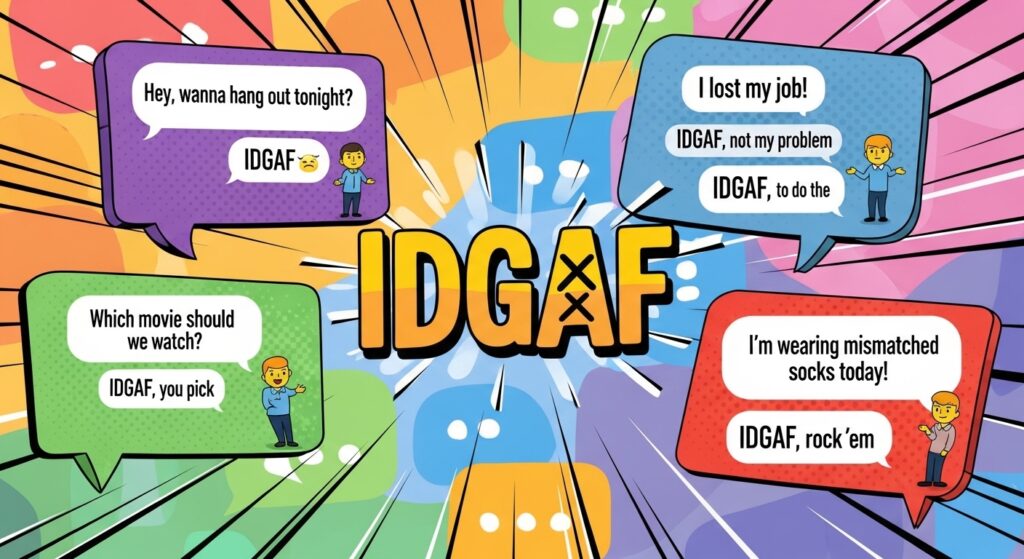
Casual Friend Chats
Among friends, IDGAF is often exaggerated for humor.
Example:
Friend: “You wore pajamas to the store?”
You: “idgaf honestly 😭”
Nobody’s offended there. It’s just casual conversation.
Gen Z especially uses internet slang dramatically. The overreaction is part of the joke.
Arguments & Online Drama
Different story.
During conflict, IDGAF can sound sharp and dismissive.
Example:
“Say whatever you want. IDGAF.”
That feels colder. More hostile.
According to discussions from English learners and native speakers online, many people interpret IDGAF as rude or emotionally aggressive when used in arguments.
And honestly? They’re not wrong.
Meme & Joke Usage
Memes changed the vibe of this phrase a lot.
On TikTok and Instagram, “IDGAF” often signals:
- confidence,
- self-love,
- independence,
- or “main character energy.”
You’ll see captions like:
- “Living my best life. IDGAF.”
- “Blocked him. IDGAF 💅”
- “Late again but idgaf.”
The phrase becomes less hostile and more performative online.
Gaming & Discord Chats
Gaming chats use IDGAF differently.
In Discord servers or multiplayer games, it’s usually:
- competitive,
- sarcastic,
- or emotionally detached.
Examples:
- “Lost rank? idgaf.”
- “People rage too much in this lobby. IDGAF anymore.”
Gaming culture rewards exaggerated reactions, so slang like this spreads quickly.
IDGAF Meaning Across Social Media Platforms
TikTok
TikTok transformed “IDGAF” into an attitude.
There, it often means:
- carefree confidence,
- emotional independence,
- rebellion against criticism.
Creators use it in captions to project “unbothered” energy.
Typical TikTok caption:
“Glow up season. IDGAF what anyone says.”
Snapchat
On Snapchat, the tone feels more personal.
Because messages are usually private, IDGAF can come across:
- playful,
- emotional,
- dramatic,
- or passive-aggressive.
A streak conversation saying:
“He unfollowed me lol idgaf”
…might actually mean the exact opposite.
Instagram usage leans heavily into image culture.
You’ll spot IDGAF in:
- bios,
- captions,
- story posts,
- comment replies.
Usually it signals confidence or detachment from criticism.
Examples:
- “IDGAF about fake people.”
- “New hair. IDGAF if you hate it.”
Discord
Discord culture is more chaotic.
There, IDGAF often appears:
- during gaming debates,
- meme conversations,
- trolling,
- or sarcasm-heavy banter.
Context matters massively.
One server might treat it as harmless slang. Another may see it as toxic behavior.
WhatsApp conversations are closer and more personal, which changes the emotional impact.
If someone texts:
“IDGAF anymore.”
…it can sound emotionally drained rather than funny.
That’s why texting acronyms can be dangerous without vocal tone.
Is IDGAF Rude, Offensive, or Funny?
Short answer?
Sometimes all three.
Why Tone Matters
Digital communication strips away facial expressions and voice inflection. So readers fill in the emotional gaps themselves.
That’s risky with vulgar slang.
A period alone can change interpretation:
- “idgaf lol” = relaxed
- “IDGAF.” = cold
Tiny differences matter online.
When It Sounds Aggressive
IDGAF usually sounds offensive when:
- directed at someone personally,
- used during arguments,
- responding to emotional vulnerability,
- dismissing feelings.
Example:
“I’m upset about what happened.”
“IDGAF.”
That feels brutal.
Reddit users discussing the phrase often describe it as hostile unless used among close friends jokingly.
When It Sounds Playful
Among friends? Totally different.
People use it jokingly to exaggerate confidence or laziness.
Example:
“Final exam tomorrow.”
“idgaf we ball.”
That’s meme culture talking.
Situations Where You Should Avoid It
Probably avoid IDGAF in:
- workplace chats,
- emails,
- customer service,
- professional networking,
- school discussions,
- serious conversations.
Even if you mean it casually, the profanity changes perception instantly.
IDGAF vs Similar Slang Terms
A lot of people confuse these abbreviations because they all orbit around indifference.
But the intensity changes.
IDGAF vs IDC
IDC = “I don’t care.”
IDGAF = “I don’t give a f*.”**
IDC sounds softer.
IDGAF sounds emotionally charged.
Think of IDC as mild annoyance and IDGAF as maximum detachment.
IDGAF vs IDFC
IDFC usually means:
- “I don’t f***ing care.”
It’s even more intense.
Less common too.
IDGAF vs “Whatever”
“Whatever” can sound passive.
IDGAF sounds intentional. Defiant.
That difference matters in online chat.
Strong vs Mild Text Slang
Here’s the rough emotional scale:
| Mild | Strong |
|---|---|
| IDC | IDGAF |
| Meh | IDFC |
| Whatever | WTF |
| Fine | Nah IDGAF |
Internet slang escalates emotion quickly.
Real Chat Examples of IDGAF

Friendly Example
A: “People think your music taste is weird.”
B: “idgaf 😂”
Playful. Lighthearted.
Sarcastic Example
A: “You forgot one homework point.”
B: “wow my life is over. idgaf.”
Clearly sarcastic.
Angry Example
A: “Everyone’s talking about you.”
B: “IDGAF what they say.”
Defensive. Heated.
Funny Example
“Diet starts Monday. IDGAF today.”
Classic meme-style usage.
Should You Use IDGAF?
Depends who you’re talking to.
Seriously.
Safe Situations to Use It
Usually acceptable:
- with close friends,
- meme conversations,
- casual online chats,
- humorous TikTok captions,
- joking Discord banter.
Even then, relationship context matters.
Professional Situations to Avoid
Avoid IDGAF in:
- work emails,
- Slack channels,
- LinkedIn messages,
- classroom discussions,
- customer communication.
The profanity alone makes it risky.
Even relaxed workplaces may interpret it as disrespectful or immature.
Better Alternatives
If you want softer wording, try:
- “I don’t mind.”
- “Doesn’t bother me.”
- “I’m not worried about it.”
- “IDC.”
- “No big deal.”
You’ll sound less confrontational immediately.
Frequently Asked Questions About IDGAF
What does IDGAF mean in texting?
It means “I don’t give a f***,” a slang expression showing strong indifference or emotional detachment.
Is IDGAF toxic?
Not automatically. Among friends it can be playful, but during conflict it may sound dismissive or hostile.
Is IDGAF Gen Z slang?
It’s widely used by Gen Z, but the acronym has existed in internet culture and texting slang for years.
What does IDGAF mean from a girl or guy?
Usually the same thing: emotional detachment, confidence, frustration, or indifference. Tone depends on context.
Is IDGAF inappropriate?
In professional or formal situations, yes. The phrase contains profanity and can easily offend people.
Read Articul: https://ytmeaning.com/xx-meaning-in-text/
Final Thoughts
The real reason “IDGAF” became so popular isn’t the acronym itself. It’s the emotion behind it.
People use it to signal:
- confidence,
- emotional exhaustion,
- rebellion,
- sarcasm,
- humor,
- or complete indifference.
That’s why the phrase survives across TikTok, Snapchat, Instagram, Discord, gaming chats, memes, and texting culture. It’s flexible. Fast. Emotion-heavy.
Still, context rules everything.
A playful “idgaf 😂” between friends lands very differently from a cold “IDGAF.” during an argument.
Same letters. Completely different vibe.