
If you have ever heard someone say, “He’s such a goon,” you may have wondered whether they were calling the person stupid, dangerous, or both. The word can feel a little slippery because its meaning changes with context.
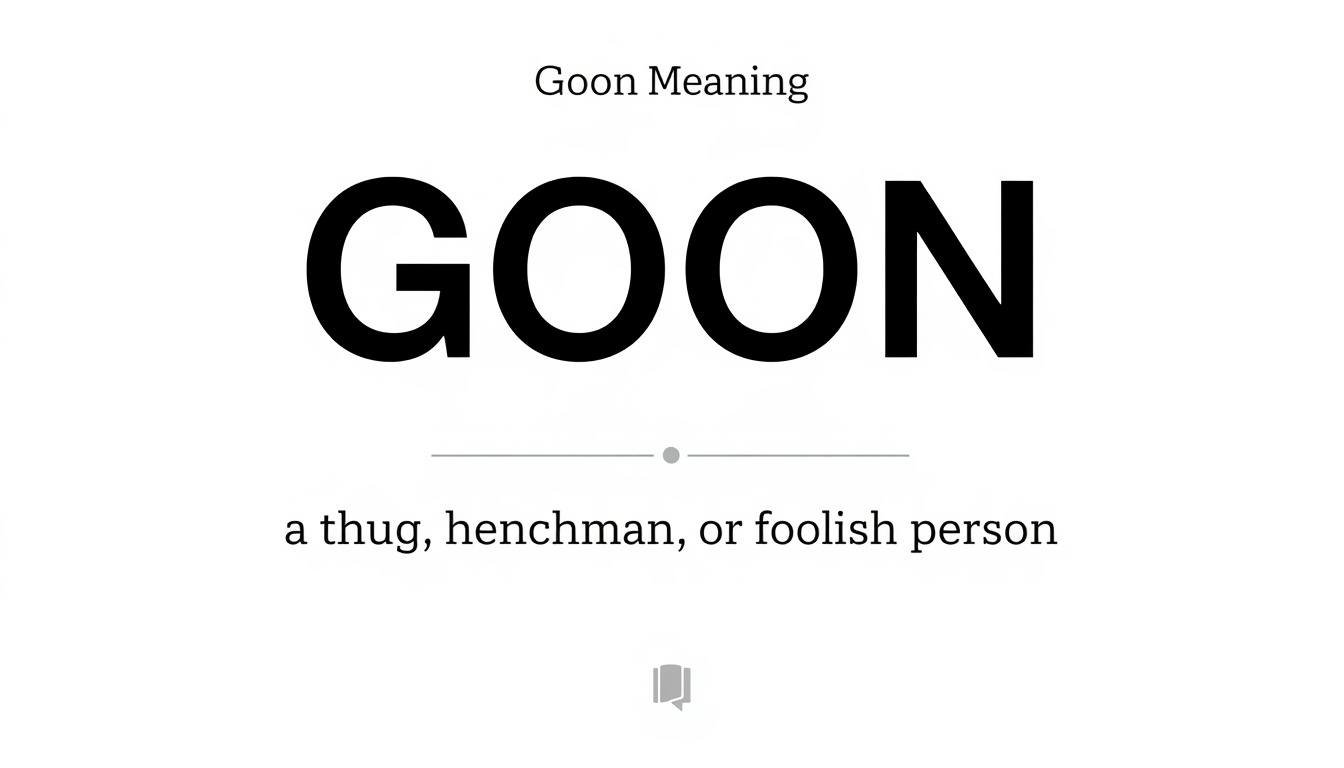
The most common goon meaning is a foolish, stupid, or awkward person. But in another very common use, a goon is a hired thug or enforcer who is brought in to intimidate, threaten, or physically attack an opponent. So, yes, the same short word can describe a harmless fool in one sentence and a genuinely threatening person in another.
Understanding the situation around the word is therefore important. Tone, surrounding words, and the speaker’s intention can completely change how it lands.
What Does Goon Mean?
So, what does goon mean in everyday English? As a noun, goon can refer to a stupid or foolish person, especially someone acting in a clumsy, silly, or brainless way.
For example, if a friend accidentally walks into a glass door and everyone laughs, someone might jokingly say, “You absolute goon.” It is usually an insult, but between friends it can be playful rather than genuinely hostile.
The second major sense is more serious. A goon can be a thug, enforcer, or hired muscle used to intimidate or hurt someone.
- “The gangster sent his goons to threaten the witness.”
- “The politician was surrounded by hired goons.”
- “The criminal organization used goons to intimidate its opponents.”
Here, the word suggests violence, intimidation, or criminal activity rather than simple foolishness.
Goon Definition and Basic Meaning
The simplest goon definition has two major noun senses: a foolish or stupid person, and a violent or intimidating person employed to do unpleasant or illegal work.
The first sense is close to words such as fool, simpleton, or idiot, although the exact strength depends on context. It can even sound affectionate when friends use it jokingly, which is one of those funny little things English does.
The second sense is closer to thug, enforcer, henchman, or hired muscle. In this usage, a goon is often someone acting on behalf of another person or organization.
So when someone asks, “What is a goon?” the honest answer is: it depends on the sentence.
Goon Meaning as a Stupid or Foolish Person
One common goon meaning describes a person who behaves foolishly, awkwardly, or without much sense.
Imagine a friend trying to open a door that clearly says “PULL” while repeatedly pushing it. Calling him a goon would usually be humorous rather than deeply offensive.
In this sense, the word overlaps with:
- stupid person
- foolish person
- simpleton
- fool
- idiot
- moron
- brainless person
However, goon often has a more playful flavor than some of those harsher words. A parent might jokingly call a mischievous child a little goon, while friends may use it after someone makes a ridiculous mistake.
Still, it can become insulting if the speaker uses it aggressively. Words don’t live alone; the tone around them matters quite a lot.
Goon Meaning as a Thug or Enforcer
The other important goon meaning is much darker. A goon can be a man hired to terrorize opponents, threaten people, beat someone up, or enforce another person’s demands.
This is where phrases such as hired goon, violent enforcer, and hired thug become relevant.
For example:
- “The crime boss sent his goons after the rival.”
- “The company owner allegedly hired goons to intimidate the protesters.”
- “The villain surrounded himself with armed goons.”
In stories, movies, and news-style writing, a goon is often the intimidating person standing behind the main antagonist. He may not be the mastermind, but he is the person expected to handle threats, intimidation, or violence.
That makes goon similar to henchman, although the words are not always interchangeable.
What Is a Goon in Slang?
The goon slang meaning depends heavily on context. Informally, it can mean a silly or foolish person, while in crime-related contexts it can mean a thug or enforcer.
Calling someone “a goon” among friends may simply mean they are being ridiculous.
Calling someone “a hired goon” is considerably more serious because the phrase suggests that the person has been employed to intimidate, attack, or otherwise use force against someone.
So, if you’re wondering about the goon meaning slang, don’t automatically assume it means “criminal.” The surrounding sentence tells you which sense is intended.
Goon as an Insult
The phrase goon as an insult is fairly common in informal English. Someone may call another person a goon when they believe that person is stupid, clumsy, aggressive, or unpleasant.
For example:
- “That goon broke the chair again.”
- “Don’t listen to that goon.”
- “He acted like a complete goon at the party.”
The goon insult meaning can therefore range from mildly teasing to openly derogatory.
Among close friends, “you goon” might produce a laugh. Said angrily to a stranger, however, it can sound disrespectful or threatening. The relationship between the speakers changes the emotional weight of the word.
Goon Synonyms and Similar Words
There are several useful goon synonyms, but each one carries a slightly different shade of meaning.
For the foolish-person sense, possible synonyms include fool, simpleton, idiot, moron, and stupid person.
For the violent-person sense, stronger alternatives include thug, enforcer, henchman, hired muscle, and hired thug.
A few examples make the difference clearer:
- Simpleton: emphasizes foolishness.
- Fool: generally describes poor judgment or silly behavior.
- Idiot: a stronger insult for someone considered very stupid.
- Thug: suggests violence or criminal behavior.
- Enforcer: suggests someone employed to make people obey.
- Henchman: often describes a subordinate working for a powerful villain or criminal.
- Goon: can cover either foolishness or intimidation, depending on context.
That’s why replacing goon with a synonym without checking the sentence can accidentally change the meaning.
Goon Used in a Sentence
Looking at examples is one of the quickest ways to understand the goon word meaning.
Here are some examples showing the different senses:
- “You forgot your keys inside again, you goon.” — playful insult.
- “The movie villain sent his goons after the hero.” — henchmen or thugs.
- “Everyone laughed when the goon slipped on the wet floor.” — foolish or clumsy person.
- “The gang hired goons to intimidate the shop owner.” — hired enforcers.
- “He was acting like a complete goon during the game.” — silly or foolish behavior.
- “Several hired goons guarded the building.” — intimidating or violent people.
Notice how the surrounding words do most of the work. “You goon” and “hired goons” may contain the same noun, but they create very different mental pictures.
Goon Noun Meaning and Grammar
From a grammatical perspective, goon is primarily a noun.
You can use it to refer to one person:
“That guy is a goon.”
The plural form is goons:
“The villain’s goons arrived.”
Therefore, the goon plural is simply goons, with no unusual spelling change.
The word can function naturally in informal conversation, fiction, sports commentary, comedy, and descriptions of criminal characters. Its register is generally informal, and some uses can be derogatory.
Hired Goon Meaning
The phrase hired goon meaning is fairly straightforward: it describes someone employed to intimidate, threaten, assault, or otherwise use force against another person.
A hired goon is essentially hired muscle.
For example, imagine a fictional crime boss who wants a shopkeeper to leave a neighborhood. Rather than speaking to the shopkeeper personally, he sends two intimidating men to deliver the threat. Those men could be described as hired goons.
The phrase can also be used figuratively. A writer might call an aggressive political operative or corporate intimidator a “goon,” although that usage depends strongly on the context and tone.
Goon Enforcer, Thug, and Henchman
The terms goon enforcer, goon thug, and goon henchman are closely connected, but there are small differences.
An enforcer is someone whose job is to make sure rules or demands are obeyed, sometimes through intimidation or violence.
A thug generally emphasizes brutality, violence, or criminal behavior.
A henchman is usually a subordinate working for a more powerful figure, particularly in stories involving villains, gangs, or criminal organizations.
A goon can overlap with all three. In one story, a goon may be a foolish henchman. In another, he may be a frightening enforcer. English really does enjoy making one little word carry extra luggage.
Goon Slang Meaning vs. “Go On”
One especially important distinction is between goon and go on.
They look and sound somewhat similar, but they are completely different expressions.
Go on is a verb phrase meaning to continue, proceed, happen, or sometimes encourage someone to speak.
Examples include:
- “Please go on with your story.”
- “What is going on here?”
- “The meeting went on for hours.”
- “The show goes on despite the rain.”
- “She told him to go on and start working.”
Depending on context, go on can mean continue, happen, proceed, travel ahead, or even express skepticism.
For example, “Oh, go on!” can sometimes express disbelief or encourage someone to continue talking.
None of these meanings should be confused with the noun goon.
Gooning Meaning and Why It Is Different
There is another internet and slang term that readers sometimes encounter: gooning.
The gooning meaning is a vulgar slang usage with a sexual meaning, and it is separate from the ordinary noun goon. It should not be assumed that someone using goon is referring to that sexual slang term.
Likewise, gooned and gooning may appear online with meanings that have little connection to the traditional sense of a foolish person or hired thug.
This distinction matters because search results can sometimes place unrelated slang terms beside one another. Context is your best friend here, honestly.
Goon Pronunciation
The word goon is pronounced like “goon,” rhyming with words such as “moon” and “soon.”
The pronunciation is short and simple, with one syllable.
The plural goons adds a “z” sound at the end: “goonz.”
Because the spelling is straightforward, pronunciation usually isn’t difficult for English learners. The harder part is understanding which meaning the speaker intends.
Goon Etymology and Word History
The goon etymology is not completely simple, and dictionaries and historical sources have connected the word with older forms such as gooney, which referred to a simpleton or foolish person.
The word became established in American English during the early twentieth century. The foolish-person sense is associated with the older idea of a simpleton, while the thug or hired-enforcer sense developed through later usage.
The word is also famously associated with the fictional character Alice the Goon from the comic strip Popeye, which helped make the word familiar to a broad audience.
Because words evolve through popular culture, literature, newspapers, and everyday speech, the modern goon definition contains layers of history rather than one neat origin story.
Is Goon a Bad Word?
Whether goon is a bad word depends on how it is being used.
It is not normally considered an extreme swear word, but it can certainly be insulting or derogatory.
Calling a close friend a goon after a silly mistake might be harmless teasing:
“You goon, you left the lights on again!”
Calling an unknown person a goon during an argument is much more confrontational.
And describing someone as a goon in connection with violence or criminal activity is obviously much more serious.
The safest approach is to consider the relationship, setting, tone, and intended meaning before using it.
Is Goon a Vulgar Slang Word?
The ordinary noun goon is informal slang, but it isn’t necessarily vulgar in every context.
It can appear in comedy, casual conversation, sports discussions, fictional stories, and descriptions of villains or criminals.
The separate term gooning, however, can have a vulgar sexual meaning. That’s why it is useful to keep the two terms separate rather than treating every variation of the word as having the same definition.
Goons Meaning in Movies and Stories
If you watch action movies, gangster films, or superhero stories, you’ve probably encountered goons without even thinking about the word.
A villain may have several unnamed men whose job is to guard a building, chase the hero, threaten someone, or start a fight. These characters are commonly called goons.
They are often not the brains behind the operation. They’re the people sent to do the dirty work.
This is where criminal associates, antagonist, opponent, and intimidation become useful contextual ideas. A fictional goon often exists to make the main villain appear more powerful or dangerous.
How to Understand the Meaning From Context
When you’re unsure about the meaning of goon, look at the words surrounding it.
If the sentence includes words such as hired, attack, threaten, gang, boss, or intimidate, the word probably refers to a thug or enforcer.
If the sentence includes words such as silly, clumsy, stupid, friend, or mistake, it probably refers to a foolish or awkward person.
For example:
“His friends called him a goon.”
Probably playful or insulting.
“The gang sent three goons to the warehouse.”
Almost certainly referring to intimidating or violent associates.
This simple context test can help English learners understand the goon meaning in English without memorizing dozens of separate definitions.
How to Write a Custom Example With “Goon”
If you’re learning English and want to use the word naturally, start with a situation rather than forcing the vocabulary into a sentence.
For the foolish-person meaning, you could write:
“I felt like a goon after realizing I’d been wearing two different shoes all day.”
For the thug meaning:
“The fictional crime boss sent his goons to scare the rival.”
For a playful conversation:
“You’re such a goon; how did you manage to lose your phone again?”
These examples show why tone matters. The first and third are humorous, while the second has a darker meaning.
Frequently aSked Qeustions
goon
A goon is usually a stupid, foolish, or unpleasant person. It can also mean a hired person who uses violence or intimidation.
goon meaning
The goon meaning is generally a foolish person or a thug hired to threaten, hurt, or intimidate others.
what does goon mean
Goon means a stupid person in casual English, but it can also describe a violent enforcer or hired thug.
what does gooning mean in slang
In slang, gooning is a vulgar sexual term referring to prolonged masturbation while maintaining a state of arousal.
Read more: https://ytmeaning.com/insatiable-meaning/
Final Thoughts on Goon Meaning
The word goon has more than one important meaning, but the two main ones are easy to separate once you pay attention to context. It can describe a stupid person, simpleton, or foolish character, especially in casual or playful speech. It can also describe a thug, enforcer, or hired person used to intimidate or hurt opponents.
The related expressions should also stay separate. Go on means to continue, happen, or proceed, while gooning belongs to a different and vulgar slang usage.
So, if someone asks what does goon mean, the best short answer is: a foolish person in one common sense, or a hired thug/enforcer in another.
Words are tiny things, but they carry surprisingly large histories. And goon is a perfect example—one little word that can sound silly among friends and threatening in a crime story, all depending on what comes before and after it.