


When you first come across the word Graf, it can feel like one of those tiny words carrying a surprisingly large suitcase of history. Depending on where you see it, Graf may refer to a German noble title, the famous tennis player Steffi Graf, or the historic airship Graf Zeppelin. So, what does Graf mean exactly? Well, the answer depends on the context, and that little detail matters quite a lot.
In the German language, Graf traditionally means a count, a historical title of nobility used in German-speaking Europe. But outside that historical meaning, Graf is also strongly associated with names and famous people. That is why someone searching graf meaning might actually be looking for several different things at once.
What Does Graf Mean?
The basic Graf definition is a German noble title corresponding roughly to a count. In historical European society, a Graf belonged to the nobility and held a particular rank within the aristocratic hierarchy. It wasn’t simply a surname or ordinary word, though today it can certainly appear as a family name.
In simple English, the Graf meaning in English is usually given as count. In some contexts, it may be explained as being broadly comparable to an English earl, although the historical systems of German and English nobility were not identical. So, “Graf = earl” is useful as a rough comparison, not a perfect translation.
The word is a Graf noun in German, and its historical use is tied closely to the structure of German nobility. It appeared in titles associated with aristocratic families and territories, which gives the word a distinctly historical flavor even when we encounter it today.
Graf Meaning in German
The Graf meaning in German is essentially “count,” referring to a nobleman holding a particular aristocratic rank. In historical documents, a person might be identified by a title involving Graf, much like other European societies used titles such as duke, marquis, count, or baron.
The German word Graf has a long linguistic history. Its origins are commonly connected with Old High German grāvo, a term associated with an official or administrative position that developed into the later noble title. Language, as usual, did not stay politely in one little box; meanings changed as political and social institutions changed.
The word therefore carries both a linguistic and historical story. Its modern dictionary meaning is short, but its background reaches into medieval European society and the development of aristocratic titles.
Graf Definition in English
The Graf definition in English can be stated quite simply: a German nobleman whose rank is traditionally equivalent to a count.
A dictionary-style explanation may describe Graf as a German, Austrian, or historically related noble title. The plural form is Grafen, which means multiple counts or members holding the Graf rank. This plural form is useful to know because German nouns often change form in ways that can look unfamiliar to English speakers.
So, if you encounter the sentence “the Graf ruled over the territory,” the historical context is pointing toward a nobleman. If you see “Graf” in a tennis article, however, you’re probably looking at a completely different meaning.
Graf Pronunciation

The Graf pronunciation is fairly straightforward for English speakers, although the German sound may be slightly different from how an English reader first guesses it.
It is commonly pronounced approximately like “grahf,” with a short, firm vowel sound. The final f is clearly pronounced, so it isn’t pronounced like “gray.”
If you’re wondering how to pronounce Graf, think of the beginning sound in “graph,” but without the “ph” spelling. That small pronunciation difference can make the word much easier to recognize when hearing German speech.
Grafen: The Plural Form of Graf
Grafen is the plural form associated with Graf in German. If one person holds the title, the singular form is Graf; when referring to several such nobles, Grafen can be used.
This is one of those little German language details that seems complicated until you actually see it in context. A historical text discussing several members of German nobility might therefore refer to Grafen rather than repeatedly using Graf.
The distinction is especially useful for anyone researching the Graf title meaning, genealogy, German history, or old aristocratic records.
Graf as a German Noble Title
Historically, the Graf title was part of the complicated hierarchy of European nobility. A Graf was generally a nobleman whose rank corresponded to a count, though the exact authority attached to the title could vary according to period and territory.
The title was used across German-speaking regions and was also connected historically with aristocratic traditions in places such as Austria. Similar noble structures existed elsewhere in Europe, but each country developed its own rules and terminology, so translating every title directly can become a bit messy.
This is why Graf noble rank is best understood as a historical German aristocratic rank rather than simply treating it as another word for “rich person.” Nobility involved legal, political, social, and hereditary distinctions that changed over time.
Graf Meaning and German Nobility
The connection between Graf and German nobility is one of the most important parts of understanding the word. A noble title was not merely decorative in many historical periods. Depending on the time and location, nobles could have territorial authority, administrative responsibilities, military roles, or political influence.
The social system changed considerably over the centuries, especially as European states developed modern governmental institutions. Eventually, hereditary aristocratic privileges were reduced or abolished in many places, while noble names and titles continued to survive as historical or family identifiers.
So when someone asks for the origin of Graf, the answer reaches beyond vocabulary. It also leads into the history of medieval Europe, aristocracy, and the German-speaking world.
Graf Etymology: Where Did the Word Come From?
The Graf etymology is generally associated with Old High German grāvo. The historical development of the word is connected with an official or administrative designation that eventually became established as a noble title.
Etymology can be a funny little time machine. A modern reader sees four letters Graf and imagines a simple surname, while those same letters can lead backward through centuries of changing institutions and languages.
The historical meaning developed alongside the European system of ranks and territorial administration. Over time, Graf became firmly associated with the rank of count in German-speaking regions.
Graf Meaning as a Surname
Today, Graf can also appear as a surname. When it occurs as a family name, it does not automatically mean that every person named Graf belongs to historical nobility.
This distinction is important. Many European surnames developed from occupations, titles, locations, nicknames, or ancestral descriptions. A surname can preserve the memory of an old word without proving that the modern bearer possesses the historical status associated with that word.
Therefore, Graf surname and Graf title should not automatically be treated as identical things. Context is doing the heavy lifting here.
Steffi Graf and the Meaning of Graf
For many people, the word Graf immediately brings to mind Steffi Graf, the legendary German tennis player. Her full name is Stephanie Maria Steffi Graf, and her career made the surname globally recognizable far beyond discussions of German aristocracy.
Steffi Graf competed in women’s singles tennis and became one of the most prominent players of her era. She competed professionally from 1987–1999, creating a sporting legacy that is often discussed whenever the history of modern tennis comes up.
So, if someone searches “Graf” after seeing a tennis headline, they probably aren’t asking about a medieval noble title at all. They’re asking about the athlete.
Steffi Graf and Her Tennis Career
Steffi Graf tennis career is remembered for an extraordinary collection of achievements. She won 22 Grand Slam singles titles, including seven Wimbledon titles, and also won an Olympic gold medal.
Her career reached a particularly remarkable moment in 1988, when she won all four Grand Slam singles tournaments and the Olympic women’s singles gold medal. This achievement became known as the Golden Slam.
That year remains one of the most distinctive chapters in tennis history. It is also why the name Steffi Graf often appears in articles about records, Grand Slam history, Wimbledon, and Olympic tennis.
Graf and Wimbledon
Wimbledon played an important role in Steffi Graf’s career. She won the women’s singles championship there seven times, establishing herself as one of the tournament’s most successful champions.
Her Wimbledon record is often mentioned alongside her broader Grand Slam achievements. For tennis fans, “Graf” can therefore carry an entirely sporting meaning, far removed from the historical German count definition.
It’s a good example of how context changes meaning. One word, two very different worlds: medieval aristocracy on one side and Centre Court on the other.
Graf Zeppelin: Another Famous Meaning

There is another major association with the word: Graf Zeppelin. This name refers to a famous German dirigible, part of the historic Zeppelin airship tradition.
The Graf Zeppelin began service in 1928 and became known for long-distance flights, including major transatlantic journeys. It was named after Count Ferdinand von Zeppelin, whose work gave the Zeppelin airship its famous name.
Here again, the word Graf is connected to nobility. “Graf Zeppelin” can be understood as “Count Zeppelin,” reflecting the noble title associated with Ferdinand von Zeppelin.
Graf Zeppelin and Its Historic Flights
The airship Graf Zeppelin became famous for demonstrating that large airships could undertake long-distance passenger and demonstration flights. Its journeys attracted international attention at a time when aviation was developing at remarkable speed.
The airship’s history is therefore part of the story of early commercial and experimental aviation. Seeing “Graf” in Graf Zeppelin 1928 doesn’t mean the word suddenly has a new dictionary definition; rather, it appears within a proper name connected to a historical person.
That little distinction is useful when researching the term because search results can otherwise become a strange mixture of German history, tennis statistics, and aviation.
Graf Meaning in Different Contexts
The easiest way to understand what is Graf is to look at the surrounding words.
If you see “German Graf,” “noble title,” or “count,” the reference is almost certainly the aristocratic title. If you see “Steffi Graf,” “Wimbledon,” or “Grand Slam,” the subject is the tennis champion.
And if you see “Graf Zeppelin,” “airship,” or “1928,” the word is part of a historical name connected with aviation.
This context-based approach prevents one of the most common problems with short dictionary searches: assuming every appearance of a word has exactly one meaning.
Graf Meaning in English vs. German
The simplest translation is that Graf means count in English. However, translations of historical titles should always be handled with a little care.
A German noble title developed within a specific political and legal system. The English title “earl” developed within another. They may occupy broadly comparable positions, but their historical institutions were not interchangeable.
For everyday understanding, “count” is generally the clearest English explanation. For historical research, however, it is better to preserve the original German title and explain its particular context.
Why Graf Has So Many Search Results
Someone searching meaning of Graf may encounter dictionaries, biographies, tennis records, aviation history, genealogy pages, and German-language resources all on the same results page.
That happens because Graf functions in several ways. It is a German noun and historical title, a surname, part of the name Steffi Graf, and part of the proper name Graf Zeppelin.
In other words, the search engine isn’t confused. The word genuinely has multiple important associations. The trick is simply figuring out which one matches the context you saw.
Quick Graf Meaning Guide
If you only need the answer quickly, this short guide makes the distinctions clearer:
- Graf a German noble title meaning count.
- Grafen the plural form associated with Graf.
- Graf pronunciation approximately “grahf.”
- Graf meaning in German a count or nobleman of the historical German aristocracy.
- Graf meaning in English generally translated as “count.”
- Steffi Graf famous German tennis champion.
- Graf Zeppelin historic German airship named in connection with Count Ferdinand von Zeppelin.
- Old High German grāvo an important historical form associated with the word’s etymology.
How to Understand Graf When You See It
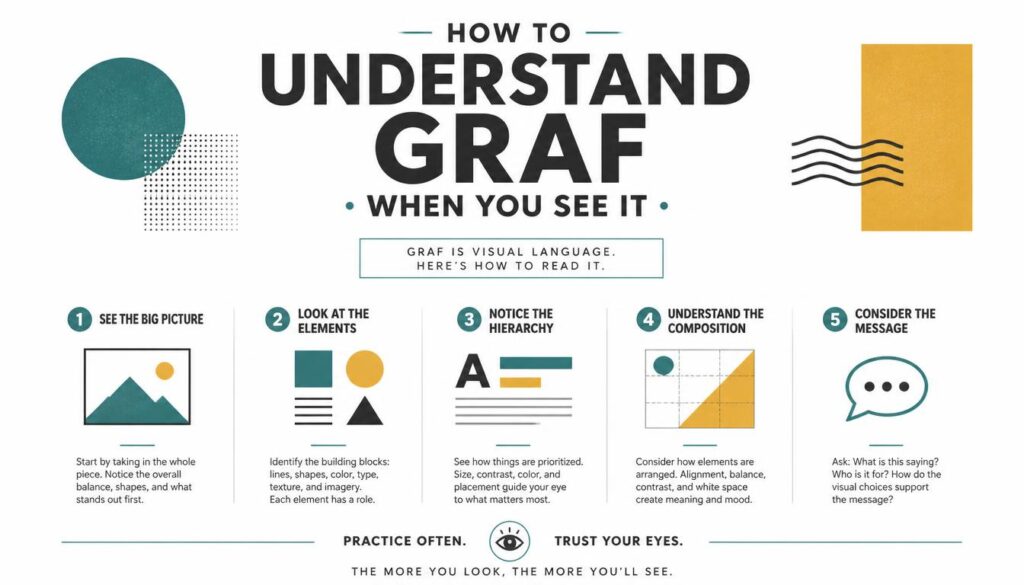
When you encounter Graf, don’t immediately assume it refers to a person or a title. Look at the words surrounding it.
A German history article may be discussing the Graf title. A tennis article is likely talking about Steffi Graf. An aviation history page may be referring to Graf Zeppelin.
That one-second context check can save you from chasing the wrong definition down a very long internet rabbit hole. And honestly, “Graf” is a perfect example of why dictionary meanings and real-world usage sometimes need to sit together.
Final Thoughts on Graf Meaning
The graf meaning is much richer than a four-letter translation might suggest. In its historical German sense, Graf means a count, a noble title rooted in the traditions of German-speaking Europe. Its linguistic history reaches back toward Old High German grāvo, while its plural form is Grafen.
But the word also carries modern cultural associations. Steffi Graf transformed the name into a familiar one in international tennis, while Graf Zeppelin connected it with the fascinating early history of air travel.
So, if someone asks, “What does Graf mean?” the most accurate short answer is: Graf is a German title meaning count, but its meaning in a particular sentence depends on context. That little word can point toward nobility, language, tennis, or aviation—and that is what makes it rather more interesting than it first appears.