There are some words that look small on a screen but carry a whole landscape behind them, and Otoe is one of those words. At first glance, someone searching otoe meaning may simply want a dictionary definition, a pronunciation, or the plural form.
But the word opens a much wider door into Native American history, Indigenous identity, geography, and the story of a people whose history stretches across the American Midwest and into present-day Oklahoma.
It is a name that appears on maps, in historical records, and in the name of a living tribal nation today, so it deserves a little more care than a quick one-line definition gives it, really.
In ordinary English usage, Otoe is a noun referring to an Oto person, while Otoes is the plural form. Dictionaries give the pronunciation as /ˈoʊtoʊ/, roughly “OH-toh.”
The related form Oto is also used, and historical sources may show several spellings because European writers recorded Indigenous names in different ways over time. That spelling history can look messy, but honestly, it is a normal part of researching older Native American records.
What Is the Otoe Meaning?
The simplest Otoe definition is that it refers to a member of the Otoe people, a Native American people historically associated with the central and northern Great Plains and the lower Missouri River region.
In modern institutional usage, Otoe history is closely connected with the Otoe-Missouria Tribe of Indians, a federally recognized tribal nation headquartered in Red Rock, Oklahoma.
The two names are connected, but Otoe and Missouria were historically distinct peoples with related languages and customs, which is a detail thats easy to lose when the names are treated as one label.
The word can therefore be understood in two overlapping ways. Otoe can identify the individual or people, while it can also appear as part of the larger name Otoe-Missouria.
A dictionary may send a reader from “Otoe” to “Oto,” while historical and tribal sources provide the fuller cultural context. So, if somebody asks, “What does Otoe mean?”,
the safest answer is not to invent a neat little translation and call the matter settled; the name’s deeper origin is regarded as uncertain by historians, which is actually more interesting than a made-up certainty.
There is one especially important warning here. You may encounter an explanation claiming that the name Otoe comes from a word associated with sexual activity.
That explanation appears in some popular accounts, but the Discover Lewis & Clark historical resource notes that this etymology has no solid historical basis beyond folk stories and says the actual origin of the name is obscure.
In other words, the sensational explanation shouldnt be presented as established fact just because it makes the internet answer look more colorful.
Otoe Pronunciation and the Otoe Word Form
The standard Otoe pronunciation listed in American English dictionaries is “OH-toh,” with both syllables clearly audible. Phonetically, it is represented as /ˈoʊtoʊ/.
If you are saying the word in conversation, a relaxed “OH-toh” is much closer than trying to pronounce every letter as if it were an unfamiliar European surname, which people sometimes do with names they havent seen before.
The relationship between Otoe and Oto is also worth noticing. Dictionary sources list Oto as a related form and define it as referring to a member of the Siouan-speaking people historically associated with the lower Missouri River basin and now primarily connected with Oklahoma.
Historical documents contain variant spellings because colonial officials, explorers, missionaries, and other writers often attempted to represent Indigenous words using the writing systems available to them at the time, and those spellings were not always consistent, naturally.
Read more: https://ytmeaning.com/elope-meaning/
Otoe Plural: Is It Otoes?
Yes, Otoe plural can be written Otoes. Dictionary.com specifically gives “Otoes” as the plural form, while “Otoe” can also function as the noun referring to an individual or the people collectively depending on context.
So a sentence such as “The Otoes lived in communities along the region” uses the plural form, although modern respectful writing will often simply say “the Otoe people” when referring to the community as a whole. Its a small grammatical point, but it can save you from an awkward sentence.
Otoe People and the Otoe Tribe
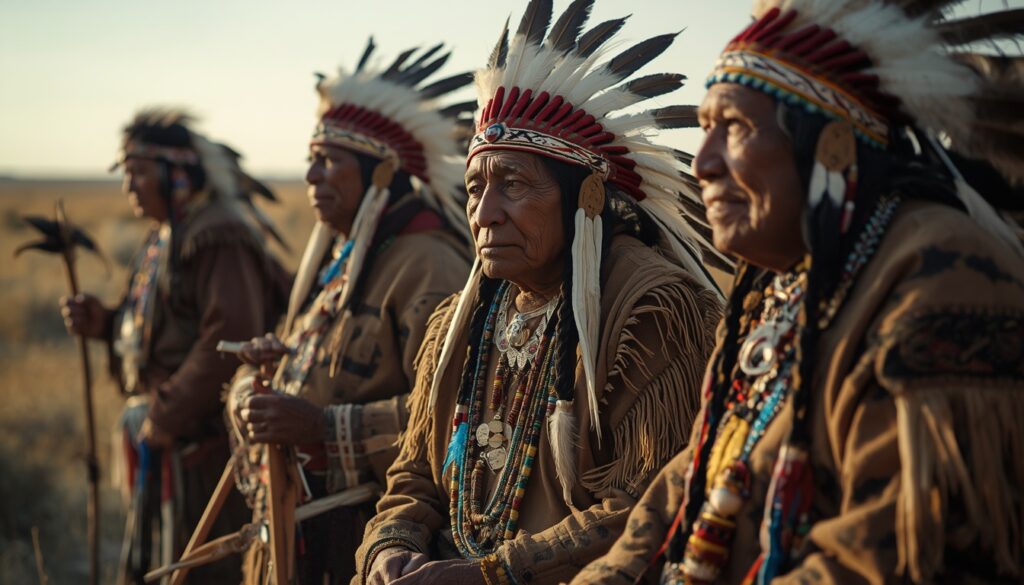
The Otoe people are an Indigenous people of the central United States whose historical movements brought them into areas that are now associated with Iowa, Nebraska, Missouri, Kansas, and surrounding regions.
The Oklahoma Historical Society describes the Otoe-Missouria ancestors as part of the Chiwere branch of the Siouan linguistic family, along with related peoples including the Iowa and Winnebago.
Over the centuries, these communities separated and developed distinct identities, while maintaining important linguistic and cultural relationships, which makes the family tree of these peoples rather fascinating.
The Otoe eventually became particularly associated with the Platte River and southeastern Nebraska. Their traditional economy included hunting bison, gathering plants, and cultivating crops such as corn, beans, pumpkins, and squash.
Historical accounts describe communities that used earth lodges as well as tipis and bark lodges, reflecting a way of life that could respond to seasonal movement and the demands of hunting and agriculture. It wasnt simply a story of wandering from place to place; it was a sophisticated adaptation to the Plains environment.
The Otoe tribe also had an organized social structure involving clans and leadership. The Oklahoma Historical Society notes that the Otoe-Missouria society was patrilineal and divided into clans, with clan chiefs forming a tribal council and the Bear clan providing principal leadership.
These details matter because the phrase “Native American tribe” can sound overly general when used without explaining how individual nations actually organized their communities, laws, relationships, and responsibilities.
Otoe-Missouria: Two Histories Connected
When people search Otoe-Missouria, Otoe Missouria, or Otoe Missouria Tribe, they are usually looking at the history and present identity of the federally recognized Otoe-Missouria Tribe of Indians. The Otoe and Missouria were related peoples, but they were not simply two names for exactly the same group.
The tribe’s own historical account emphasizes that they had related languages and customs while remaining distinct peoples. That distinction is important, and it shouldnt be flattened just for the sake of a shorter explanation.
The relationship became especially significant after the Missouria suffered devastating population losses from disease and warfare. Beginning around the 1790s, surviving Missouria increasingly joined the Otoe, while maintaining aspects of their own identity.
Over time, the two peoples became closely associated, eventually forming the historical foundation of the modern Otoe-Missouria Tribe. It is one of those histories where survival itself becomes part of the story, rather quietly but powerfully.
The tribe’s own history records that the Otoe called themselves Jiwere, pronounced approximately “jee-WEH-ray,” while the Missourias called themselves Nutachi, approximately “noo-TAH-chi.”
These self-designations are useful reminders that English names found in historical documents are not always the names Indigenous peoples used for themselves. Language can carry identity in ways that a translated label simply cant quite hold.
Otoe History Along the Platte River
For anyone exploring Otoe Indians history, the Platte River and the wider Missouri River region are especially important. The Otoe established themselves in the Nebraska area and became associated with the central Plains.
Their location placed them in a region that later became heavily contested as European-American settlement expanded westward, creating enormous pressure on Indigenous lands and communities. The historical geography, when you look at it closely, is almost a map of changing power in America.
The Otoe-Missouria also had early contact with the Lewis and Clark Expedition. In 1804, the expedition held a council with Otoe and Missouria representatives.
The tribe’s historical account describes this as the first council the two captains held with a tribal nation in their official role as representatives of President Thomas Jefferson.
It was a meeting that sits inside a much larger story of diplomacy, sovereignty, trade, exploration, and eventually severe disruption, so it shouldnt be reduced to a quaint explorer anecdote.
The arrival of European-American settlers brought devastating disease, warfare, land loss, and political pressure. Treaties progressively reduced Otoe-Missouria territory, and in 1855 the U.S. government confined the people to a reservation along the Big Blue River in southeastern Nebraska.
Later, the tribe was moved to Indian Territory, present-day Oklahoma, in the late nineteenth century. These were not just changes of address; they involved the loss of land, cultural disruption, and policies aimed at reshaping Indigenous life.
Otoe County, Nebraska: Why Is It Called Otoe?
A person searching Otoe Nebraska may discover that the word is not only a tribal name. There is also Otoe County, located in southeastern Nebraska, and the county was named in honor of the Otoe people.
Nebraska state historical records explain that the territorial legislature changed the county’s name to Otoe in 1855, honoring the Native American tribe of the same name. So the word sitting quietly on a modern county map is connected to a much older Indigenous presence in the region.
Otoe County has a particularly interesting historical connection with the Lewis and Clark era as well. Nebraska archival material notes that the expedition explored the area as early as 1804 and camped along the Missouri River near the present site of Nebraska City.
The county therefore sits in a landscape where Indigenous history, exploration history, territorial expansion, and modern Nebraska life overlap, sometimes almost invisibly if you only look at a road map.
There are also claims about the word behind the name of Nebraska itself. The Otoe-Missouria Tribe explains that Nebraska is connected to the Otoe-Missouria phrase “Ni Brathge,” interpreted by the tribe as “water flat,” referring to the calm, broad character of the Platte River. This is a valuable cultural connection, though readers should distinguish it from the narrower question of the etymology of the word “Otoe” itself; they are related pieces of history, not the same definition, which is easy to muddle up.
Otoe Native American Identity Today
The phrase Otoe Native American can point to a living community rather than only an entry in a history book. Today, the Otoe and Missouria are represented through the federally recognized Otoe-Missouria Tribe of Indians, headquartered in Red Rock, Oklahoma.
The tribe describes a continuing cultural life that includes feasts, dances, an annual powwow, song traditions, clan relationships, and efforts to preserve knowledge of the traditional language. History here is not frozen in 1881; it keeps walking into the present, even if sometimes on tired feet.
Language preservation is one of the difficult parts of that continuing story. The tribe explains that government policies and boarding schools discouraged the use of traditional language, with some elders remembering punishment for speaking it at school.
As a result, significant portions of the language were lost or weakened across generations. Yet historical documentation, community efforts, cultural programs,
and the knowledge that remains all contribute to ongoing preservation work, which is hopeful in a way that statistics alone dont quite show.
Otoe Meaning vs. “Oto-” in Medical Words
There is another little trap for people researching Otoe meaning online: Otoe and oto- are not the same thing. The combining form “oto-” comes from Greek and relates to the ear, appearing in medical words such as otitis and otolith.
Dictionary sources list this separately from Oto/Otoe, the name connected with the Indigenous people. So if you searched “oto meaning” because you saw it inside a medical term, youve wandered into a completely different linguistic neighborhood.
This distinction is particularly useful for students, writers, and anyone doing SEO or dictionary research. A search engine may group similar-looking words together, but spelling similarity doesnt automatically mean shared ancestry.
Otoe, Oto, and oto- need to be read according to their context, and context is doing a lot of heavy lifting here, as it often does with language.
Why the Otoe Meaning Matters
Learning the meaning of Otoe is more worthwhile when the word is treated as a doorway instead of a tiny dictionary box. Behind it are the Otoe people, the Missouria, the Platte and Missouri River regions, Nebraska,
Oklahoma, the Lewis and Clark expedition, centuries of movement, and the survival of a tribal nation through policies that caused enormous disruption. A definition gives you the word; history gives you its weight, and that difference matters a lot.
It is also worth remembering that Indigenous names should not be treated as decorative vocabulary. When a county, river region, historical document, or organization uses a Native name, there may be generations of people behind that name whose stories continue today.
The Otoe-Missouria Tribe itself presents its history as a story of five hundred years, and its current cultural work shows that the community is not merely a subject of the past but a living people with its own identity and traditions.
For readers researching Otoe definition, Otoe pronunciation, Otoes meaning, or Otoe Indian tribe, the most reliable approach is therefore to separate three questions: what the dictionary says, what historical sources say, and how the people themselves describe their identity.
Those three perspectives can overlap, but they dont always answer exactly the same question, and pretending they do can create an answer thats tidy but misleading.
Frequently Asked Questions
What does Otoe mean?
Otoe refers to an Indigenous people of the Great Plains and is also used as a noun for a member of the Otoe people. Its deeper original meaning is uncertain.
How do you pronounce Otoe?
Otoe is commonly pronounced “OH-toh” and written phonetically as /ˈoʊtoʊ/.
What is the plural of Otoe?
The dictionary-listed plural of Otoe is Otoes. “Otoe people” is also commonly used when referring to the community collectively.
Are Otoe and Oto the same?
Oto is a related form of Otoe and appears in historical and dictionary sources. Both names are associated with the Oto people.
What is the Otoe tribe?
The Otoe tribe is an Indigenous people historically associated with the central Plains and now represented by the Otoe-Missouria Tribe of Indians in Oklahoma
What does Otoe mean?
Otoe is an English noun used for an Oto person or the Otoe people, and it is closely related to the form Oto. The deeper Indigenous etymology of the name is uncertain, so it is better to say that the name identifies the people than to confidently assign it a speculative translation.
How do you pronounce Otoe?
The usual American English pronunciation is “OH-toh,” /ˈoʊtoʊ/. Both syllables are pronounced, with the first syllable receiving the primary stress. Its pleasantly simple once you hear it said aloud.
What is the plural of Otoe?
The dictionary-listed Otoe plural is Otoes. In contemporary writing, however, “Otoe people” is often a more natural way to describe the community collectively, particularly when discussing cultural or historical subjects.
Are Otoe and Oto the same word?
They are closely related forms. Dictionary sources list Oto as the related term for Otoe, while historical sources contain multiple spellings and names because of the complicated history of recording Indigenous languages in English and other European languages. So they shouldnt be treated as completely unrelated words.
Is Otoe-Missouria one tribe?
The modern Otoe-Missouria Tribe of Indians represents the connected Otoe and Missouria tribal identity, but historically the Otoe and Missouria were distinct peoples. Their relationship became much closer after population losses and migration, especially from the late eighteenth century onward.
Where are the Otoe people today?
The modern Otoe-Missouria Tribe is headquartered in Red Rock, Oklahoma. Tribal citizens also live in other parts of the United States, while the tribe maintains community, governmental, and cultural activities in Oklahoma.
Is Otoe County named after the tribe?
Yes. Nebraska historical records state that the county was named Otoe in 1855 in honor of the Otoe Indian tribe. The name remains on the map today, carrying a piece of Indigenous history into the geography of modern Nebraska.
Final Thoughts on Otoe Meaning
In the shortest possible form, Otoe means Oto, a name referring to an Indigenous people of the American Midwest and Great Plains; its common English pronunciation is “OH-toh,” and Otoes is the dictionary-listed plural. But thats only the first layer.
The fuller story leads toward the Otoe people, the Otoe-Missouria Tribe, Nebraska, Oklahoma, the Platte River, and a long history of migration, diplomacy, cultural resilience, and survival.
Perhaps the most responsible takeaway is also the simplest one: dont force a mysterious old name into a translation that historians cannot firmly support.
The origin of Otoe remains uncertain, while its identity and historical associations are much clearer. Sometimes a word doesnt need a flashy secret meaning to be important;
sometimes its greatest meaning is the people, places, and memories that have carried it forward. And in the case of Otoe, thats a story still being lived, not merely one being looked up in a dictionary.