
Have you ever received a message with TBF and wondered what the person actually meant? You are not alone. Digital communication changes quickly, and new texting abbreviations appear all the time. Some disappear after a short trend, while others become a normal part of everyday conversations.
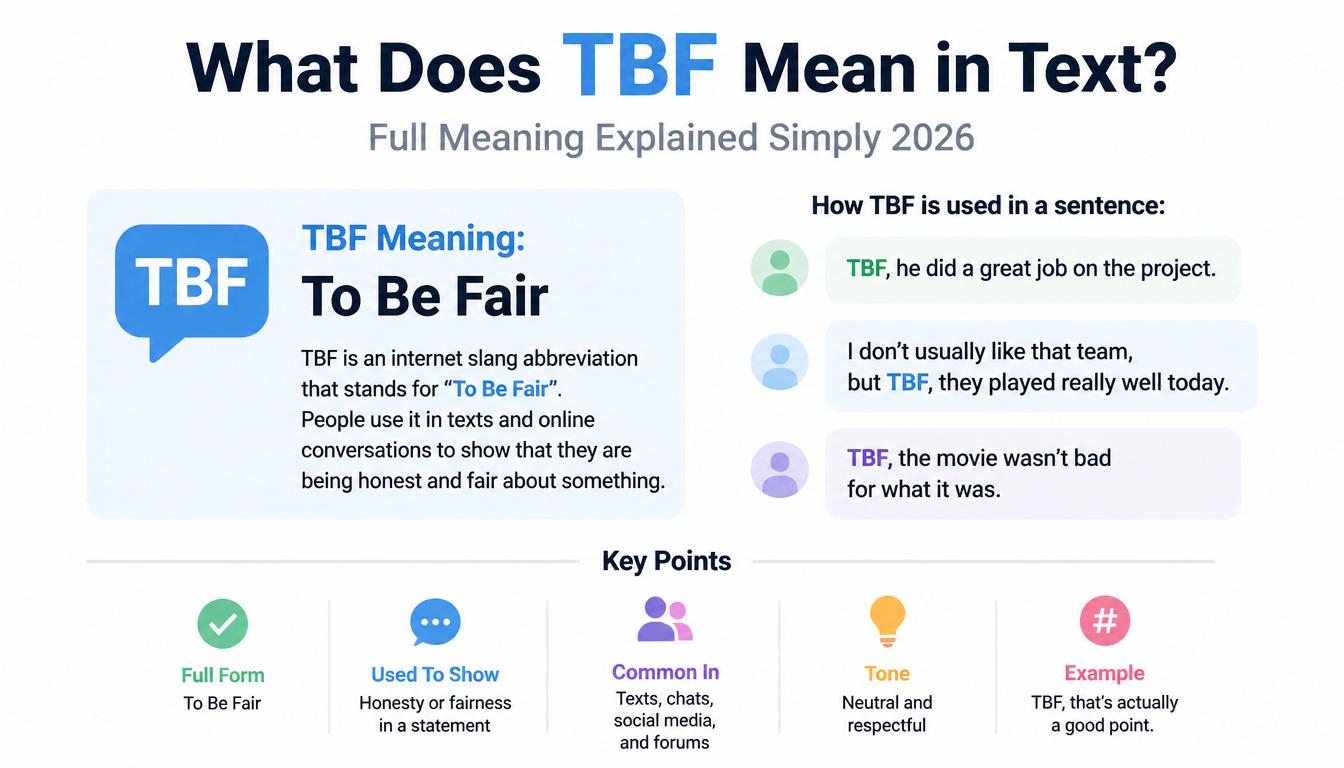
So, what does TBF mean in text? The most common meaning is “To Be Fair.” People use TBF when they want to add balance, admit another side of an argument, or make a statement sound less harsh. It is a small abbreviation, but it carries a lot of meaning in modern online communication.
TBF is not only about saving typing time. It works as a tone marker that tells readers, “I am trying to be reasonable here.” Whether used in a casual chat, social media comment, or internet discussion, TBF helps people express fairness and understanding.
This complete guide explains the TBF meaning in texting, how people use it, examples from real conversations, differences between similar slang terms, and when you should avoid using it.
What Does TBF Mean in Text?
TBF means “To Be Fair” in text messages, online chats, and social media conversations.
The abbreviation is used when someone wants to introduce a fair point, acknowledge another perspective, or soften what they are saying.
For example:
“I didn’t like the movie, but TBF, the special effects were amazing.”
In this sentence, TBF introduces a balanced opinion. The speaker still has criticism, but they recognize something positive too.
The main purposes of using TBF in texting include:
- Adding balance to an opinion
- Showing honesty
- Acknowledging another side
- Reducing conflict
- Making criticism sound less aggressive
In simple words, TBF is a way of saying: “I understand there is another side to this.”
Why Do People Use TBF Instead of Writing “To Be Fair”?
People use text abbreviations because digital conversations often focus on speed and convenience. Typing three letters is quicker than writing the full phrase every time.
However, the popularity of TBF is not only because it is shorter. It also matches the style of modern digital language.
TBF feels:
- Quick and natural
- Friendly in casual conversations
- Less formal than traditional writing
- Easy to understand across online communities
For example:
Without abbreviation:
“To be fair, you were right about the situation.”
With abbreviation:
“TBF, you were right about the situation.”
The second version feels more like a real chat message between friends.
In online communication, speed matters, but tone matters too. TBF solves both problems by making messages shorter while adding emotional meaning.
The Real Meaning Behind TBF: More Than Just an Abbreviation
Although TBF literally means “To Be Fair,” its deeper purpose is communication.
TBF acts as a tone marker. It changes how the reader understands the sentence that follows.
When someone writes TBF, they are often communicating ideas like:
- “I am looking at the situation fairly.”
- “I understand both sides.”
- “I do not want to attack anyone.”
- “There is more to this story.”
This makes TBF an example of how internet slang has developed beyond simple shortcuts. Many abbreviations now carry emotional signals.
A message without TBF may sound negative:
“She was late again.”
A message with TBF sounds more balanced:
“TBF, she was late because of traffic.”
The second message shows understanding instead of only blame.
Common Situations Where People Use TBF
TBF in Friendly Chats
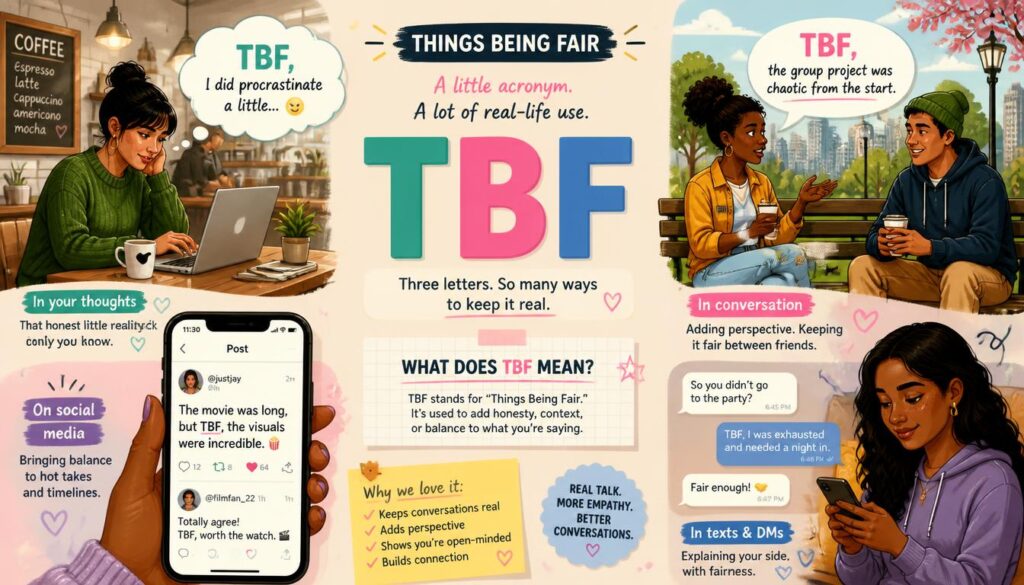
Friends often use TBF to keep conversations relaxed and fair.
Example:
Person A: “You never reply quickly.”
Person B: “TBF, I was sleeping.”
Here, TBF prevents the reply from sounding defensive. The person explains the situation without starting an argument.
In casual conversations, TBF often adds humor too.
Example:
“My dog destroyed my homework. TBF, I left it on the floor.”
The speaker is joking but also accepting some responsibility.
TBF During Arguments or Disagreements
One of the strongest uses of TBF is during disagreements.
Arguments can become emotional quickly, especially online. Adding TBF can make a response feel calmer.
Example:
“TBF, she was dealing with a lot of stress at that time.”
Instead of attacking someone, the speaker introduces context.
This is why many people see TBF as a tool for empathetic communication.
TBF on Social Media
TBF appears frequently on platforms where people share opinions publicly.
Common places include:
- Instagram captions
- TikTok comments
- Facebook discussions
- X (Twitter) conversations
- Online forums
Example:
“This restaurant was expensive, but TBF, the service was excellent.”
Social media discussions often involve strong opinions, so phrases like TBF help users sound more balanced.
TBF Meaning in Different Contexts
The meaning of TBF stays mostly the same, but the feeling can change depending on where it appears.
| Context | Meaning of TBF | Example |
|---|---|---|
| Friendly chat | Adding a fair explanation | “TBF, I forgot too.” |
| Argument | Showing another perspective | “TBF, they had a reason.” |
| Social media | Balancing criticism | “TBF, the design looks great.” |
| Humor or memes | Playful defense | “TBF, the cat was curious.” |
The surrounding sentence matters. A person can use TBF sincerely, humorously, or even sarcastically depending on the situation.
How to Know If You Are Using TBF Correctly
The easiest way to check your usage is to look at what comes after TBF.
A correct use usually introduces:
- A fair point
- A missing detail
- A different perspective
- A reasonable explanation
Correct example:
“The game was disappointing. TBF, the developers had limited time.”
Incorrect example:
“TBF, I like pizza.”
This is not necessarily wrong, but it does not introduce fairness or a counterpoint. It feels random because there is no balance being added.
A simple rule:
Use TBF when you are adding another side of the story.
Difference Between TBF, TBH, IMO, and FYI
Many texting abbreviations look similar, but they serve different purposes. Understanding these differences helps you communicate more naturally.
| Abbreviation | Meaning | Main Purpose |
|---|---|---|
| TBF | To Be Fair | Adds balance or another perspective |
| TBH | To Be Honest | Shares personal honesty or opinion |
| IMO | In My Opinion | Shows personal viewpoint |
| FYI | For Your Information | Provides information |
TBF vs TBH
TBF focuses on fairness.
Example:
“TBF, he made a mistake but he fixed it.”
TBH focuses on honesty.
Example:
“TBH, I did not enjoy the concert.”
TBF says, “Look at the whole situation.”
TBH says, “Here is my honest thought.”
TBF vs IMO
IMO means “In My Opinion.” It tells readers that something is a personal belief.
Example:
“IMO, this is the best restaurant nearby.”
TBF is different because it does not simply give an opinion. It introduces balance.
The Evolution of TBF in Internet Culture
The growth of internet culture has changed how people communicate. Short forms like TBF became popular because online conversations needed faster ways to express complex emotions.
Years ago, people mainly used abbreviations like LOL or BRB. Today, many abbreviations communicate more advanced social meanings.
TBF became popular because it combines:
- Short wording
- Emotional intelligence
- Social awareness
- Conversational flexibility
It shows how language evolves with technology.
A three-letter phrase can now communicate fairness, empathy, and context.
TBF Across Different Age Groups
TBF is widely recognized across different generations, although usage patterns vary.
Younger users often include TBF naturally in:
- Group chats
- Gaming conversations
- Social media comments
- Memes
Older users may understand the meaning but use it less frequently.
This difference shows that texting slang is influenced by digital habits, not only age.
TBF in Memes and Online Humor
TBF has become common in memes because it works well for playful explanations.
Example:
“My phone battery died during the meeting. TBF, I forgot to charge it.”
The humor comes from defending a situation while admitting some responsibility.
In meme culture, TBF often creates a funny contrast between an excuse and the actual reason.
Common Mistakes When Using TBF
Although TBF is simple, people sometimes use it incorrectly.
Avoid these mistakes:
- Using TBF when there is no fair point being added
- Using it in every message
- Making criticism sound passive-aggressive
- Using it in professional documents
- Assuming everyone understands internet slang
TBF should support communication, not replace clear thinking.
When Should You Avoid Using TBF?
TBF is best for informal communication. It is usually not appropriate for serious professional writing.
Avoid using TBF in:
- Job applications
- Legal documents
- Academic papers
- Business reports
- Official letters
Instead of writing:
“TBF, the project was successful.”
A professional version would be:
“To be fair, the project was successful.”
The full phrase sounds clearer and more appropriate.
How to Respond When Someone Says TBF
If someone uses TBF in a conversation, they are usually presenting another viewpoint.
Good responses include:
- “That’s fair.”
- “Good point.”
- “I see what you mean.”
- “You’re right about that.”
- “That makes sense.”
These responses keep conversations respectful and open.
Why TBF Matters in Modern Texting
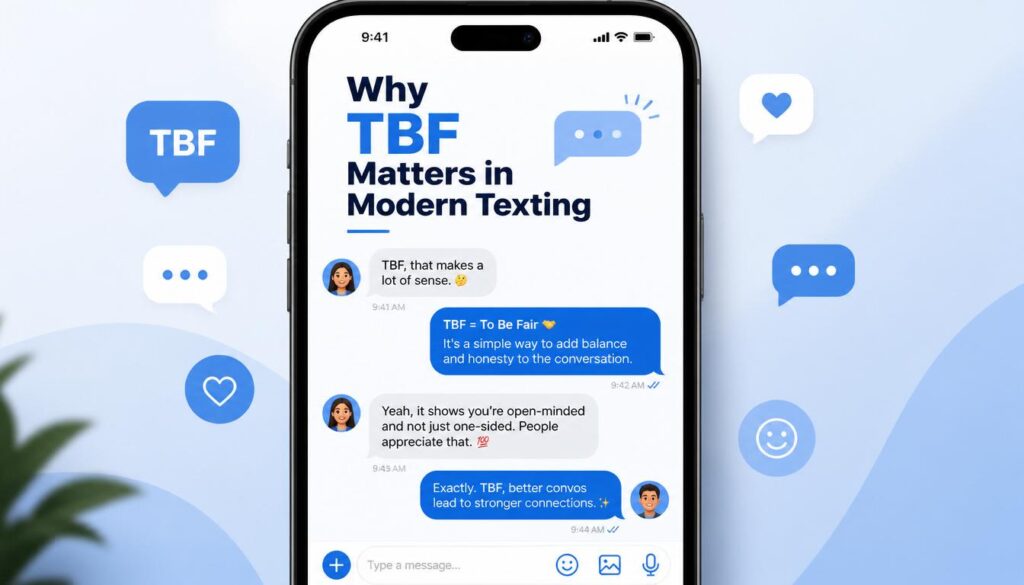
TBF represents a bigger change in communication. Digital conversations are not only about sending information; they are also about managing tone.
A short abbreviation can help people:
- Avoid unnecessary conflict
- Show understanding
- Express opinions politely
- Recognize different perspectives
The relationship is simple:
TBF → creates balance → improves conversational tone.
This is why small phrases like TBF continue to survive in changing internet language.
Frequently Asked Questions About TBF Meaning in Text
What does TBF mean in text messages?
TBF means “To Be Fair.” People use it in text messages to introduce a fair point, provide context, or acknowledge another side of a situation. It is common in casual chats, social media comments, and online discussions.
Is TBF rude when someone uses it?
No, TBF is usually not rude. It is often used to make conversations more balanced and respectful. However, depending on the sentence and tone, it can sometimes sound sarcastic or dismissive.
Can TBF be used in professional emails?
It is better to avoid TBF in professional emails and formal writing. Instead, write the complete phrase “To be fair.” Professional communication usually requires clearer and more traditional language.
What is the difference between TBF and TBH?
TBF means “To Be Fair” and introduces balance or another perspective. TBH means “To Be Honest” and introduces a personal truth or opinion. Both are common texting abbreviations but communicate different intentions.