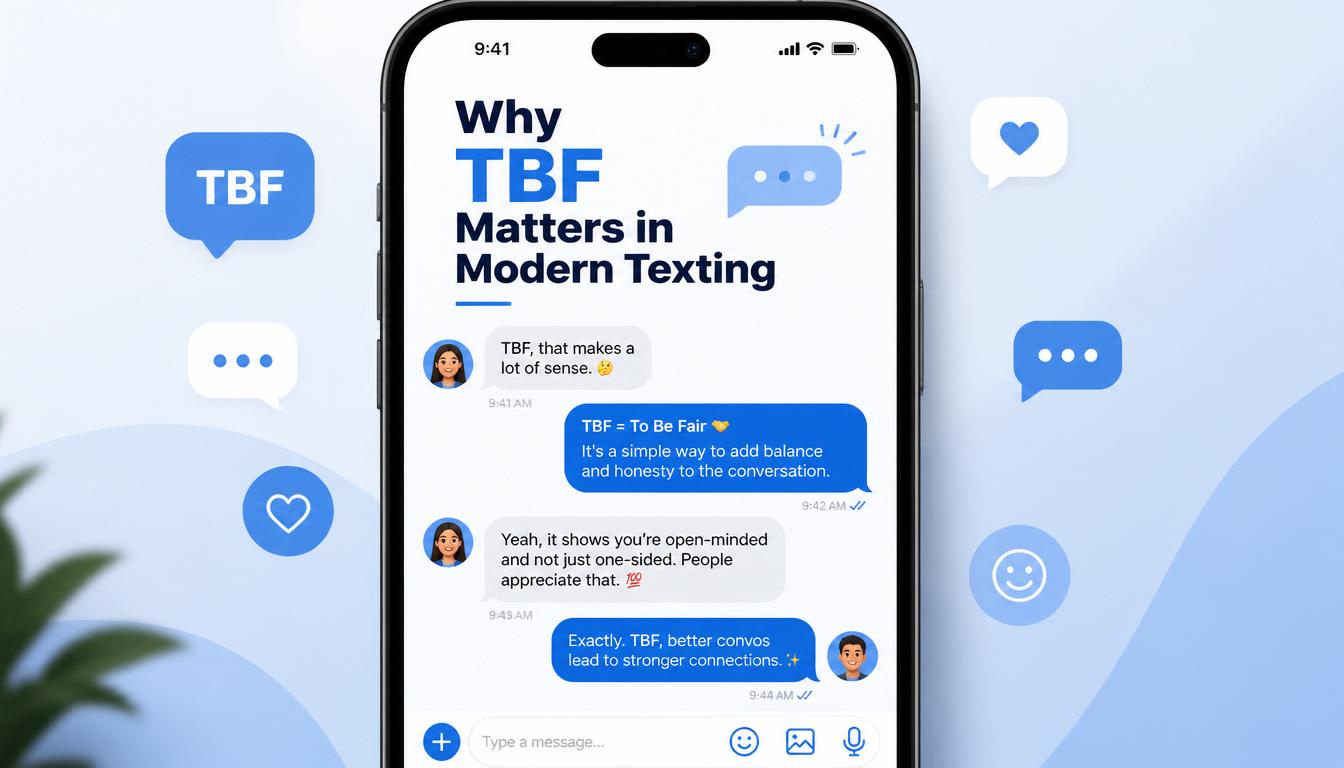

Have you ever seen someone write “TBF” in a message, comment, or social media post and wondered what it actually means? If you are searching what does TBF mean in text, the answer is simple: TBF stands for “To Be Fair.” But this small abbreviation carries more meaning than just three letters.
In modern digital communication, people use TBF to show fairness, add another perspective, soften criticism, or make a conversation feel more balanced. It has become a common part of internet slang and casual texting, especially among people who communicate through social platforms and messaging apps.
Understanding TBF is not only about knowing the definition. It is also about understanding the emotion, tone, and social meaning behind it. This guide explains the TBF abbreviation, how people use it, where it appears, and when you should or should not use it.
What Does TBF Mean in Text?
TBF means “To Be Fair” in text messages, online conversations, and social media discussions.
The phrase is used when someone wants to introduce a fair point, acknowledge another side of an argument, or make a statement sound less aggressive.
For example:
“I didn’t like the movie, but TBF, the acting was really good.”
Here, TBF shows that the person is not completely negative. They are recognizing something positive while sharing their opinion.
The main purposes of using TBF in texting include:
- Adding balance to an opinion
- Giving a reasonable explanation
- Acknowledging another person’s perspective
- Reducing conflict during disagreements
- Making criticism sound softer
The relationship is straightforward:
TBF → stands for → To Be Fair
This meaning is widely accepted across casual conversations, online comments, and social media platforms.
Why Do People Use TBF Instead of Writing “To Be Fair”?
People use texting abbreviations because digital conversations are usually fast and informal. Typing three letters is quicker than writing the full phrase every time.
However, speed is not the only reason. TBF also communicates a specific feeling.
When someone writes TBF, they are often saying:
- “I want to be reasonable here.”
- “There is another side to this.”
- “I understand why this happened.”
- “I am not trying to attack anyone.”
So, TBF is more than an abbreviation; it is a tone marker in digital communication.
A tone marker helps readers understand the intention behind a message. Without it, a sentence may sound too harsh or negative.
For example:
Without TBF:
“She was late again.”
With TBF:
“TBF, traffic was terrible today.”
The second message feels more understanding and less judgmental.
The Emotional Meaning Behind TBF

Although TBF literally means “To Be Fair,” its emotional purpose is what makes it popular.
People often use TBF when they want to appear balanced and thoughtful. It shows that they are considering facts instead of reacting emotionally.
In online communication, where misunderstandings happen easily, small phrases like TBF help create better conversations.
TBF usually communicates:
- Fairness – The speaker wants to consider all sides.
- Empathy – The speaker recognizes another person’s situation.
- Honesty – The speaker admits something even if it supports an opposing view.
- Respect – The speaker avoids sounding unnecessarily rude.
This is why TBF works well in disagreements. It shifts the conversation from blaming someone toward understanding the situation.
How Is TBF Used in Different Contexts?
The meaning of TBF stays the same, but the feeling can change depending on where it appears.
TBF in Friendly Chats
In casual conversations between friends, TBF is often used humorously or casually.
Example:
Person A: “You never answer my messages.”
Person B: “TBF, I was sleeping.”
The phrase makes the response playful instead of defensive.
Friends often use TBF because it keeps conversations relaxed while still making a point.
TBF During Arguments or Disagreements
One of the most useful purposes of TBF is reducing tension.
Example:
“I think he handled the situation badly.”
“TBF, he was dealing with a lot of pressure.”
Here, TBF introduces a counterargument without directly attacking the first person’s opinion.
The relationship is:
TBF → functions as → A tool for adding balanced viewpoints
TBF on Social Media
TBF appears frequently on:
- Instagram captions
- TikTok comments
- X (Twitter) discussions
- Facebook conversations
- Reddit threads
Social media discussions can become negative quickly, so people often use TBF to add context.
Example:
“The game had problems, but TBF, the graphics were amazing.”
The writer is criticizing one part while recognizing another positive aspect.
TBF Meaning Compared With Similar Text Abbreviations
Many internet abbreviations look similar but have different purposes. Knowing the difference helps you communicate clearly.
| Abbreviation | Full Meaning | Main Purpose |
|---|---|---|
| TBF | To Be Fair | Adds balance or fairness |
| TBH | To Be Honest | Shares a direct opinion |
| IMO | In My Opinion | Shows personal viewpoint |
| FYI | For Your Information | Provides information |
The biggest difference is that TBF focuses on fairness, while TBH focuses on honesty.
For example:
- “TBH, I didn’t enjoy the concert.” → personal opinion
- “TBF, the singer performed well.” → balanced perspective
Both can appear together in the same conversation.
Common Mistakes When Using TBF
Although TBF is simple, people sometimes use it incorrectly.
Common mistakes include:
Using TBF Without Making a Fair Point
TBF should introduce a reasonable explanation or another perspective.
Incorrect:
“TBF, I just like pizza.”
This does not add fairness or balance.
Better:
“TBF, the restaurant was busy, so the service was slower.”
Using TBF in Professional Writing
TBF is considered casual language. It usually does not belong in:
- Job applications
- Academic papers
- Legal documents
- Business reports
- Formal emails
In professional situations, write the complete phrase:
“To be fair, the project required additional research.”
Overusing TBF
Using TBF in every sentence can make messages feel repetitive or unnatural.
Like any slang term, it works best when it fits the situation.
When Should You Avoid Using TBF?
You should avoid using TBF when communicating in formal or serious environments.
Examples include:
- Workplace documents
- Official complaints
- Research writing
- Customer service messages
- Professional presentations
The phrase itself is not rude, but the abbreviation may appear too casual.
A useful rule:
Use TBF in casual digital conversations, but write “to be fair” in professional communication.
Does TBF Have Other Meanings?
The most common meaning of TBF is “To Be Fair.” However, abbreviations can sometimes have different meanings depending on the community using them.
Some people may encounter TBF in specialized areas such as:
- Gaming communities
- Technology discussions
- Workplace systems
- Industry-specific conversations
These alternative meanings are much less common than “To Be Fair” in texting.
When you see TBF in a normal chat, comment section, or social media post, the intended meaning is almost always To Be Fair.
Context matters. The surrounding words usually reveal what the person means.
TBF Across Different Age Groups and Online Communities
The use of TBF varies between generations and communities.
Teenagers
Many teenagers use TBF casually in:
- Group chats
- Social media comments
- Gaming conversations
It often appears naturally because abbreviations are already part of everyday digital speech.
Young Adults
Young adults may use TBF more strategically. They often use it during discussions to show they are being reasonable.
Older Users
Older internet users may understand TBF but may use it less frequently compared with younger digital users.
This shows how language evolves. Internet slang becomes popular when communities repeatedly use it in everyday conversations.
TBF in Memes and Internet Culture
TBF has become popular in memes because it creates a funny contrast.
A person may describe something negative and then add a fair excuse.
Example:
“My dog destroyed my homework… TBF, I left it on the floor.”
The humor comes from admitting responsibility while still defending the situation.
In internet culture, TBF often creates a feeling of relatability. It shows that people understand situations are not always completely one-sided.
How to Respond When Someone Says TBF
When someone uses TBF in a conversation, they are usually opening the door for agreement or discussion.
Possible responses include:
- “That’s fair.”
- “Good point.”
- “True, I didn’t think about that.”
- “I see your perspective.”
A good response depends on the situation, but acknowledging the point keeps conversations positive.
How TBF Reflects Modern Digital Communication
Modern language is becoming shorter, faster, and more emotionally focused.
Abbreviations like TBF are not simply shortcuts. They help people express attitudes and feelings quickly.
The relationship is:
Digital communication → creates → New language patterns like texting abbreviations
People now communicate not only through words but also through tone markers, emojis, and short phrases that carry social meaning.
TBF is a good example because three letters can communicate fairness, empathy, and balance.
Frequently Asked Questions About TBF
What does TBF mean in text messages?
TBF means “To Be Fair.” It is used in texting and online conversations when someone wants to add a balanced opinion, acknowledge another perspective, or make a statement sound less harsh. It is commonly used in casual chats and social media discussions.
Is TBF considered rude?
No, TBF is generally not rude. In most situations, it makes conversations feel more reasonable because it shows the person is considering different viewpoints. However, the tone can change depending on the context, and it may sound sarcastic if used negatively.
Can TBF be used in professional emails?
It is better to avoid using TBF in professional emails. While the phrase “to be fair” is acceptable in some workplace conversations, the abbreviation is considered informal. Writing the complete phrase creates a more professional impression.
What is the difference between TBF and TBH?
TBF means “To Be Fair” and focuses on balance or another perspective. TBH means “To Be Honest” and introduces a personal opinion or direct statement. Both are common internet abbreviations, but they communicate different intentions.