
Have you ever received a message that simply said “DK” and wondered what the person actually meant? In today’s fast-moving digital conversations, short forms and texting abbreviations have become a normal part of how people communicate.
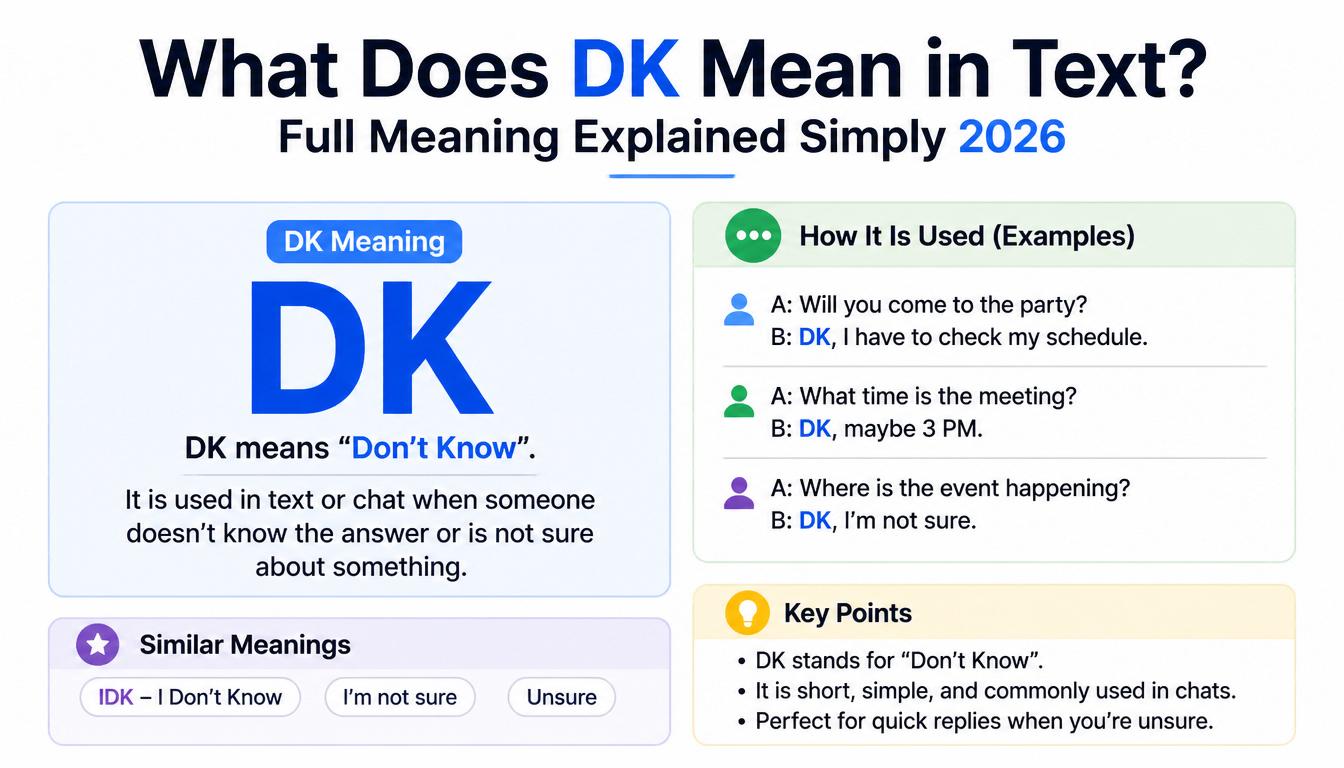
If you are searching for “What Does DK Mean in Text? Full Meaning Explained Simply 2026,” the answer is usually straightforward: DK means “Don’t Know.”
However, like many pieces of internet slang, DK can carry different meanings depending on the conversation, platform, and relationship between the people chatting. A two-letter response can show uncertainty, honesty, hesitation, or even a casual way of avoiding a longer explanation.
Understanding DK is not only about knowing the definition. It is also about understanding the context, tone, and digital communication habits behind the abbreviation.
This guide explains the meaning of DK, how people use it in messages, how it compares with similar abbreviations, and how to correctly interpret it in different situations.
What Does DK Mean in Text?
DK stands for “Don’t Know” in text messages and online conversations. It is a shortened form people use when they do not have an answer, are uncertain about something, or want to give a quick response.
For example:
Person A: “Are you coming to the party tonight?”
Person B: “DK yet.”
Meaning: “I don’t know yet.”
The abbreviation is common because modern texting culture values speed and convenience. Instead of typing three separate words, users can write two letters and communicate the same idea instantly.
DK is most often used to express:
- Uncertainty the person does not have enough information.
- Honesty they admit they do not know something.
- Neutrality they avoid giving a strong opinion.
- Casual communication they want a quick informal reply.
The relationship is simple:
DK → stands for → Don’t Know
This direct connection is why DK has become widely understood across many digital conversations.
Why Do People Use DK Instead of Writing “Don’t Know”?
People use DK because digital conversations are usually fast, informal, and short. Typing a shorter response saves time, especially during active chats.
Some common reasons include:
- Faster typing on mobile devices.
- Keeping messages short and simple.
- Matching the casual style of friends or online communities.
- Avoiding unnecessary explanations.
- Maintaining a relaxed conversation tone.
For example:
“I DK what happened.”
is quicker than:
“I don’t know what happened.”
Both sentences communicate the same idea, but DK fits the quick style of online messaging.
The use of DK reflects a larger trend in digital shorthand, where people use abbreviations, emojis, GIFs, and short phrases to express thoughts quickly.
The Emotional Meaning and Tone Behind DK

Although DK has a simple definition, its emotional meaning can change depending on the situation.
DK → communicates → uncertainty, honesty, or neutrality
The same abbreviation can feel different in different conversations.
Neutral or Casual Tone
Example:
“I DK what time the movie starts.”
Here, DK simply means the person does not have the information. There is no negative emotion involved.
Confused Tone
Example:
“I DK why he did that.”
This may show confusion or surprise. The person is searching for an explanation.
Indifferent or Nonchalant Tone
Example:
“DK, you decide.”
This can mean the person does not have a preference. Depending on the relationship, it may sound relaxed or slightly dismissive.
Frustrated Tone
Example:
“DK anymore 😕.”
The emoji and surrounding messages can make DK appear more emotional. The person may feel overwhelmed or tired.
This shows why context determines the meaning and tone of DK.
Where Is DK Commonly Used?
DK appears across many forms of digital communication. It is not limited to traditional texting.
DK in Text Messages
Text messaging is the most common place where people use DK.
Examples:
- “DK when she will arrive.”
- “DK what happened yesterday.”
- “DK if I can make it.”
In these cases, DK works as a quick replacement for “I don’t know.”
DK on Social Media
On platforms like Instagram, X/Twitter, and other social networks, DK appears in comments, captions, and direct messages.
Example:
“DK why everyone loves this trend 😂”
Here, the user is not asking a serious question. They are usually expressing curiosity or mild confusion.
DK in WhatsApp and Chat Apps
Fast conversations on messaging apps often use abbreviations because people reply quickly.
Example:
Friend: “Who is bringing food?”
Reply: “DK, maybe Sarah.”
The meaning is uncertain but honest.
DK in Gaming Chats
Gaming communities often rely on quick communication because players need to make decisions quickly.
Example:
“DK if we should attack now.”
Here, DK helps teammates understand that the player is unsure about the strategy.
DK vs IDK: What Is the Difference?
Many people confuse DK with IDK because both have almost the same meaning.
| Abbreviation | Meaning | Common Tone |
|---|---|---|
| DK | Don’t Know | Short, casual, neutral |
| IDK | I Don’t Know | More common, informal |
| NGL | Not Gonna Lie | Honest opinion |
| TBH | To Be Honest | Personal statement |
| SMH | Shaking My Head | Disappointment or frustration |
The main difference is that IDK is more widely recognized, while DK is a shorter version that some people use in casual chats.
Example:
“I DK.”
and
“I IDK.”
Both communicate uncertainty, but “IDK” is generally more familiar to most English speakers online.
Is DK Rude or Offensive?
No, DK is not normally rude or offensive. It is a neutral texting abbreviation that usually means someone does not know an answer.
However, the way DK is written can affect how it feels.
Compare:
Friendly:
“DK 😅 I’ll check and let you know.”
Less friendly:
“DK.”
The second example may seem short or dismissive because there is no additional context.
Factors that influence the tone include:
- The previous conversation.
- The relationship between the people.
- Use of emojis.
- Whether the person provides more information afterward.
A simple DK from a close friend usually means something different than the same reply from a coworker during an important discussion.
Other Meanings of DK Outside Texting
Although “Don’t Know” is the most common texting meaning, DK can represent other things in different communities.
Context is extremely important because abbreviations often have multiple definitions.
Some alternative meanings include:
| Meaning | Context |
|---|---|
| Donkey Kong | Gaming and entertainment |
| Dark Knight | Comics and movies |
| Drift King | Automotive culture |
| Denmark (DK) | Country code abbreviation |
| Developer Kit | Technology and software |
For example, someone discussing a video game might use DK to refer to Donkey Kong, not “Don’t Know.”
This is why understanding the conversation topic is necessary before interpreting any abbreviation.
How to Understand DK Correctly in a Conversation
When someone sends “DK,” do not immediately assume they are being careless or uninterested. Instead, look at the surrounding information.
Consider these questions:
- What was the topic of conversation?
A gaming discussion may have a different meaning than a personal chat. - What was said before DK appeared?
Previous messages often reveal whether the person is confused, uncertain, or simply responding quickly. - Are there emojis or extra words?
Emojis can completely change the emotional tone. - Does the person follow up later?
A person saying DK and then researching the answer is different from someone ignoring the conversation.
The key relationship is:
Context → determines → the interpretation of DK
When Should You Use DK?
DK works best in casual conversations where short replies are acceptable.
Good situations to use DK:
- Talking with friends.
- Replying in group chats.
- Casual social media conversations.
- Informal online communities.
- Quick everyday questions.
Examples:
- “DK what time we are leaving.”
- “DK if that restaurant is open.”
- “DK what she meant.”
When Should You Avoid Using DK?

Although DK is useful, it is not appropriate everywhere.
Avoid using DK in:
- Professional emails.
- Formal reports.
- Important workplace decisions.
- Academic writing.
- Serious conversations requiring explanation.
Instead of writing:
“DK.”
A better professional response would be:
“I’m not sure at the moment, but I’ll confirm and get back to you.”
This provides clarity and sounds more professional.
Common Misunderstandings About DK
One common misunderstanding is that DK means someone does not care.
That is not always true.
A person saying DK may simply be:
- Missing information.
- Unsure about the answer.
- Waiting for more details.
- Being honest instead of guessing.
Example:
Question: “Do you know when the meeting starts?”
Answer: “DK.”
This does not necessarily mean the person is lazy. It simply means they do not know the meeting time.
Another misunderstanding is that DK always sounds cold. In reality, emojis and additional words can make it friendlier.
“DK 😂 maybe tomorrow”
feels very different from:
“DK.”
How to Respond When Someone Uses DK
Your response should match the situation and tone.
Helpful responses include:
- “No problem, let me know when you find out.”
- “Okay, we can decide later.”
- “Thanks, I’ll check.”
- “That’s fine, we’ll figure it out.”
Avoid assuming the person is being unhelpful. A respectful response keeps the conversation positive.
The Cultural Impact of DK in Digital Communication
DK is part of a larger shift toward faster and shorter communication. Similar to emojis and GIFs, abbreviations allow people to express ideas with fewer characters.
Modern digital communication focuses on:
- Speed.
- Convenience.
- Emotional expression.
- Informal interaction.
A small abbreviation like DK can communicate uncertainty without requiring a complete sentence.
This shows how language continues to evolve. Just like older generations created slang and shortened expressions, online communities create new forms of communication based on technology.
Psychological Meaning of Using DK
The use of DK can reveal certain communication habits.
People who use DK may be showing:
- Comfort with uncertainty.
- Willingness to admit they do not know something.
- Preference for efficient communication.
- A casual conversation style.
In many cases, saying “I don’t know” is actually a sign of honesty. Instead of providing incorrect information, the person clearly communicates uncertainty.
DK Usage Examples in Real Conversations
Example 1: Friends Planning an Event
Friend A: “Are we meeting tonight?”
Friend B: “DK yet, I’ll tell you later.”
Meaning: The person is uncertain but may provide an update.
Example 2: Social Media Comment
“DK why this video is trending 😂”
Meaning: The user is confused but making a casual observation.
Example 3: Group Chat
Person A: “Who ordered the tickets?”
Person B: “DK, ask Mike.”
Meaning: The person does not have the information.
Frequently Asked Questions About DK
What does DK mean in text?
DK usually means “Don’t Know” in text messages and online chats. People use it to show uncertainty, lack of information, or a casual response. The exact meaning depends on the conversation context, platform, and relationship between the people communicating.
Is DK the same as IDK?
Yes, DK and IDK have the same basic meaning: “Don’t Know” and “I Don’t Know.” IDK is more commonly used online, while DK is a shorter version that appears in some casual conversations.
Can DK have other meanings?
Yes. Although DK most commonly means “Don’t Know” in texting, it can also refer to things like Donkey Kong, Dark Knight, Drift King, or other terms depending on the topic being discussed.
Is DK rude in messages?
DK is usually not rude. It is a neutral abbreviation. However, a one-word reply like “DK” without additional explanation may sometimes appear dismissive depending on the situation and relationship between the people chatting.