
Have you ever received a message that simply said “DK” and wondered what it actually meant? You’re not alone. As texting, social media, and online conversations continue to evolve, abbreviations have become a normal part of digital communication. One of the most common is DK, but its meaning can vary depending on the context.
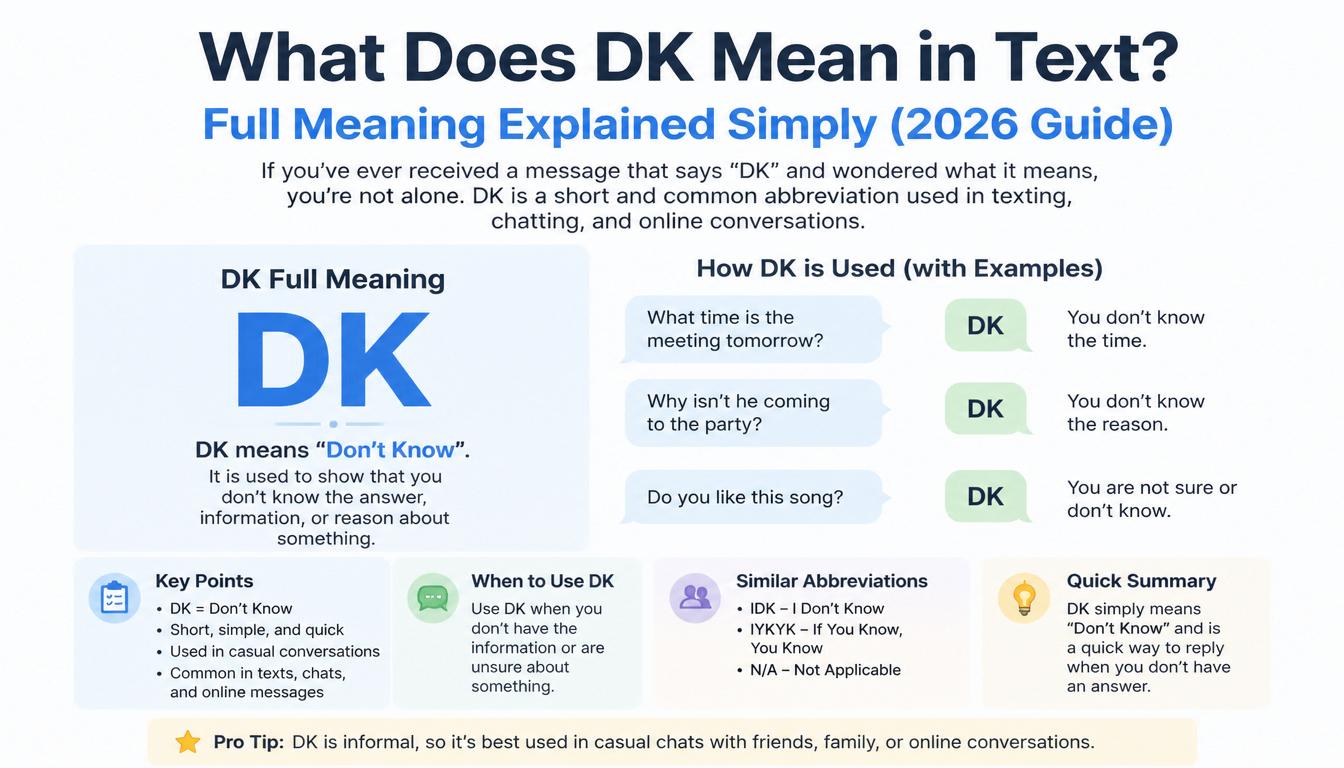
In most cases, DK means “Don’t Know.” It’s a quick, informal way to express uncertainty or a lack of information in text messages, chat apps, gaming conversations, and social media. However, DK can also represent several other meanings in different situations.
This guide explains everything you need to know about what does DK mean in text, how to use it correctly, when to avoid it, and how to understand its meaning based on context.
What Does DK Mean in Text?
Direct Answer: In texting, DK stands for “Don’t Know.” It is commonly used to express uncertainty, honesty, or a neutral response when someone doesn’t have the answer to a question.
Examples:
- Person A: “Are you coming tonight?”
- Person B: “DK yet.”
Meaning: The person doesn’t know yet.
Another example:
- Person A: “Who won the match?”
- Person B: “DK, I haven’t checked.”
In both cases, DK communicates uncertainty without requiring a long explanation.
Why Is DK So Popular in Texting?
Modern communication values speed and convenience. Instead of typing “I don’t know,” many people simply type DK or IDK.
People use DK because it is:
- Quick to type
- Easy to understand
- Informal and conversational
- Suitable for casual texting
- Common across multiple platforms
Whether you’re chatting with friends, replying in a group chat, or commenting on social media, DK saves time while still getting the message across.
DK Stands for “Don’t Know”
The most common meaning of DK is straightforward:
DK → stands for → Don’t Know
This abbreviation is used whenever someone lacks information or isn’t certain about something.
For example:
- “DK what time the movie starts.”
- “DK if she’s coming.”
- “DK why everyone is talking about it.”
These responses are honest and neutral rather than rude or dismissive.
Common Situations Where People Use DK
Text Messages
Text messaging is where DK appears most frequently.
Examples:
- “DK when I’ll be home.”
- “DK if I can make it.”
Social Media
On platforms like Instagram, Facebook, TikTok, and X (formerly Twitter), people use DK in comments and replies.
Examples:
- “DK why this video is trending.”
- “DK what’s happening here.”
Chat Apps
Apps such as WhatsApp, Messenger, Telegram, and Snapchat encourage quick communication.
Examples:
- “DK what to say.”
- “DK, maybe tomorrow.”
Gaming Chats
Gamers often use DK while discussing strategies or gameplay.
Examples:
- “DK if we should attack now.”
- “DK which weapon is better.”
Gaming conversations move quickly, making abbreviations especially useful.
Emotional Meaning Behind DK
Although DK simply means “Don’t Know,” its emotional tone depends on the conversation.
Honest Uncertainty
Sometimes the sender genuinely doesn’t know the answer.
Example:
“DK what happened.”
Casual Response
Friends often use DK casually without sounding serious.
Example:
“DK, let’s see.”
Neutral Reply
DK can also avoid making a decision immediately.
Example:
“DK, you choose.”
Mild Confusion
Sometimes DK expresses confusion rather than ignorance.
Example:
“DK why that happened.”
Understanding the surrounding conversation helps determine the intended tone.
Is DK Rude?
No.
In most conversations, DK is not considered rude.
However, context matters.
For example:
Friend:
“Want pizza tonight?”
Reply:
“DK.”
This sounds perfectly normal.
But imagine someone asks:
“Can you help me with this important issue?”
Reply:
“DK.”
Without additional explanation, the response may appear cold or dismissive.
Adding a few extra words improves clarity.
Instead of:
“DK.”
Try:
“DK yet, but I’ll check.”
DK vs IDK
Many people confuse these abbreviations because they have similar meanings.
| Abbreviation | Meaning | Common Usage |
|---|---|---|
| DK | Don’t Know | Short, casual texting |
| IDK | I Don’t Know | Most common internet abbreviation |
| TBH | To Be Honest | Honest opinion |
| NGL | Not Gonna Lie | Introduces honesty |
| SMH | Shaking My Head | Disappointment or disbelief |
Although IDK is more widely recognized, DK is becoming increasingly common in fast-paced conversations.
Other Meanings of DK (Important Context)
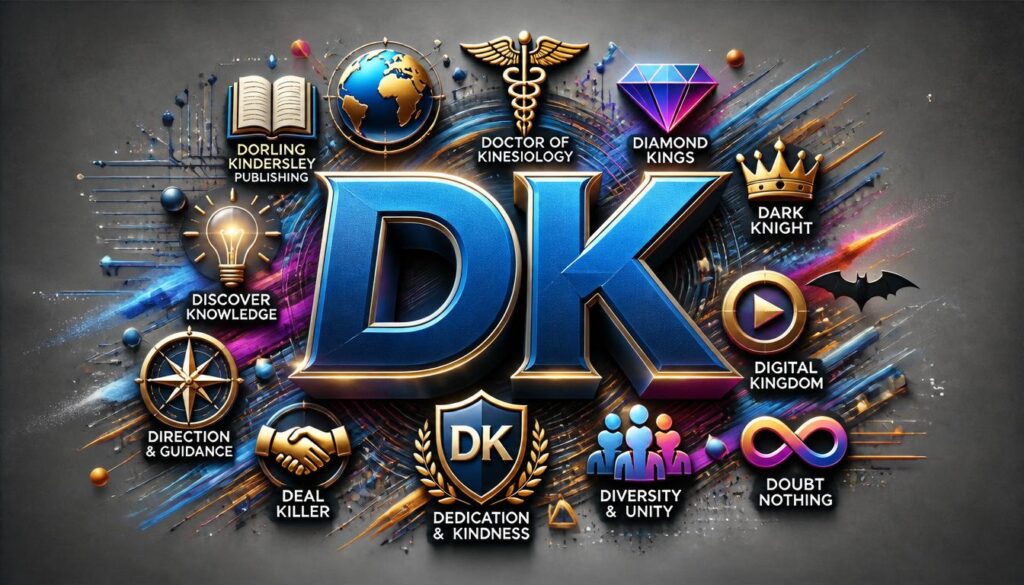
One area many guides overlook is that DK doesn’t always mean “Don’t Know.”
Depending on the conversation, DK can refer to completely different things.
Donkey Kong
Gamers often recognize DK as Donkey Kong, the famous Nintendo character.
Example:
“I’ve always liked DK in Mario Kart.”
Here, DK clearly refers to the video game character.
Denmark
DK is the official country abbreviation for Denmark.
Example:
“My package is shipping from DK.”
Drift King
Car enthusiasts use DK when discussing drifting.
Example:
“He’s the new DK of the local racing scene.”
Double Kill
In competitive online games, DK may stand for Double Kill.
Example:
“Nice DK!”
Dark Knight
Movie fans sometimes shorten The Dark Knight to DK.
Example:
“DK is still my favorite Batman movie.”
Person’s Initials
Sometimes DK simply refers to someone’s initials.
Example:
“DK sent the report this morning.”
Always look at the conversation before assuming the meaning.
How to Identify the Correct Meaning of DK
Since DK has multiple meanings, context is everything.
Ask yourself these questions:
- What is the conversation about?
- Is it gaming?
- Is it texting?
- Is it about movies?
- Is someone talking about travel?
- Is DK someone’s name?
The surrounding words usually make the intended meaning obvious.
Examples of DK in Everyday Conversations
Example 1
Person A:
“What time is dinner?”
Person B:
“DK yet.”
Meaning:
The person doesn’t know the time.
Example 2
Person A:
“Who’s driving?”
Person B:
“DK, maybe Sarah.”
Meaning:
The speaker is unsure.
Example 3
Person A:
“Did you watch DK?”
Person B:
“It was amazing.”
Here, DK probably refers to The Dark Knight, not “Don’t Know.”
Example 4
Person A:
“I unlocked DK today.”
Meaning:
The conversation is likely about Donkey Kong.
Why Context Matters
Language on the internet changes quickly.
The same abbreviation may have several meanings.
For example:
- “LOL” can express laughter or soften a sentence.
- “GG” means Good Game.
- “AFK” means Away From Keyboard.
- “BRB” means Be Right Back.
- “IDK” means I Don’t Know.
- “DK” usually means Don’t Know.
Understanding context prevents misunderstandings.
When Should You Use DK?
DK is appropriate when:
- You genuinely don’t know something.
- You’re texting friends.
- You’re chatting casually.
- You’re messaging family.
- You’re playing online games.
- You’re commenting on social media.
When Should You Avoid DK?
Avoid using DK in:
- Business emails
- Job applications
- Academic papers
- Formal presentations
- Professional reports
- Official documents
In professional settings, writing “I don’t know” or “I’m not certain” sounds much more appropriate.
How to Respond When Someone Says DK
Good responses include:
- “No problem.”
- “Thanks for letting me know.”
- “Let’s find out together.”
- “I’ll check myself.”
- “We can ask someone else.”
Avoid criticizing someone simply because they don’t know the answer.
Common Texting Abbreviations Similar to DK
Besides DK, you’ll often encounter these abbreviations:
- IDK I Don’t Know
- IMO In My Opinion
- TBH To Be Honest
- NGL Not Gonna Lie
- BTW By The Way
- BRB Be Right Back
- AFK Away From Keyboard
- LMK Let Me Know
- FYI For Your Information
- TTYL Talk To You Later
Learning these abbreviations makes online communication much easier.
Frequently Asked Questions
What does DK mean in text?
DK usually stands for “Don’t Know.” People use it in text messages, social media, gaming chats, and messaging apps when they are unsure about something or don’t have the information being requested.
Is DK the same as IDK?
Not exactly. DK means “Don’t Know,” while IDK means “I Don’t Know.” Both express uncertainty, but IDK is more widely recognized and commonly used across the internet.
Can DK have other meanings?
Yes. Depending on the context, DK may refer to Donkey Kong, Denmark, Drift King, Double Kill, Dark Knight, or even a person’s initials. Always consider the conversation before deciding its meaning.
Should I use DK in professional communication?
No. DK is an informal abbreviation best suited for casual conversations. In professional emails, meetings, or business messages, it’s better to write complete phrases such as “I don’t know” or “I’m not certain.”
Conclusion
Understanding what does DK mean in text helps you communicate more effectively in today’s digital world. While DK most commonly stands for “Don’t Know,” its meaning always depends on the context.
It appears frequently in text messages, chat apps, gaming communities, and social media because it’s short, convenient, and easy to understand.
Before interpreting DK, consider the conversation, the platform, and the people involved. Doing so will help you avoid misunderstandings and respond appropriately.
As online language continues to evolve in 2026 and beyond, knowing common abbreviations like DK, IDK, TBH, and NGL will make digital communication smoother and more confident.
Meta Description: What Does DK Mean in Text? Discover the full meaning of DK, its uses, examples, alternative meanings, and texting tips in this complete 2026 guide.