
Have you ever received a reply that only says “this” and wondered what the person actually means? You are not the only one. The phrase “what does “this” mean in text?” is searched often because this small word can carry a surprisingly big meaning depending on the conversation, timing, and tone.
In digital communication, “this” is usually more than just a pointing word. It can show agreement, emotional connection, support, emphasis, or even sarcasm. A single-word reply can communicate a complete reaction without needing a long explanation.
Understanding how “this” works in texting culture helps you read online conversations better and avoid misunderstandings. Although it looks simple, the meaning changes based on the message before it, the relationship between people, and the platform where it appears.
What Does “This” Mean in Text Messages?
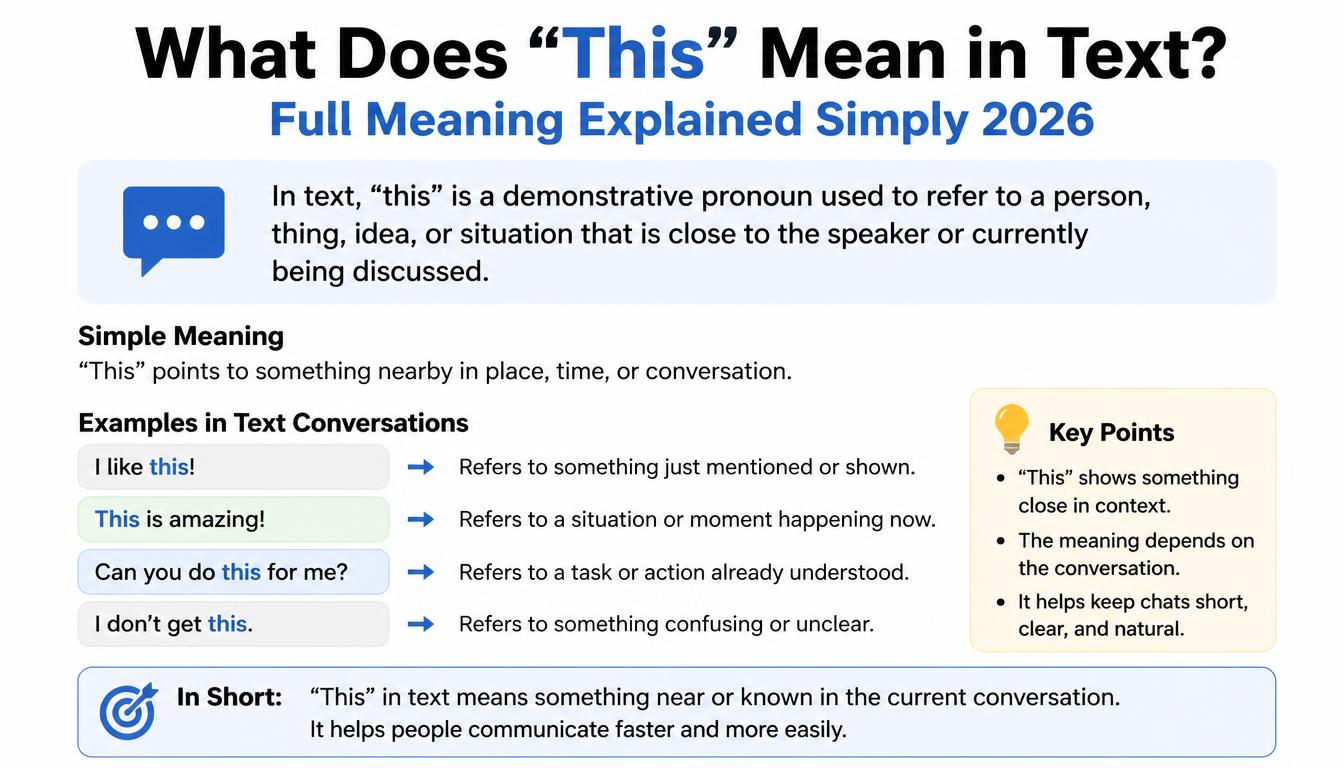
In text messages, “this” usually means “I agree with this,” “I relate to this,” or “this perfectly explains my thoughts.” It points back to a specific idea, statement, image, or feeling that someone wants to highlight.
For example:
Person A: “Taking breaks is important because burnout is real.”
Person B: “This.”
The second person is not just referring to the word itself. They are saying:
- I strongly agree with this idea.
- This describes exactly how I feel.
- This point deserves attention.
The meaning of “this” in texting depends heavily on context. The word does not carry the full message alone. The previous sentence, conversation mood, and relationship between users complete its meaning.
The Core Meaning of “This” in Digital Communication
At its basic level, “this” is a reference word that points toward something already mentioned. In traditional grammar, it is called a deictic word because it directs attention toward a specific thing.
In texting, that “thing” can be:
- A previous message
- A personal opinion
- A social media post
- A photo or video
- An emotional statement
- A joke or observation
For example:
“People should stop judging others without knowing their story.”
Reply: “This.”
The reply means:
“This statement is correct, and I support it.”
So the relationship is simple:
“This” → refers to → a previous idea or message.
That is why the word feels powerful even though it contains only four letters.
Why Does “This” Feel Confusing in Texts?

The confusion happens because texting removes many communication signals that exist in real conversations.
When speaking face-to-face, people use:
- Facial expressions
- Voice tone
- Body language
- Timing
Text messages remove most of those clues. Because of that, a short response like “this” requires the reader to understand the surrounding conversation.
For example:
“I finally finished my project after weeks of stress.”
Reply: “This.”
It could mean:
- “I understand that feeling.”
- “I have experienced the same thing.”
- “This is exactly what I needed to hear.”
The same word can create different meanings in different situations.
Common Meanings of “This” in Texting
The word “this” has several common meanings in online conversations.
| Context | Meaning of “This” |
|---|---|
| Casual chat | Agreement or approval |
| Emotional conversation | Shared feelings or connection |
| Debate | Support for an argument |
| Social media comments | Highlighting a post or opinion |
| Humor | Approval or appreciation |
“This” Means Agreement
The most common use of “this” in text messages is agreement.
Example:
Friend: “Sleep is more important than staying busy all the time.”
Reply: “This.”
Meaning:
“I completely agree with this statement.”
In many online communities, “this” works like a stronger version of “yes.” It shows that someone does not just accept the information; they connect with it.
“This” Shows Emotional Connection
Sometimes people use “this” when a message describes their own feelings.
Example:
“I’m tired of pretending everything is fine when it’s not.”
Reply: “This.”
The person may mean:
- I feel the same way.
- This describes my experience.
- I understand this emotion.
Here, “this” → expresses → emotional alignment.
It creates a sense of connection without requiring a long reply.
“This” Adds Emphasis
Another common use is highlighting something important.
Example:
“Confidence matters more than perfection. This.”
The person is saying:
“Pay attention to this idea.”
The word works almost like underlining a sentence. It tells others that the previous point deserves focus.
“This” vs “Yes” in Text Messages
Although “this” and “yes” can both show agreement, they have different emotional meanings.
| Word | Meaning |
|---|---|
| Yes | Simple confirmation |
| This | Strong agreement, connection, or emphasis |
A person saying “yes” may simply accept information.
A person saying “this” often means:
- This exactly matches my opinion.
- This represents what I believe.
- This expresses something I could not explain myself.
For example:
Statement: “Everyone needs time away from screens.”
Reply: “Yes.” → Simple agreement.
Reply: “This.” → Strong personal connection.
How “This” Is Used on Social Media
The use of “this” on social media comments has become especially common. People use it to publicly support a post without writing a full response.
You may see comments like:
- “This.”
- “Exactly this.”
- “This needs more attention.”
- “This is the point.”
On platforms where users quickly scroll through large amounts of content, short reactions are efficient.
The relationship is:
Social media users → use → “this” to highlight opinions and ideas.
It saves time while still showing participation.
“This” in Group Chats
In group chats, “this” helps people react quickly when they agree with another person.
Imagine someone writes:
“People should communicate clearly instead of expecting others to guess their feelings.”
Several members reply:
- “This.”
- “Exactly this.”
- “100% this.”
They are all showing collective agreement.
Instead of repeating the entire message, the word points back to the original statement.
This makes conversations faster and reduces repetition.
Can “This” Have a Negative Meaning?
Yes, “this” can sound negative depending on tone and surrounding words.
The word itself is usually neutral or positive, but additional context changes the meaning.
Examples:
“Oh great, this again.”
Here, “this” may show:
- Frustration
- Annoyance
- Disappointment
Another example:
“Sure, because this worked so well last time.”
The speaker is probably being sarcastic.
The relationship is:
Tone → influences → whether “this” sounds positive or negative.
Without context, it is difficult to know the exact intention.
Is “This” Considered Slang?
No, “this” is not slang by itself. It is a normal English word. However, using it as a standalone reply is a modern feature of informal digital communication.
Traditional grammar uses “this” to identify something nearby or already mentioned.
Modern texting culture expanded its use into a reaction word.
Examples of traditional use:
“This book is interesting.”
Modern online use:
“This.”
The second example has become common in:
- Social media comments
- Online communities
- Messaging apps
- Internet discussions
Why People Prefer Saying “This”
People use “this” because it communicates a lot with very little effort.
Main reasons include:
- It is short and quick.
- It avoids repeating a long message.
- It feels emotionally expressive.
- It fits fast online conversations.
- It creates social connection.
Modern digital communication often values speed. A short response can still carry strong meaning when everyone understands the context.
How to Understand “This” Correctly
If someone sends only “this”, look at the surrounding conversation before interpreting it.
Ask yourself:
- What message came before it?
- Is the conversation serious, emotional, or humorous?
- Is the person agreeing or criticizing?
- Are there other words that change the tone?
For example:
Positive:
“Being kind costs nothing.”
Reply: “This.”
Negative:
“Another meeting that could have been an email.”
Reply: “This again.”
The same word creates different meanings because the context changes.
The Psychology Behind Using “This” in Texting
The popularity of “this” as a text response shows how online communication has changed.
People do not always need complete sentences to express emotions. Sometimes a short reaction creates a stronger feeling of connection.
Linguistically, “this” works as a shortcut for shared understanding. It allows people to say:
“I see this.”
“I agree with this.”
“I feel connected to this.”
Digital language often focuses on speed, emotional reaction, and social belonging.
Can “This” Have a Negative Meaning?
One major difference between traditional writing and online communication is how words gain new functions.
The standalone use of “this” became popular through online discussions, forums, comment sections, and social platforms. Users wanted faster ways to support an idea without rewriting the entire argument.
Over time, it became common in:
- Forum discussions
- Reddit-style conversations
- Social media replies
- Meme culture
- Community discussions
The meaning stayed connected to agreement, but the emotional strength increased.
How Different Platforms Use “This” Differently
The meaning can slightly change depending on where it appears.
Messaging Apps
In apps like private chats, “this” usually feels personal. It often means:
“I understand you.”
Social Media
In public comments, it usually means:
“I support this opinion.”
Online Communities
In discussion forums, it can mean:
“This argument explains my viewpoint.”
Workplace Messaging
In professional spaces, standalone “this” may be less clear. A complete sentence is usually better.
When Should You Avoid Using “This” Alone?
Although “this” is common online, it is not always suitable.
Avoid using only “this” when:
- Writing professional emails
- Communicating with someone unfamiliar
- Giving important feedback
- Clarity is necessary
For example, instead of replying:
“This.”
A workplace message could say:
“I agree with this point because it explains the issue clearly.”
That removes confusion and sounds more professional.
How to Respond When Someone Says “This”

There is no required response when someone replies “this.” It depends on the conversation.
You can reply:
- “Glad you agree.”
- “Exactly!”
- “Same here.”
- “That’s what I was thinking too.”
Sometimes no response is needed because the person has already shown agreement.
Frequently Asked Questions
What does “this” mean in text messages?
In text messages, “this” usually means agreement, support, or emotional connection with something previously mentioned. It tells the other person that their statement, idea, or feeling matches the responder’s own thoughts.
Is “this” rude when someone texts it?
No, “this” is usually not rude. It is commonly used as a positive reaction showing agreement or support. However, the meaning can become negative if the surrounding words or tone suggest frustration, criticism, or sarcasm.
Does “this” mean the same as “I agree”?
Mostly yes, but “this” often feels stronger than “I agree.” It suggests emotional or personal connection, not just simple confirmation. It tells someone that their exact point represents what the responder thinks or feels.
Can “this” be sarcastic in texting?
Yes, “this” can be sarcastic when combined with negative wording or a mocking tone. The word itself is neutral, so the surrounding message determines whether it shows genuine support or criticism.