Have you ever come across the word Valkyrie in a fantasy movie, an old legend, a video game, or a conversation about powerful female warriors?
It is one of those words that sounds mysterious even before you discover what it means. There is something almost magical about its pronunciation, but its history is much deeper than its dramatic sound.
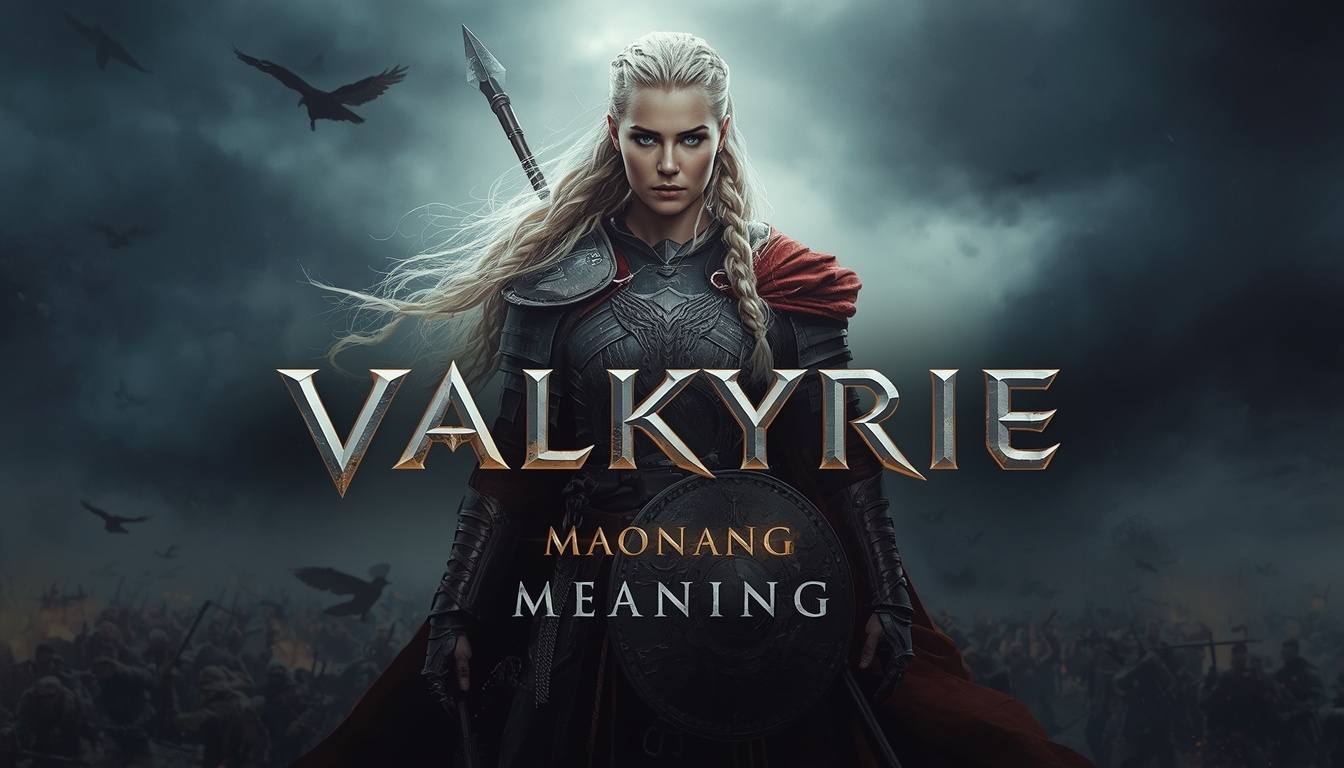
The Valkyrie meaning comes from ancient Norse mythology, where Valkyries were supernatural female figures associated with battles, fallen warriors, and the god Odin. They were believed to choose brave warriors who died in battle and guide some of them to Valhalla, the legendary hall of the slain.
Interestingly, Valkyries were not simply ordinary women carrying weapons. They had a special place in Scandinavian mythology and represented courage, fate, warfare, and the mysterious relationship between life and death.
Whether you are researching the Valkyrie definition, exploring Norse legends, or simply wondering what this unusual word means, understanding its origin reveals a fascinating part of ancient European storytelling.
What Does Valkyrie Mean?
A Valkyrie is a supernatural female figure in Norse mythology who chooses warriors destined to die in battle and, in many traditional accounts, escorts selected fallen heroes to Valhalla.
The word is often associated with strength, bravery, battle, and divine responsibility. Valkyries served Odin, one of the most important gods in Norse mythology, and played a significant role in the stories surrounding warriors and the afterlife.
In simple English, a Valkyrie can be described as:
- A supernatural female warrior from Norse mythology.
- One of Odin’s maidens who selects fallen warriors.
- A mythological figure connected with battle and warfare.
- A female being associated with Valhalla and the afterlife.
- A powerful figure representing courage, destiny, and honor.
The meaning of Valkyrie in mythology is not limited to fighting. These figures also represented the idea that a warrior’s fate could be connected to a larger supernatural purpose.
In modern language, someone might use Valkyrie to describe a strong, fearless, or independent woman, although this is a figurative interpretation rather than the original mythological definition.
Valkyrie Definition and Meaning in English
According to the dictionary, Valkyrie is a noun referring to one of the supernatural maidens in Norse mythology who select warriors killed in battle and sometimes bring them to Odin’s hall.
The Valkyrie definition has remained closely connected to these ancient legends, even though the word is now used in literature, entertainment, and everyday descriptions.
Here is a simple breakdown:
- Word: Valkyrie
- Part of speech: Noun
- Plural: Valkyries
- Origin: Old Norse
- Mythological association: Norse mythology
- Associated god: Odin
- Associated location: Valhalla
- Main role: Selecting fallen warriors
For example, someone might write, “The Valkyrie appeared above the battlefield to choose the fallen heroes.”
This sentence uses the word in its traditional mythological sense.
You may also encounter the word in modern descriptions such as, “She entered the competition like a Valkyrie.” Here, the writer is comparing a woman’s confidence and strength to the powerful female figures of Norse legends.
What Is a Valkyrie in Norse Mythology?
Valkyries and the Chosen for Valhalla, the Hall of the Brave – TheWarriorLodge
thewarriorlodge.com
In Norse mythology, Valkyries were supernatural female beings who served Odin and participated in determining the fate of warriors during battles.
Their most recognized responsibility was selecting certain warriors who died bravely in combat. These chosen individuals were known as the fallen heroes, and some were taken to Valhalla to prepare for the events surrounding Ragnarok.
Valkyries appear in several important Old Norse literary traditions, including the Poetic Edda and the Prose Edda. These historical texts preserve stories about Norse gods, supernatural beings, legendary warriors, and ancient Scandinavian beliefs.
However, not every story describes Valkyries in exactly the same way.
Some portray them as powerful supernatural beings connected with battlefields, while others present them with more human qualities, emotions, relationships, and personal identities.
Valkyries as Female Supernatural Beings
Valkyries were different from ordinary human warriors because their actions were connected with divine decisions and supernatural responsibilities.
They were often portrayed riding through the sky or appearing over battlefields. Their presence could represent the arrival of fate for warriors who were about to meet their end.
In traditional stories, they were also associated with beautiful appearances, weapons, horses, and impressive clothing.
Their Role in Ancient Scandinavian Beliefs
Ancient Scandinavian societies placed considerable importance on courage, loyalty, reputation, and bravery in battle.
Valkyries became part of the mythology that explained what could happen to warriors after death. Their stories connected human struggles with the world of Norse gods.
It is this combination of warfare, supernatural power, and destiny that makes the Valkyrie such an interesting mythological figure.
Who Were Odin’s Valkyries?
La Chevauchée des Walkyries (The Ride of the Valkyries) by William T. Maud Reproduction For Sale | 1st Art Gallery
1st-art-gallery.com
Odin’s Valkyries were supernatural maidens who served Odin, the chief god associated with wisdom, war, poetry, and death in Norse mythology.
They were closely connected with his authority and his interest in gathering selected warriors for Valhalla.
Their responsibilities included choosing warriors who had fallen in battle and, in many accounts, escorting the chosen dead to Odin’s legendary hall.
The expression Odin’s maidens is frequently used when discussing Valkyries because it highlights their connection with the Norse god.
Some famous Valkyrie names appearing in Norse literature include:
- Brynhildr: A prominent Valkyrie-like figure associated with the Volsung legends and the story of Sigurd.
- Sigrdrifa: A figure connected with wisdom, heroic instruction, and the legendary tradition surrounding Sigurd.
- Gondul: A Valkyrie mentioned in Old Norse poetry.
- Skogul: A supernatural female figure associated with battle.
- Hildr: A name associated with battle and the broader Valkyrie tradition.
- Mist: One of the names appearing in the Valkyrie lists of Norse literature.
- Hrist: Another named Valkyrie mentioned in traditional sources.
These names help demonstrate that Valkyries were not always presented as one anonymous group. Some stories gave them individual personalities and important roles.
What Is the Connection Between Valkyries and Valhalla?
Valhalla: Beyond the Gates of the Mythical Hall of Fallen Norse Heroes – Tales of Valhalla
talesofvalhalla.com
To understand the Valkyrie meaning in Norse mythology, it helps to understand Valhalla as well.
Valhalla was the magnificent hall associated with Odin, where selected warriors who died in battle were believed to live after death.
According to Norse mythology, the warriors who reached this hall were called the Einherjar. They spent their time preparing for Ragnarok, the great final conflict described in Norse traditions.
Valkyries were associated with selecting and escorting some of these fallen warriors.
Their connection can be understood through three important ideas:
- Odin: The god who receives the chosen warriors.
- Valkyries: The supernatural figures responsible for selecting fallen heroes.
- Valhalla: The legendary hall where the chosen warriors gather.
It is worth mentioning that Valhalla was not considered the destination of every person who died in battle. Norse traditions also associate the goddess Freyja with receiving a portion of those slain, taking them to her field called Fólkvangr.
This makes the mythology more interesting because the afterlife was not described through just one destination.
What Did Valkyries Do in Norse Mythology?
Valkyries had several important responsibilities in traditional Norse stories. Their roles were connected with warfare, destiny, and the supernatural world.
Although different sources describe them differently, some recurring activities help explain their place in mythology.
Selecting Fallen Warriors
Their best-known responsibility was choosing warriors who died during battle.
These were not simply random selections in the stories. The chosen warriors were associated with courage, honor, and the divine plans of Odin.
Escorting Heroes to Valhalla
Some Valkyries were believed to guide selected fallen warriors to Valhalla.
This journey represented the transition from earthly life to a supernatural existence among the chosen dead.
Appearing on Battlefields
Valkyries were often connected with the battlefield, where the fate of warriors was decided.
Their supernatural presence made them important figures in stories about warfare and death.
Serving Odin
They were associated with Odin and his responsibilities as a powerful Norse god.
Their selection of warriors supported the gathering of heroes who would eventually fight during Ragnarok.
Representing Fate and Destiny
One of the deeper meanings associated with Valkyries is the relationship between human decisions and destiny.
In ancient legends, a warrior could demonstrate extraordinary bravery, yet the final outcome of battle remained connected with supernatural forces.
This idea gave Valkyries a role that extended beyond simply being female warriors.
Valkyrie Origin and Etymology
The Valkyrie word origin can be traced to Old Norse, where the original form was valkyrja.
The word is generally understood through two elements:
- Valr: Refers to the slain or those killed in battle.
- Kyrja: Is associated with choosing or selecting.
Together, these elements produce the familiar interpretation of Valkyrie as a chooser of the slain.
This is also why the term is sometimes explained as meaning “chooser of the fallen.”
The word has a Germanic linguistic background, and its development is connected with older historical forms and related vocabulary.
The German word Walküre is closely related to the English Valkyrie.
Similarly, Old English had the word wælcyrige, which is considered a related historical form.
These linguistic connections demonstrate how words from ancient Germanic languages influenced the development of modern English vocabulary.
What Does Valkyrja Mean in Old Norse?
Valkyrja is the Old Norse form from which the modern English word Valkyrie developed.
It refers to the mythological female figure responsible for choosing warriors who died in battle.
The meaning becomes easier to understand when looking at its historical word elements.
The Old Norse term valr refers to those slain in battle, while the second element is associated with choosing.
Therefore, Valkyrja carries the meaning of a chooser of the slain.
This original meaning explains why Valkyries are closely connected with warriors, battlefields, Odin, and Valhalla.
It also reveals something interesting about Old Norse vocabulary: many words reflected the beliefs, traditions, and everyday experiences of the people who spoke the language.
When Was the Word Valkyrie First Used?
The word Valkyrie has a long history connected with Old Norse mythology and Germanic languages.
However, the English dictionary record provides a more specific historical detail.
According to Merriam-Webster, the first known use of Valkyrie in English dates to 1770.
This date refers to the recorded English usage of the word, not the beginning of the mythology itself.
The stories about Valkyries existed much earlier in Norse literary and oral traditions.
Ancient Scandinavian poems and medieval Icelandic writings preserved many of these legends before the English word became established.
This distinction matters because the history of a word and the history of the concept it describes are two different things.
The mythology is considerably older than its recorded English dictionary appearance.
How Do You Pronounce Valkyrie?
The correct Valkyrie pronunciation can seem slightly confusing when you first encounter the spelling.
In American English, it is commonly pronounced:
VAL-kuh-ree
A simple phonetic breakdown looks like this:
- VAL: Pronounced like the beginning of “value.”
- kuh: A short, unstressed sound.
- ree: Sounds like the ending of “tree.”
The word contains three syllables:
Val-kyr-ie
You may also see simplified pronunciation guides such as Val-ker-ee or Val-ky-ree, but the exact pronunciation can vary slightly depending on accent and dictionary transcription.
If you are learning English, try saying the word slowly before joining the syllables together.
After a few attempts, it becomes much easier to pronounce naturally.
Is a Valkyrie a Goddess or a Warrior?
This is a common question because Valkyries are often portrayed as powerful women carrying swords, shields, and spears.
However, traditionally, they are described as supernatural female beings who serve Odin rather than as a single group of independent Norse goddesses.
Their identities are more complicated than the simple label of warrior or goddess.
Consider the following distinctions:
| Category | Explanation |
|---|---|
| Valkyrie | A supernatural female figure in Norse mythology |
| Goddess | A divine female being with godly status |
| Warrior | A person who fights in battles |
| Odin’s maidens | A traditional description of Valkyries |
| War goddess | A broader description sometimes used in modern interpretations |
Valkyries certainly have warrior-like qualities in many artistic and literary portrayals.
Nevertheless, calling every Valkyrie a goddess or an ordinary warrior would oversimplify their traditional mythological role.
They belong to a distinctive category of supernatural figures within Norse mythology.
Valkyrie Meaning in Modern Culture
Valkyrie – Warrior of Valhalla | AI Art Generator | Easy-Peasy.AI
easy-peasy.ai
Today, the word Valkyrie has developed meanings beyond its original mythological background.
It appears in movies, television, literature, music, gaming, and popular discussions about powerful female characters.
Modern creators often use Valkyries as symbols of independence, strength, courage, and determination.
Valkyrie as a Symbol of Strength
When someone describes a woman as a Valkyrie, they may be suggesting that she is brave, confident, and capable of facing difficult situations.
It is generally intended as a powerful comparison rather than a literal mythological description.
Valkyries in Movies and Games
Fantasy entertainment frequently uses Valkyrie-inspired characters.
These characters might carry traditional weapons, wear impressive armor, ride magical horses, or possess supernatural abilities.
However, modern portrayals sometimes change the original mythology to create more dramatic stories.
Valkyrie as a Female Name
Valkyrie is also used as a distinctive name in modern naming culture.
Parents or writers may choose it because of its association with courage, individuality, and mythological strength.
The name has an unusual sound, which makes it memorable, although its historical meaning remains connected with choosing the slain.
Valkyrie and Related Germanic Words
The word Valkyrie has several interesting linguistic relatives.
Understanding these terms provides additional context about its development.
- Valkyrja: The original Old Norse form of Valkyrie.
- Walküre: The corresponding German word.
- Wælcyrige: An Old English historical form related to the concept.
- Valr: An Old Norse term associated with the slain.
- Wæl: An Old English term associated with the slain or battlefield dead.
- Cēosan: An Old English verb meaning to choose.
- Keusan: A reconstructed Germanic linguistic root associated with choosing.
These words belong to the broader study of historical linguistics and Germanic language development.
The connection between them is especially interesting because it shows how an ancient mythological idea travelled through related languages over many centuries.
Valkyrie vs. Other Norse Mythological Figures
Valkyries are sometimes confused with other supernatural female figures in Scandinavian mythology.
Although their stories can overlap, they are not all the same.
Valkyrie vs. Norse Goddess
A Norse goddess is a divine female figure within the Norse religious tradition.
For example, Freyja is a major goddess associated with love, fertility, beauty, magic, and battle.
Valkyries, on the other hand, are generally described as supernatural beings serving Odin and selecting fallen warriors.
Valkyrie vs. Shieldmaiden
A shieldmaiden is a female warrior in Scandinavian legendary or historical storytelling.
Unlike Valkyries, shieldmaidens are generally portrayed as human women who participate in battles.
Some modern stories combine the two ideas, but their traditional identities are different.
Valkyrie vs. Sorceress
A sorceress is a woman associated with supernatural magic or magical practices.
Certain Valkyrie stories include supernatural abilities, but their main mythological responsibility is connected with selecting warriors.
Not every magical woman in Norse mythology is a Valkyrie.
Frequently Asked Questions About Valkyrie Meaning
What does Valkyrie mean in simple words?
Valkyrie means a supernatural female figure in Norse mythology who chooses warriors killed in battle and, in many stories, takes selected heroes to Valhalla.
What is the literal meaning of Valkyrie?
The word is generally interpreted as “chooser of the slain.” It comes from Old Norse elements associated with the fallen and the act of choosing.
Is Valkyrie a female warrior?
Valkyries are supernatural female figures often portrayed with warrior-like qualities. However, their traditional role is more specifically connected with selecting fallen warriors for Odin.
Who is the most famous Valkyrie?
Brynhildr is among the best-known figures associated with Valkyrie traditions. Her story appears in the legendary Volsung cycle and is connected with the hero Sigurd.
Are Valkyries evil or good?
Valkyries are not traditionally classified as simply good or evil. They perform supernatural duties connected with battle, death, and destiny.
Why did Valkyries choose warriors?
According to Norse mythology, they selected warriors who died in battle, with some of those chosen destined to join Odin in Valhalla and prepare for Ragnarok.
What is the plural of Valkyrie?
The plural form is Valkyries.
For example: “The Valkyries appeared above the battlefield.”
What is Valkyrie in German?
The German word for Valkyrie is Walküre.
It refers to the same mythological figure found in Norse traditions.
What is the Old Norse word for Valkyrie?
The Old Norse word is Valkyrja. It is the historical linguistic form from which the modern English word developed.
When was Valkyrie first used in English?
Merriam-Webster records 1770 as the first known use of Valkyrie in English. The mythology itself is much older.
Is Valkyrie a good name?
Valkyrie can be an appealing name for someone who likes distinctive mythological names. It is associated with strength, bravery, and supernatural female figures, although its original meaning is specifically connected with choosing fallen warriors.
What is the difference between Valkyrie and Valhalla?
A Valkyrie is a supernatural female figure who selects fallen warriors, while Valhalla is the legendary hall where selected warriors received by Odin gather.
Read more: https://ytmeaning.com/syfm-meaning/
Valkyries Meaning
Valkyries are female figures in Norse mythology who serve Odin by choosing warriors slain in battle and guiding them to Valhalla.
Valkyrie Definition
A Valkyrie is one of Odin’s maidens in Norse mythology, responsible for selecting fallen heroes and escorting them to Valhalla.
What Is the Valkyrie
The Valkyrie is a supernatural female figure in Norse mythology who chooses brave warriors who die in battle and takes them to the afterlife.
What Does Valkyries Mean
Valkyries refers to the mythical maidens of Odin who select slain warriors from battlefields and lead them to Valhalla.
What Is a Valkyrie?
A Valkyrie is a powerful female warrior figure from Norse mythology, traditionally associated with Odin, battles, fallen heroes, and Valhalla.
Conclusion: Understanding the True Valkyrie Meaning
The Valkyrie meaning is much more fascinating than simply describing a female warrior. Rooted in ancient Norse mythology, the word represents supernatural maidens who selected fallen heroes and connected the world of human warfare with the mysterious realm of Odin and Valhalla.
Its Old Norse origin, Valkyrja, reveals the historical meaning of a chooser of the slain, while its related German and Old English forms demonstrate its fascinating linguistic history.
From ancient Scandinavian legends to modern fantasy entertainment, Valkyries have remained powerful symbols of courage, strength, and destiny.
The next time you encounter this unusual word in a book, movie, game, or conversation, you will know that it carries centuries of mythology behind it. And that is what makes the word Valkyrie so memorable: a single name with an entire world of ancient stories hidden inside.