Have you ever received a message that simply said “FMB” and wondered what it actually meant? You’re not alone. Every year, thousands of people search “What Does FMB Mean in Text?
Full Meaning Explained Simply 2026″ because new texting abbreviations and internet slang appear almost daily. Sometimes these short forms are obvious, and sometimes…well, not really.
The good news is that FMB is actually easy to understand once you know the context. In most text messages, social media conversations, and direct messages (DMs), FMB means “Follow Me Back.”
It’s a casual request asking someone to return a follow on platforms like Instagram, TikTok, X (formerly Twitter), Facebook, Threads, and even some online communities.
In this complete guide, you’ll learn what FMB means, where it’s commonly used, when you should use it, when you shouldn’t, other possible meanings, platform-specific examples, and plenty of real-life conversations to help you understand it naturally.
What Does FMB Mean in Text?
FMB means “Follow Me Back.”
It is commonly used on social media when one user follows another account and hopes that person will return the favor by following them back.
Quick Answer
| Abbreviation | Meaning | Common Usage |
|---|---|---|
| FMB | Follow Me Back | Social media, texting, DMs, comments, networking |
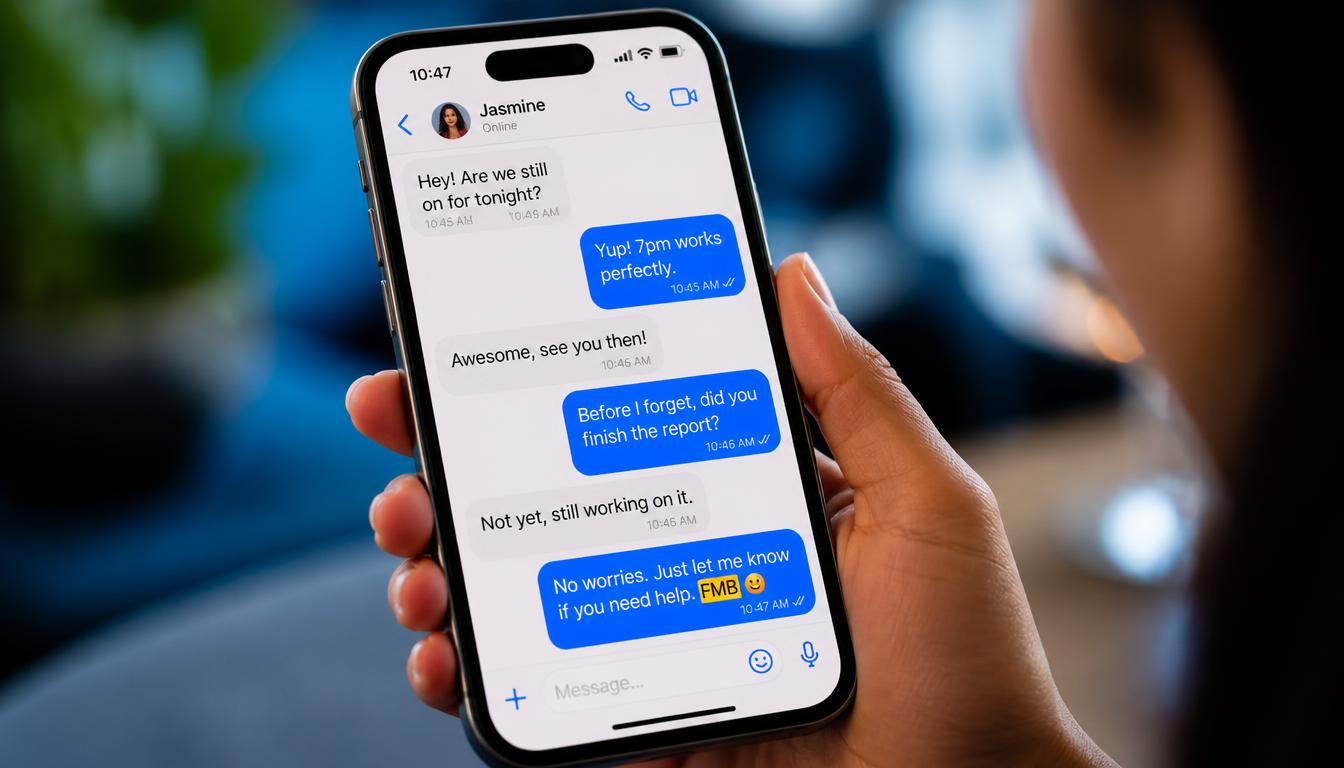
For example:
Person A: I just followed your account!
Person B: Thanks! FMB 😊
In this conversation, Person B is politely asking Person A to follow their account back.
Simply put:
FMB → means → Follow Me Back
That’s the meaning you’ll see almost every time in everyday digital conversations.
Why Do People Use FMB?
People use FMB because typing four letters is much faster than writing “Please follow me back.”
Modern digital communication is built around speed. People prefer short messages that are easy to read and quick to type.
Some common reasons include:
- Growing followers
- Building online friendships
- Networking with creators
- Supporting friends
- Joining online communities
- Increasing engagement
- Creating mutual connections
In short,
Follow Me Back → helps → Grow social media followers.
That’s one of the biggest reasons the abbreviation became popular.
Where Is FMB Most Commonly Used?
You’ll usually find FMB anywhere people interact socially online.
Instagram is probably the most common place to see FMB.
Example:
Love your photography.
Just followed you.
FMB if you like my content too!
Creators often exchange follows while building new audiences.
TikTok
TikTok users also use FMB while trying to increase followers.
Example:
Great edits!
FMB ❤️
Usually it’s friendly and informal.
X (Formerly Twitter)
Many users still exchange follows.
Example:
Nice thread.
FMB?
Short, simple, and straight to the point.
Although Facebook relies more on friends than followers, public pages often use FMB.
Example:
Thanks for visiting our page.
FMB if you’re interested in our updates.
Threads
Threads has become another platform where users ask for mutual follows.
Example:
Just discovering new creators.
FMB if you’re active here.
Snapchat
Snapchat users rarely use FMB compared to Instagram, but it still appears occasionally.
Usually it means:
Add me back.
Discord Communities
Some gaming or creator communities also use FMB when sharing social media profiles.
Why Has FMB Become So Popular?
The internet has changed how people communicate.
Instead of writing complete sentences, users rely on texting slang, chat abbreviations, and internet shorthand.
Some reasons include:
- Faster communication
- Less typing
- Mobile-friendly conversations
- Easier networking
- Common understanding among users
Just think about how often people use abbreviations like:
- LOL
- BRB
- IMO
- TBH
- FYI
- DM
- FMB
After a while, they become second nature.
Understanding the Tone Behind FMB
One thing many people wonder is whether FMB sounds rude.
Usually, it doesn’t.
Most people use it casually.
For example,
I really enjoyed your content.
FMB if you get a chance 😊
This feels friendly.
Compare that with:
FMB NOW!!
That feels demanding.
So the tone depends on how the message is written, not just the abbreviation itself.
Real-Life Examples of FMB in Text Messages
Here are some natural conversations.
Example 1
Alex:
Your travel photos are amazing!
Emma:
Thanks! I followed you.
FMB if you’d like.
Example 2
John:
Love your gaming videos.
Ryan:
Thanks!
FMB and let’s stay connected.
Example 3
Sarah:
Just found your page today.
Lily:
Welcome!
FMB anytime 😊
Example 4
Chris:
Nice artwork!
Artist:
Appreciate it.
FMB if you enjoy digital art.
Notice how natural it sounds.
Nobody is forcing anyone.
It’s simply a request.
How Context Changes the Meaning
One of the biggest mistakes people make is assuming every abbreviation has only one meaning.
That’s not how language works.
Context → determines → Correct interpretation of FMB.
For example:
Message:
I followed your business page.
FMB.
Obviously:
It means Follow Me Back.
But imagine this sentence:
We started an FMB project at work.
Now the meaning could be something completely different.
Always read the surrounding words before deciding what an abbreviation means.
Other Possible Meanings of FMB
Although Follow Me Back is by far the most common meaning in texting, FMB can stand for other phrases depending on the situation.
Here are a few examples:
| Meaning | Where It’s Used |
|---|---|
| Follow Me Back | Social media and texting |
| Free My Brother | Online communities and slang |
| Find My Business | Marketing discussions |
| Financial Management Branch | Government or corporate settings |
| Fleet Maintenance Base | Military or transportation industries |
This is why context matters.
If someone says,
FMB on Instagram
it’s almost certainly Follow Me Back.
If someone writes,
The FMB approved the budget,
they’re obviously talking about something entirely different.
Is FMB Only Used on Social Media?
Mostly, yes.
You’ll rarely hear someone say FMB in face-to-face conversations.
It’s primarily an online communication term.
You’ll often find it in:
- Instagram comments
- TikTok replies
- Facebook posts
- Threads conversations
- Direct Messages (DMs)
- Community chats
- Creator groups
- Networking forums
Anywhere people exchange follows, you’ll probably see FMB.
Should You Use FMB?
There’s nothing wrong with using it as long as you use it naturally.
Good situations include:
- Casual chats
- Social media
- Creator communities
- Networking with influencers
- Online groups
Avoid using it in:
- Business emails
- Job applications
- School assignments
- Professional reports
- Academic writing
Professional communication should always use complete phrases instead of internet slang.
Tips for Using FMB Naturally
If you want your messages to sound friendly rather than spammy, keep these simple tips in mind.
- Say thank you before asking.
- Don’t repeatedly send FMB to strangers.
- Personalize your message.
- Respect people’s choice if they don’t follow back.
- Avoid copy-pasting the same comment everywhere.
For example:
“Hey! I really liked your travel content. Just followed your page. FMB if you enjoy my posts too.”
That feels genuine and much more natural than posting only “FMB” under dozens of posts.
Platform-Specific Meaning of FMB
Although FMB usually means Follow Me Back, the way people use it can be a little different depending on the platform. Understanding these differences helps you reply naturally instead of guessing.
Instagram is where FMB is probably seen the most.
People often use it in:
- Story replies
- Comments
- Direct Messages
- Creator networking posts
Example:
“Love your reels! FMB if you enjoy photography too.”
Many small creators use this approach to build an audience. It’s fairly common, though some users ignore these requests if they prefer organic growth.
TikTok
On TikTok, users are generally more interested in engagement than simply increasing follower numbers.
Example:
“Your edits are amazing! FMB and let’s support each other.”
Sometimes creators combine FMB with likes and comments to encourage mutual interaction.
X (Formerly Twitter)
Because X focuses on conversations and communities, FMB is often used between people with similar interests.
Example:
“Great football updates. FMB if you’re into sports news.”
It’s usually casual and short.
Facebook users don’t use FMB as often as Instagram users because the platform mainly revolves around friends rather than followers.
Still, public pages and creators occasionally use it.
Threads
Threads encourages conversations between creators, so mutual follows are fairly common.
Example:
“Just joined Threads today. FMB if you’re active here.”
Discord
Discord isn’t a follower-based platform, but users sometimes exchange Instagram or TikTok profiles.
Example:
“Here’s my Insta if anyone wants to connect. FMB.”
So while the abbreviation stays the same, its purpose changes slightly depending on where people communicate.
FMB Compared With Other Popular Texting Abbreviations
FMB is only one of hundreds of internet abbreviations people use every day.
Here are a few common ones:
| Abbreviation | Meaning | Typical Use |
|---|---|---|
| FMB | Follow Me Back | Social networking |
| DM | Direct Message | Private conversations |
| TBH | To Be Honest | Sharing opinions |
| LOL | Laugh Out Loud | Humor |
| FR | For Real | Agreement or emphasis |
| IMO | In My Opinion | Personal viewpoint |
| FYI | For Your Information | Sharing information |
| BRB | Be Right Back | Temporary absence |
These abbreviations make conversations quicker while keeping messages informal and easy to understand.
Common Mistakes People Make About FMB
Many people misunderstand FMB, especially if they’re new to social media.
Here are the most common mistakes.
Assuming It Has Only One Meaning
Although Follow Me Back is the most popular meaning, abbreviations can have multiple definitions depending on the situation.
Always consider the surrounding conversation.
Using It in Professional Emails
Imagine emailing a company and writing:
“Thanks for your time. FMB.”
That would confuse most readers.
Professional communication should always avoid texting slang.
Sending It Repeatedly
Some users post “FMB” under hundreds of posts.
Unfortunately, this often looks spammy and can annoy people instead of attracting followers.
Ignoring Context
One of the biggest language skills online is understanding context.
A sentence gives clues that help determine the correct meaning.
For example:
“I followed your account yesterday. FMB.”
Clearly means:
Follow Me Back
Whereas:
“The FMB department approved the request.”
Obviously has nothing to do with social media.
How Should You Respond When Someone Says FMB?
There isn’t one perfect response.
It depends on whether you actually want to follow the person.
If you do, you could reply:
- Sure, I followed you back.
- Done! Thanks for following.
- Happy to connect.
- Just followed you.
If you don’t want to follow back, you can still be polite.
Examples:
- Thanks for reaching out.
- I appreciate the follow.
- Thanks for checking out my profile.
There’s no obligation to follow anyone simply because they asked.
Is FMB Considered Spam?
Not always.
A single friendly request usually isn’t spam.
For example:
“Loved your artwork. Just followed you. FMB if you’re interested.”
That sounds genuine.
However, posting the exact same “FMB” comment dozens of times across different accounts can appear spammy and may even reduce engagement.
Quality interactions generally work better than repetitive requests.
How Texting Abbreviations Have Changed Digital Communication
The rise of smartphones has transformed the way people communicate.
Instead of typing long sentences, users often rely on abbreviations that save time while still delivering the same message.
Examples include:
- LOL
- OMG
- BTW
- TBH
- IDK
- FMB
These shortcuts have become part of modern digital language.
In many cases, people understand them instantly without needing a full explanation.
Texting abbreviations → improve → Speed and convenience of digital communication.
That’s one reason they continue to grow in popularity every year.
Will FMB Still Be Popular in 2026?
Most likely, yes.
While internet slang constantly changes, FMB has remained relevant because social media continues to revolve around connections and followers.
As long as people want to build communities online, abbreviations like FMB will probably remain part of everyday conversations.
New platforms may appear, but the idea of asking someone to follow back is unlikely to disappear anytime soon.
Key Takeaways
If you only remember a few things from this guide, remember these:
- FMB most commonly means “Follow Me Back.”
- It is mainly used on social media, not in professional communication.
- Context helps determine the correct meaning.
- It is usually a friendly request rather than a demand.
- Using it politely creates better interactions than repeatedly posting it everywhere.
- Alternative meanings exist, but they’re much less common in everyday texting.
Frequently Asked Questions
What does FMB mean in text messages?
In most text messages and social media conversations, FMB means “Follow Me Back.” It’s a casual request asking another user to return a follow after someone has already followed their account. The meaning is especially common on Instagram, TikTok, Threads, and X.
Is FMB rude to say?
No. FMB is generally considered a polite and informal abbreviation. However, repeatedly sending it to strangers or posting it excessively can make it seem pushy or spam-like. Using it respectfully and in the right context is perfectly acceptable.
Can FMB have different meanings?
Yes. Although Follow Me Back is the most common interpretation in texting, FMB may also represent other phrases in business, government, marketing, or specific communities. Reading the surrounding conversation helps identify the intended meaning accurately.
Should I use FMB in professional communication?
No. FMB is internet slang and should be avoided in formal emails, business correspondence, academic writing, and workplace communication. In professional settings, writing the complete phrase is always clearer and more appropriate.
Conclusion
Understanding what FMB means in text is straightforward once you know the context. In nearly all social media conversations, FMB stands for “Follow Me Back,” a friendly request for mutual connection.
Whether you’re chatting on Instagram, TikTok, X, Threads, or another platform, recognizing this abbreviation helps you communicate more confidently.
Like many forms of texting slang, FMB reflects how digital communication has evolved to become faster and more efficient. While it should be reserved for casual conversations rather than professional settings, it’s a widely recognized expression that remains relevant in 2026.
By paying attention to context and using it politely, you’ll have no trouble understanding or using FMB in your own online interactions.