
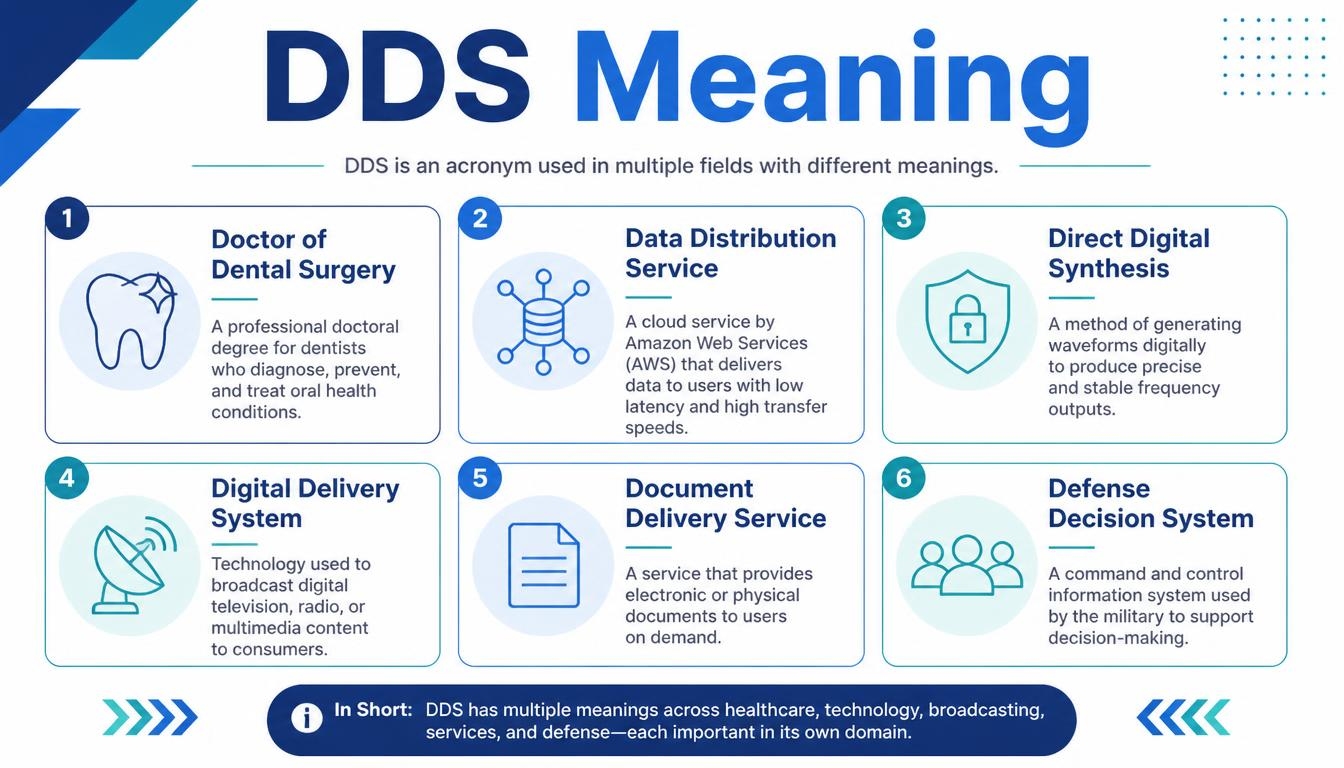

When you look at a dentist’s name, you might notice a few letters written after it. Sometimes those letters are DDS, while other dentists use DMD. At first glance, these abbreviations can seem like different professional rankings, and it’s natural to wonder whether one dentist has more education or experience than another. But the truth is a little simpler than many people expect.
DDS meaning is Doctor of Dental Surgery. It is a professional degree awarded to graduates who successfully complete an accredited dental education program. DMD, on the other hand, stands for Doctor of Medicine in Dentistry or Doctor of Dental Medicine. Although the names sound different, both qualifications represent the same level of dental education.
So, does it really matter whether your dentist has DDS or DMD after their name? Not in the way you might think. Both degrees prepare graduates to practice general dentistry, provided they meet the licensing requirements in their jurisdiction. Let’s explore what these qualifications mean, where they came from, and what patients should actually consider when choosing a dentist.
What Does DDS Mean in Dentistry?
DDS stands for Doctor of Dental Surgery, a professional academic qualification earned after completing dental school. It indicates that a dentist has successfully completed the education and clinical preparation required for the degree.
Despite the word surgery in its name, a DDS degree does not mean that the dentist only performs surgical procedures. Dentists with this qualification can provide general dental care, including examinations, preventive services, fillings, and other treatments within their training and legal scope of practice.
A dentist with DDS after their name has completed an extensive educational journey. This typically includes undergraduate education followed by four years of professional dental school in the United States.
Here are some important things the DDS qualification represents:
- Completion of an approved dental education program.
- Training in oral health and dental diseases.
- Knowledge of dental anatomy and biomedical sciences.
- Practical experience through supervised clinical training.
- Preparation to meet professional dental licensing requirements.
- Education in diagnosing and treating common dental conditions.
- The foundation for further training in dental specialties.
In simple words, DDS tells patients that their dentist has earned a recognized professional dental degree. It isn’t merely an impressive title placed on a business card.
DDS vs. DMD: Are These Dental Degrees Different?
One of the most common questions patients ask is whether DDS and DMD represent different levels of dental expertise. The answer is no. According to the American Dental Association (ADA), both degrees represent equivalent educational preparation.
Some dental schools award a Doctor of Dental Surgery degree, while others award a Doctor of Dental Medicine degree. The difference comes mainly from the terminology and traditions followed by individual universities.
Both qualifications generally require the same dental school curriculum, clinical education, and professional preparation. A graduate holding either degree must also satisfy the licensing requirements applicable to their location before practicing independently.
Consider the following comparison:
| Feature | DDS | DMD |
|---|---|---|
| Full form | Doctor of Dental Surgery | Doctor of Dental Medicine |
| Alternative meaning | Not applicable | Doctor of Medicine in Dentistry |
| Degree type | Professional dental degree | Professional dental degree |
| Education | Dental school | Dental school |
| Clinical training | Required | Required |
| General dentistry | Yes | Yes |
| Professional licensing | Required | Required |
| Educational equivalence | Equivalent to DMD | Equivalent to DDS |
The important thing to remember is that a dentist with DMD isn’t automatically more qualified than someone with DDS, and the reverse is equally true.
Your dentist’s experience, clinical abilities, communication, and professional standards are much more meaningful when evaluating the care you receive.
The History Behind the DDS and DMD Degrees
The history of dental qualifications is quite interesting because the two degree names developed through different university traditions.
According to the American Dental Association, the Baltimore College of Dental Surgery established the first Doctor of Dental Surgery degrees in 1840. This was an important milestone in the development of dentistry as a formal profession.
Later, when Harvard University established its dental school in 1867, it chose a different naming convention. Harvard traditionally used Latin terminology for its academic qualifications, which influenced the name associated with its dental degree.
The term Dentariae Medicinae Doctorate was associated with the Doctor of Medicine in Dentistry qualification.
Over time, other universities adopted different degree names, and both DDS and DMD became established professional qualifications.
It’s a small historical difference, really, but one that continues to confuse patients who assume the names must indicate different educational standards.
How Long Does It Take to Earn a DDS Degree?
Becoming a dentist takes several years of education, patience, and hands-on preparation. A professional dental degree isn’t something students earn through classroom learning alone. They must also develop practical skills and learn how to care for real patients under supervision.
In the United States, the traditional educational pathway usually involves four years of undergraduate education followed by another four years of dental school.
That means students commonly spend around eight years completing their undergraduate and professional dental education.
The journey generally includes:
- Undergraduate education: Students complete a bachelor’s degree or the required undergraduate coursework for dental school admission.
- Dental school admission: Applicants meet academic and other admission requirements established by individual institutions.
- First two years of dental school: Students concentrate heavily on biomedical sciences and foundational dental knowledge.
- Final two years of dental school: Students gain substantial clinical experience and participate in supervised patient care.
- Graduation: Successful students earn either a DDS or DMD degree, depending on their university.
The process requires commitment. Students need to understand scientific concepts while developing the confidence and precision required for dental treatment.
What Do Dental Students Study During Their Education?
Dental education covers much more than teeth. Students learn about the entire oral environment, the structures surrounding the teeth, and the relationship between oral health and general health.
During the early years, the curriculum focuses on biomedical sciences, which help students understand how the human body works and how diseases develop.
Some important subjects include:
- Anatomy: Understanding the structure of the human body, including the head, neck, jaw, and oral cavity.
- Biochemistry: Studying chemical processes that support normal body functions.
- Pathology: Learning about diseases, their causes, and their effects on tissues.
- Pharmacology: Understanding medications, their effects, and their appropriate use in dental care.
- Dental anatomy: Studying the shape, structure, and function of teeth.
- Oral biology: Exploring the tissues and biological processes associated with oral health.
As students progress, their education becomes increasingly practical. They learn how to examine patients, identify oral health concerns, plan treatments, and perform procedures under professional supervision.
The combination of classroom instruction, clinical training, and dental laboratory training prepares graduates for the responsibilities of professional dental practice.
DDS and DMD Licensing Requirements
Graduating from dental school is an important achievement, but earning a degree doesn’t automatically give someone permission to practice dentistry.
Dentists must meet the licensing requirements established by the relevant dental regulatory authority. These requirements vary depending on the country, state, or jurisdiction.
In the United States, professional licensing has traditionally involved several forms of assessment.
National Board Dental Examination
The National Board Dental Examination is a major examination associated with dental professional assessment in the United States. It evaluates important areas of dental knowledge and clinical reasoning.
The examination system has evolved over time, and the Integrated National Board Dental Examination (INBDE) is now used in place of the former separate NBDE examinations.
Regional or Clinical Board Examination
Clinical competency assessments help determine whether dental graduates can apply their knowledge in practical situations.
Depending on the applicable licensing pathway, candidates may need to complete an accepted clinical examination or another approved assessment.
Jurisprudence Examination
A jurisprudence examination evaluates a dentist’s understanding of relevant professional laws, regulations, and ethical responsibilities.
It may cover areas such as patient rights, professional conduct, recordkeeping, and the legal responsibilities associated with practicing dentistry.
Dental License
After completing the applicable education, examination, and other licensing requirements, a dentist may receive authorization to practice in a particular jurisdiction.
This is an important distinction: DDS and DMD are academic qualifications, whereas a dental license provides legal authorization to practice.
What Can a Dentist With a DDS or DMD Degree Treat?
Both DDS and DMD graduates are educated to provide general dental care, subject to their licensing, competence, and applicable scope of practice.
General dentistry focuses on maintaining oral health, identifying problems early, and treating common dental conditions.
A general dentist may provide services such as:
- Routine dental examinations.
- Professional teeth cleaning.
- Dental fillings.
- Diagnosis of tooth decay.
- Treatment planning for oral health problems.
- Preventive dental care.
- Basic restorative procedures.
- Patient education about oral hygiene.
- Assessment of gum health.
- Referrals to dental specialists when necessary.
Not every dentist provides every treatment. Their services depend on their training, experience, equipment, and professional scope of practice.
For example, a patient with a complicated root canal problem might benefit from seeing an endodontist, while someone needing advanced tooth replacement may require a prosthodontist.
Education After a DDS or DMD Degree
Some dentists continue their education after earning their initial professional degree. They may choose advanced training in a particular area of dentistry to develop specialized knowledge and clinical abilities.
Depending on the specialty, postgraduate dental training may take approximately two to six years or longer.
This additional education allows dentists to concentrate on specific oral health conditions and more complex treatment needs.
Several recognized dental specialties include:
Endodontics
Endodontics focuses on the inside of the tooth, particularly the dental pulp and surrounding tissues.
An endodontist commonly treats problems involving infected or damaged dental pulp. Root canal treatment is one of the best-known procedures associated with this specialty.
Orthodontics
Orthodontics deals with correcting irregular tooth positions and bite problems.
An orthodontist may use braces, clear aligners, retainers, and other appliances to improve tooth alignment and dental function.
Periodontics
Periodontics focuses on the gums and supporting structures surrounding the teeth.
A periodontist treats gum disease and other conditions affecting the tissues and bone that support teeth.
Prosthodontics
Prosthodontics involves restoring and replacing damaged or missing teeth.
Treatment may include crowns, bridges, dentures, and other restorative solutions designed to improve oral function and appearance.
Oral Surgery
Oral surgery involves surgical procedures affecting the teeth, jaws, and surrounding oral structures.
An oral and maxillofacial surgeon receives specialized training in managing a wide range of conditions that may require surgical treatment.
Pediatric Dentistry
Pediatric dentistry focuses on the oral health needs of infants, children, and adolescents.
Pediatric dentists receive additional training in treating younger patients and helping children develop healthy dental habits from an early age.
Is a DDS Dentist Better Than a DMD Dentist?
This is probably one of the most important questions behind searches for DDS meaning.
When comparing two dentists, the letters after their names shouldn’t be the deciding factor. Both DDS and DMD indicate equivalent types of professional dental education.
A better way to evaluate a dentist is to consider their actual qualifications, experience, and approach to patient care.
Here are some factors worth considering:
- Professional licensing: Make sure the dentist is legally authorized to practice in the relevant location.
- Clinical experience: Consider their experience with the particular treatment you need.
- Specialized training: Check whether they have additional qualifications if your dental condition requires specialist care.
- Communication: A good dentist should explain procedures, risks, and treatment options in understandable language.
- Professionalism: Respect, ethical conduct, and patient confidentiality are important parts of dental care.
- Available services: Check whether the clinic provides the treatments you need.
- Patient comfort: A dentist who listens to your concerns can make dental appointments less stressful.
A highly experienced dentist with a DDS may be an excellent choice, just as a well-trained dentist with a DMD can provide excellent care.
The degree name alone doesn’t tell the complete story.
Common Questions About DDS Meaning
What does DDS stand for after a dentist’s name?
DDS stands for Doctor of Dental Surgery. It is a professional degree awarded to graduates who successfully complete an approved dental education program.
What does DMD stand for?
DMD stands for Doctor of Dental Medicine or Doctor of Medicine in Dentistry. Both names refer to the same type of professional dental qualification.
Are DDS and DMD the same?
Yes. According to the American Dental Association, DDS and DMD degrees represent the same educational standards. The difference is primarily in the naming convention used by dental schools.
Can a DDS dentist perform surgery?
A dentist with a DDS degree may perform dental procedures within their education, training, competence, and legal scope of practice. However, complex surgical procedures may require additional specialist qualifications.
Does DMD mean a dentist has a medical degree?
DMD is a professional dental degree, not the same as a general medical degree such as an MD. Its full name is Doctor of Dental Medicine or Doctor of Medicine in Dentistry.
How many years does it take to become a DDS dentist?
In the traditional United States pathway, students typically complete four years of undergraduate education and four years of dental school. Requirements can vary between institutions and educational pathways.
Is DDS higher than DMD?
No. Neither degree is academically superior to the other. Both represent equivalent professional dental education.
Can a DDS or DMD dentist become a specialist?
Yes. Dentists with either qualification may pursue additional postgraduate education and specialized training, provided they meet the relevant admission and professional requirements.
Read articul: https://ytmeaning.com/fafo-meaning/
How to Understand Your Dentist’s Qualifications
If you’ve recently visited a dental clinic and noticed DDS or DMD written on a dentist’s profile, there’s no need to feel confused.
Both abbreviations identify recognized professional dental degrees. They tell you something about the dentist’s educational background, but they don’t provide a complete picture of their clinical experience or expertise.
If you’re considering a particular dental procedure, ask about the dentist’s experience with that treatment. You can also check their registration status and whether additional specialist training is relevant to your needs.
The American Dental Association is another useful resource for understanding dental education and professional dental specialties in the United States.
Remember, choosing a dentist should involve more than reading the letters printed after their name.
Final Thoughts on DDS Meaning
Understanding DDS meaning makes it easier to interpret dental qualifications and compare professional credentials without unnecessary confusion.
DDS stands for Doctor of Dental Surgery, while DMD stands for Doctor of Dental Medicine or Doctor of Medicine in Dentistry. Although universities use different names, both degrees represent equivalent dental education and prepare graduates for general dentistry.
Whether your dentist has DDS or DMD after their name, what truly matters is their professional competence, licensing, experience, communication, and commitment to patient care.
A good dentist doesn’t just look after your teeth; they help you understand your oral health and make informed decisions about your treatment. So, the next time you see DDS or DMD on a dental clinic’s signboard, you’ll know exactly what those letters mean — and why the difference isn’t nearly as important as the quality of care behind them.
Medical disclaimer: This article is for educational purposes only and is not a substitute for professional medical or dental advice, diagnosis, or treatment. Always consult a qualified dentist or other healthcare professional about your individual oral health needs.