

The word Ching can look surprisingly simple, but behind those five letters sits a large piece of Chinese history. If you have come across the word in an old book, dictionary, historical article, or family name, you may have wondered, “What does Ching actually mean?” Well, the answer depends a little on the context, because Ching is commonly used as an older English spelling of Ch’ing or Qing.
Most importantly, Ching is strongly associated with the Qing dynasty, the last imperial dynasty of China. The dynasty ruled from 1644 until 1912, making the term important when reading about imperial China, the Manchu rulers, and the final centuries of China’s imperial system.
So, the Ching meaning is not simply the meaning of an ordinary English word. In historical writing, it usually points toward the Qing dynasty, also called the Ch’ing dynasty or Manchu dynasty. Understanding that spelling difference makes the word much less mysterious.
What Is the Ching Meaning?
The simplest definition of Ching in historical English is an alternative spelling for Ch’ing, which itself represents the name now generally written as Qing. It is especially encountered in older English-language sources discussing Chinese imperial history.
The Qing dynasty was an imperial dynasty of China established by the Manchu people. It ruled China from 1644–1912, although the final emperor abdicated in 1912.
In modern historical writing, “Qing” is the standard romanization. Older publications, however, often used “Ch’ing” or “Ching.” That is why somebody researching the Ching definition may find different spellings in different dictionaries or historical books.
In other words, when you see Ching in a historical context, don’t automatically treat it as a separate dynasty. In many cases, it is simply an older spelling of Qing.
Ching, Ch’ing, and Qing: Why Are There Different Spellings?
This is probably the part that causes the most confusion. The three forms Ching, Ch’ing, and Qing can refer to the same historical dynasty, depending on the romanization system and the age of the source.
Older systems for representing Chinese sounds in English produced spellings that look different from today’s standard pinyin system. “Ch’ing” became common in older English-language historical writing, while “Qing” is now the standard spelling.
So, if one book says Ch’ing dynasty, another says Ching dynasty, and a modern encyclopedia says Qing dynasty, they may all be discussing the same Chinese dynasty.
It is a bit like finding an old street sign with an older spelling of a familiar place. The letters changed, but the historical reference can remain the same.
Ching Meaning in Chinese History
The historical meaning of Ching becomes clearer when connected with the Qing dynasty of China. The dynasty was founded by the Manchu rulers who entered China and established control over the country in the seventeenth century.
The Qing period lasted for more than two and a half centuries. During that time, China experienced major political, cultural, economic, military, and social changes.
The dynasty expanded the territory under imperial control and governed a huge and diverse population. It also witnessed some of the most dramatic events of late imperial China.
Because of this, Ching historical meaning is closely connected with ideas such as imperial rule, the Manchu, the Chinese Empire, and the final stage of China’s imperial dynasty system.
What Does Ch’ing Mean?
Ch’ing meaning is generally connected with the older romanization of Qing. The apostrophe in Ch’ing was useful in older systems because it helped distinguish the pronunciation from another possible sound.
When older English texts mention the Ch’ing dynasty, they are normally referring to the same dynasty that modern sources call the Qing dynasty.
The spelling may look unfamiliar today, but it remains useful when researching historical documents. A person searching only for “Qing” could sometimes miss older books that use “Ch’ing” instead.
That is why both spellings are worth knowing if you’re digging through older references about Chinese history.
Ching Definition in English
The Ching definition in English depends on the context in which the word appears. Historically, it can function as an English rendering of the Chinese dynasty’s name.
The word may therefore appear in descriptions such as “Ching dynasty,” “Ch’ing dynasty,” or “Ching Empire.” These expressions point toward the same broad historical subject: the imperial government established by the Manchu in China.
It is worth remembering that the Ching dictionary meaning is not necessarily a personal-name definition. When used in historical sources, the term is primarily a transliteration or older romanized form.
This distinction matters because someone searching for the name Ching might expect a completely different explanation. Context is doing a lot of work here.
The Qing Dynasty and the Manchu Dynasty
The Qing dynasty is often called the Manchu dynasty because it was established by the Manchu people. Before taking control of China proper, the Manchu state developed in the northeast and eventually became powerful enough to challenge the existing Ming government.
In 1644, Qing forces entered Beijing, and the dynasty gradually established its rule across China. This began the period commonly referred to as Qing rule.
The dynasty retained many Chinese institutions while also preserving elements of Manchu identity and political organization. This created a complicated imperial system rather than a simple replacement of one culture with another.
That mixture is one reason the Manchu dynasty meaning carries so much historical weight. It describes not merely a royal family but an entire period in the political history of China.
Ching Dynasty 1644–1912
The dates 1644–1912 are especially important when understanding the Ching dynasty 1644 1912 reference.
The year 1644 marks the beginning of Qing imperial rule in China proper. The year 1912 marks the end of the imperial dynasty following the abdication of the last Qing emperor.
That makes the Qing the final Chinese imperial dynasty.
During these centuries, China went through periods of expansion and prosperity as well as serious internal and external challenges. The later Qing era, in particular, was marked by wars, political pressure from foreign powers, rebellions, reform movements, and growing demands for political change.
So when a source describes the Ching dynasty 1644 1912, it is identifying one of the longest and most consequential periods in China’s imperial history.
What Does Ching Mean in a Dictionary?
Someone searching for the Ching dictionary definition may encounter a definition that differs depending on the dictionary and publication date.
Older English dictionaries and reference works sometimes use Ching or Ch’ing as a spelling associated with the Chinese dynasty. Modern sources generally favor “Qing,” following the pinyin romanization system.
The word can therefore behave differently from a normal English vocabulary item. Its meaning is strongly tied to transliteration, historical terminology, and proper naming.
This also explains why a search for Ching meaning in English can produce several seemingly unrelated results. Context is essential.
Ching Pronunciation and the Sound of the Word
The Ching pronunciation is usually represented approximately as “ching,” with a sound familiar to English speakers.
The older spelling Ch’ing includes an apostrophe that belonged to the romanization system used by many historical sources. Modern Qing pronunciation, however, follows Mandarin pronunciation represented through pinyin.
The International Phonetic Alphabet can offer a more precise description, but English speakers should be careful not to assume that the spelling automatically tells them exactly how a Chinese word sounds.
Romanization is a representation of another language’s pronunciation. It is helpful, but it isn’t always a perfect pronunciation guide.
Ching vs Qing: Are They the Same?
In the historical context of the dynasty, Ching vs Qing is primarily a question of romanization.
Qing is the modern standard form used in pinyin. Ch’ing is an older romanization, while Ching can appear as a simplified or variant spelling in older English sources.
Therefore, seeing “Ching” does not necessarily mean you have discovered another Chinese dynasty.
If your source is discussing the Manchu dynasty, Chinese imperial history, or the period from 1644 to 1912, it is very likely referring to the Qing dynasty.
The exact spelling can tell you something about the source itself, too. An older spelling often indicates that the author or publication follows an older transliteration convention.
Ta Ch’ing and the Qing Empire
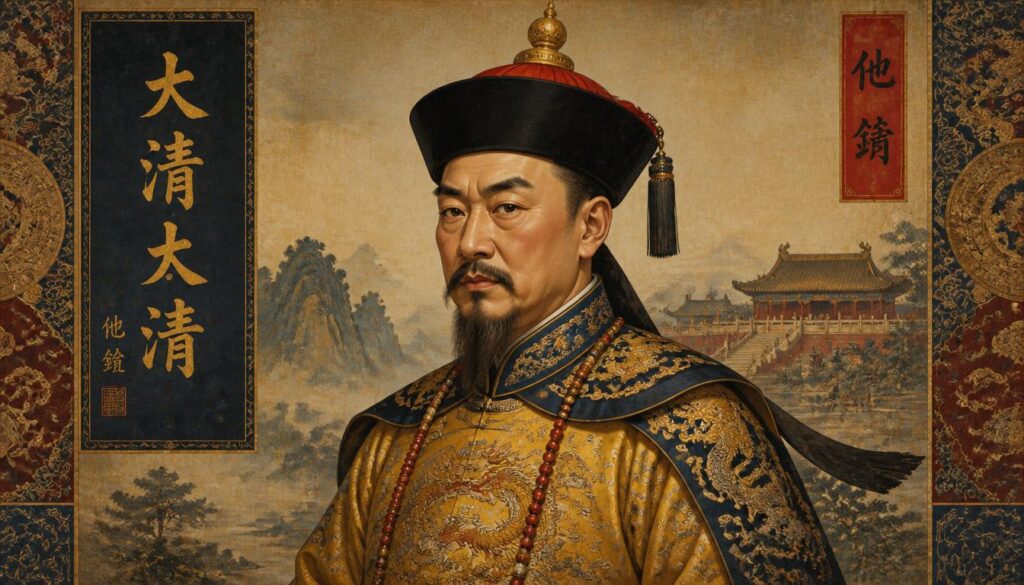
Another historical expression you may encounter is Ta Ch’ing, an older romanized form connected with the official name of the Qing state.
The Qing Empire was one of the largest political entities in East Asia during its height. Its territory included areas far beyond the core regions traditionally associated with Chinese dynastic rule.
The imperial government had to manage different peoples, languages, regions, and political traditions. That made Qing administration a remarkably complicated subject for historians.
So terms such as Ta Ch’ing, Qing Empire, and Ch’ing dynasty can appear together in historical literature even though modern sources generally prefer “Qing.”
Ching Meaning and the Manchu Rulers
The connection between Ching and the Manchu rulers is central to understanding the term historically.
The Qing ruling house belonged to the Aisin Gioro clan of the Manchu people. The dynasty maintained a distinct Manchu identity while ruling a predominantly Chinese population.
This produced an imperial culture that blended traditions. Court life, military institutions, language, religion, administration, and cultural practices all reflected the complexity of the empire.
When studying the Manchu rule, therefore, it is useful to avoid thinking of the Qing period as a simple historical footnote. It was a long era with its own political structures and major transformations.
Other Uses of the Word Ching
Not every appearance of Ching refers to the Qing dynasty.
For example, readers may encounter terms such as I Ching, Ching-t’u, Nan-ching, or Shih Ching. These expressions belong to different historical, linguistic, or cultural contexts.
The I Ching, for example, is a famous Chinese classical text often translated as the “Book of Changes.” Its appearance of “Ching” does not mean that it refers to the Qing dynasty.
Likewise, place names and older romanizations may contain “Ching” without having anything to do with the Manchu dynasty.
This is why the surrounding words matter so much. The same Roman letters can represent different Chinese characters and completely different meanings.
Is Ching a Personal Name?
The name Ching can also appear in personal names and surnames, particularly in communities with Chinese heritage or in English-language contexts where Chinese names have been romanized in different ways.
That use should not automatically be confused with the historical Ching meaning connected to the Qing dynasty.
Chinese names can have different meanings depending on the original Chinese characters. A Romanized spelling alone may not reveal which character was intended.
So if somebody asks, “What does Ching mean as a name?” the answer requires the original Chinese character, language, family background, or naming context.
Without that information, assigning one fixed personal-name meaning would be misleading.
Why Older Sources Say Ching
The reason older historical books sometimes use Ching instead of Qing comes down largely to romanization.
Before pinyin became the dominant international system for Mandarin Chinese, several other systems were widely used. Wade-Giles was particularly influential in English-language scholarship.
Under older systems, Chinese sounds were represented using spellings that can look strange to modern readers. The apostrophe in Ch’ing, for example, was not decorative. It conveyed information about pronunciation within that system.
Modern readers therefore encounter a mixture of spellings when researching older Chinese history.
Knowing this can save a lot of confusion when comparing books, dictionaries, archives, and websites.
Why the Ching Meaning Can Be Confusing
The word Ching creates confusion because it can point toward several different things depending on context.
It may be an older spelling associated with the Qing dynasty, part of an older romanized Chinese term, a surname or personal-name spelling, or part of the title of a classical Chinese work.
The biggest clue is usually the surrounding vocabulary.
If you see “Manchu,” “dynasty,” “1644,” “1912,” “emperor,” or “imperial China,” the historical Qing interpretation is strongly indicated. If you see “Book of Changes,” “I Ching,” or another classical text, you’re looking at a different use.
A tiny word can carry a surprisingly large suitcase of history.
How to Understand Ching When You Find It in an Old Text
If you encounter Ching in an old historical document, don’t immediately assume the word has a completely different meaning from “Qing.”
First, look at the surrounding sentence. If the text mentions China, emperors, Manchu rulers, imperial government, or the years 1644–1912, the reference is probably to the Qing dynasty.
Next, check the publication date and spelling conventions. Older works frequently use romanization systems that are no longer standard today.
Finally, compare the term with a modern historical reference. This little extra step can turn a confusing old spelling into something immediately recognizable.
The Lasting Importance of the Ching Meaning
Understanding the Ching meaning is really an exercise in understanding how languages preserve history.
A spelling such as Ching can survive long after the romanization system that created it has fallen out of everyday use. Old books preserve those forms, and modern readers encounter them generations later.
The word therefore acts almost like a small historical doorway. Behind it are the Qing Empire, the Manchu dynasty, imperial China, and centuries of political and cultural change.
That is why knowing the difference between Ching, Ch’ing, and Qing is useful for anyone researching Chinese history.
Common Questions About Ching Meaning
What does Ching mean?
In historical English usage, Ching is often an older spelling associated with Ch’ing or Qing, the final imperial dynasty of China.
What is the Ching dynasty?
The Ching dynasty is an older English spelling referring to the Qing dynasty, the Manchu-led imperial dynasty that ruled China from 1644 to 1912.
Is Ching the same as Qing?
In the context of the Chinese dynasty, yes. Ching, Ch’ing, and Qing can represent the same dynasty through different romanization conventions.
What does Ch’ing mean?
Ch’ing is an older romanized spelling of Qing, especially common in older English-language works about Chinese history.
What is the Ching historical meaning?
The historical meaning of Ching is primarily connected with the Qing dynasty, the Manchu rulers, and the final period of China’s imperial dynastic system.
What is Qing meaning?
“Qing” is the modern pinyin spelling of the name of the dynasty that ruled China from 1644 until 1912.
Why is Ching spelled differently from Qing?
The difference comes from different systems for romanizing Chinese sounds. “Qing” follows modern pinyin, while “Ch’ing” and “Ching” appear in older or alternative English spellings.
Is Ching always related to the Qing dynasty?
No. Ching can appear in personal names, place names, classical Chinese titles, and other romanized expressions. The context determines the meaning.
What is the Manchu dynasty?
The Manchu dynasty is another common description of the Qing dynasty because the ruling house was Manchu. It governed China for more than two and a half centuries.
What are the Qing dynasty dates?
The Qing dynasty is generally dated 1644–1912 in Chinese history, although the political transition surrounding those dates involved important events before and after formal dynastic rule.
Conclusion: The Meaning Behind Ching
The simplest way to remember the Ching meaning is this: in historical contexts, Ching is commonly an older English spelling connected with Ch’ing or Qing, the Chinese imperial dynasty that ruled from 1644 to 1912.
The Qing dynasty was established by the Manchu and became the final imperial dynasty of China. Its history covers centuries of expansion, administration, cultural development, conflict, reform, and eventually the end of imperial rule.
At the same time, context matters. Ching can appear in other Chinese names, titles, and romanized expressions, so the word does not have one universal meaning in every situation.
Once you understand that Ching, Ch’ing, and Qing can be different spellings for the same historical name, many older references suddenly become much easier to read. A strange-looking word turns into a familiar chapter of Chinese history—and thats often the real fun of language, finding history hiding inside a few ordinary letters.